


Sprain Of The Flexor Brachii
Description
This section is from the book "The Horse - Its Treatment In Health And Disease", by J. Wortley Axe. Also available from Amazon: The Horse. Its Treatment In Health And Disease.
Sprain Of The Flexor Brachii
In the anatomical portion of this work the flexor brachii muscle is described as largely tendinous. It is wholly so in the portion which passes over the bicipital groove in front of the humerus, where it acts as a rope over a pulley before gaining insertion into the head of the radius. Being situated at the point of the shoulder it is much exposed to injury from blows, as well as to sprains, in performing its office of flexing the forearm upon the humerus.
Symptoms
Save in exceptional cases this accident is easy of diagnosis. The muscle is comparatively superficial, and can be seen and felt to be swollen and tender to pressure, and to stand out distinctly from the surrounding structures. There is difficulty in raising the limb from the ground, and when this is attempted the toe is directed downward or the foot may drag on the ground; if the limb be flexed at the knee and then forcibly drawn backward the animal evinces pain. The bursa in front of the shoulder when sharing in the inflammation becomes more or less distended with fluid. It not unfrequently happens that injury to this muscle is associated with disease affecting the upper end of the humerus (bicipital groove) or arm-bone at their point of contact, and the shoulder-joint may also be involved at the same time. Owing to the large proportion of fibrous tissue entering into the composition of the flexor brachii it is rendered specially prone to ossification as the result of inflammation. This change into bone commences in the tendinous portion and may involve the whole of its substance by degrees. In case of other muscles of a more fleshy character, it will be remembered that atrophy and not ossification results from injury and subsequent disuse.
By some it is affirmed that it is almost invariably the right shoulder which is affected, and that the trouble is frequently incurred at plough. If that be so an animal once affected in this manner should not again be employed for ploughing.
Treatment
The chief aim is to give repose to the injured muscle, and for this purpose the patient should be confined to the stable. At first hot fomentations will be needed to reduce existing inflammation. As soon as the acute lameness has passed away blistering may be resorted to, and repeated once or twice according to the circumstances of the case. After this a turn out on a level pasture will prove beneficial. A blister-charge over the injured region is a favourite method of treatment in some districts where experience of the accident has given opportunities of observation on the different means which may be employed.
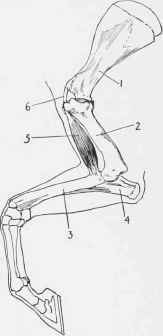
Fig. 365. - The Flexor Brachii (internal aspect).
1, Scapula. 2, Humerus. 3, Radius. 4, Ulna. 5, Flexor Brachii. 6, Tendon of origin of Flexor Brachii.
Continue to:


My Books

