


Ovum
Description
This section is from the book "The Horse - Its Treatment In Health And Disease", by J. Wortley Axe. Also available from Amazon: The Horse. Its Treatment In Health And Disease.
Ovum
Changes which occur in the mammalian ovum during its progress to maturity are always going on, from the time of puberty to the end of the productive life of the animal. Its mature state is reached with the occurrence of aestrum, or heat, and it is to be noticed that during the few days of continuance of this condition there is a marked increase of sexual excitement. The mature ovum or ova are at this time discharged from the Graafian follicle.
An idea of the form and structure of the mammalian ovum may be gained from an examination of the egg of a bird. The common fowl furnishes the most simple examples, simple because they are prominent objects, easily seen by the unaided eye, while the mammalian ovum is a microscopic object, only to be distinguished by the aid of a highly magnifying power.
In the above illustration (fig. 537) a diagram, with description, exhibits the ovum lying in the Graafian vesicle.
Physiologists are not agreed as to the successive steps in the formation of the ovum, but it is allowed that the development of the germinal vesicle is precedent to the appearance of the yolk. The germinal spot is to be seen in the germinal vesicle, and presumably the spot is the incipient body round which the vesicle is developed.
From its origin to its maturation the chief changes which occur in the ovum are those incidental to its growth, and the necessary advance of the body from the centre of the Graafian vesicle to its circumference. The germinal vesicle itself, as maturity in the ovum advances, becomes relatively smaller, owing to the more rapid growth of the structures with which it is associated.
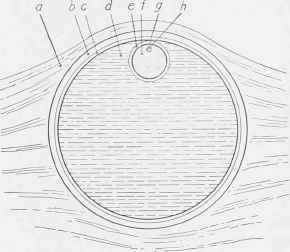
Fig. 537. - The Ovum lying in the Graafian Vesicle.
a. Stroma or tissue of ovary; b, c, external and internal tunics of Graafian vesicle; d, cavity of vesicle; e, thick tissue of ovum or yolk sac; f, yolk; g, seminal vesicle; It, the spot.
While the ovum is advancing to the circumference of the Graafian vesicle, the granular contents of that vesicle are pushed to the inner side of the investing membrane which forms its wall, and become the membrana granulosa, in which the ovum itself is embedded.
According to modern views, the germinal vesicle, during the growth of the structures of the ovum, undergoes changes which result in its temporary obliteration, and the substitution of a spindle-shaped body at each end of which the elements of the yolk are clustered.
All the developmental actions which have been referred to as occurring in a single ovum, it will be understood, are going on at the same time in a number of ova enclosed in the ovaries. In fact, it is not unreasonable to presume that, from early life, ova are constantly being developed and discharged as effete matter, falling short of the indefinable something which would give them the right to take rank among the actual, or, at the least, possible, entities.
To continue the story, it must be granted that one or more of several mature ova meet the sperm-cells, which can start their dormant life into activity, and in such case on the instant of contact commence the changes which end in the formation of a miniature representation of the parent.
Continue to:


My Books

