


How To Make Silver Mounts For Tobacco Pipes
Description
This section is from the book "Cassell's Cyclopaedia Of Mechanics", by Paul N. Hasluck. Also available from Amazon: Cassell's Cyclopaedia Of Mechanics.
How To Make Silver Mounts For Tobacco Pipes
In making an ordinary pipe mount, a plate of silver has to be prepared to fit tightly round the two pieces of the pipe to be joined by its means. The easiest way to obtain a pattern of this plate is by wrapping a piece of smooth paper round the place on which the mount is to go, and very carefully cutting all the surplus away with a pair of scissors until one thickness of the paper is all round the pipe. If this is done carefully and due attention is paid to the straightness of the soldering seam and of the ends, the silver can be cut to fit exactly. The plate must be flattened, and then turned up into a tube quite free from bruises or kinks. For this is required a " triblet," which is a tapering piece of smooth round iron or steel; a bending block is also required. A mallet also may be necessary if the silver is thick; thin metal will come up by the pressure of the hand almost, and may be worked with a pair of half-round pliers in place of the block and mallet. With a knife or a scraper made from a three-square file, make the edges to be soldered together quite level and true with each other; see that no burr from the file is left on the metal when tying with wire.
Should the mount be long, it is desirable to file small nicks in the edges that form the seam a a (Fig. 1), so that the solder may hold better; the seam will not be so likely then to open during the subsequent operations. When fitted, the tube is tied with iron binding wire so that the edges remain in the proper position whilst soldering. Thin wire should be used, as thick wire on cooling and shrinking may bruise the work. The tying of the wire is not a difficult job, but with a very tapering mount means have to be taken to prevent the binding wire slipping down (see Fig. 1). In soldering, which is the next process, brush the flux on the edges to be united, which previously should have been scraped clean. The flux is borax rubbed up in water. Lay some pallions (small pieces) of silver solder along the seam, and with a gentle heat from the blowpipe flame evaporate all moisture. Then, if the solder has not been shifted, apply the full heat. When cold, pickle in a mixture of 1 part of sulphuric acid and 40 parts of water, and file off any pieces of unflushed solder. The mount now is sure to be more or less out of shape, so it has to be trued on the triblet previously mentioned with a smooth-faced mallet. The work could he more easily done in a lathe, which would also be useful in the subsequent polishing. If the metal is so thin that the triblet and mallei or hammer are of little service, use a ribbed burnisher (Fig. 2), with which it is quite possible to rub the thinnest of collars true and smooth. The burnisher may he from 7 in. to l0 in. long, 1 in. wide, and 3/16 in. thick,and can be made from an old flat file. The ribs or ridges should be quite smooth, and should be of the size shown in Fig. 2. When the mount is in shape, and fits the pipe, it will have to be smoothed and polished. Remove hammer marks, etc., by filing, and not by the use of glasspaper or emery-cloth; by the latter means the corners are rounded instead of being left sharp. The next thing is to polish the mount. The principle underlying most polishing processes is a simple one. It is the application by friction of abrasive materials in stages of gradually increasing fineness. If that is understood, it will be an easy matter to make shift with materials that may be handy, though those mentioned here may be obtained in small quantities at oilshops and of dealers in jewellers' materials. As the mount to be polished may be thin, and therefore likely to get out of shape, a piece of wood should be fitted to it, and this will both support it and allow it to be handled with comfort. First is used a stick of water-of-Ayr stone with water, a damp sponge being employed to remove the mud-like stonings as they are produced. This is followed by pumice powder and oil, and this by crocus and oil (or rotten-stone or Tripoli powder and oil). These may be applied by means of buffs made by glueing strips of buff leather to pieces of wood.
Next softly brush the mount with damp whiting, and then wash it in hot soda and water to remove all the contained grease in the polishing materials. The final polish is given with rouge, applied by a buff at first, and then by the palm of the hand or the. ball of the thumb. Wash off all rouge, and the mount is then ready for fixing on. It is important in using the rouge that the hands, rouge, and everything by which the mount is touched be quite free from grit. Jewellers' rouge is not that sold as face powder, but is peroxide of iron specially prepared. The best quality has a red colour having a derided purple tinge. Rouge varies in colour from the one mentioned to a deep red.
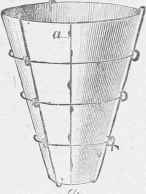
Fig. 1.
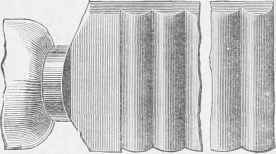
Fig. 2. Making Silver Mounts for Tobacco Pipes.
Continue to:


My Books

