


Photographic Paper That Does Not Require Toning
Description
This section is from the book "Cassell's Cyclopaedia Of Mechanics", by Paul N. Hasluck. Also available from Amazon: Cassell's Cyclopaedia Of Mechanics.
Photographic Paper That Does Not Require Toning
Printing-out paper that would give a rich brown tone with simply washing and fixing and no toning can easily be prepared. The prints may he made on paper, linen, silk, wood, etc. Procure some pure Kives or Saxe paper (Whatman's smooth drawing paper is also suitable) and soak it for about ten minutes in a salting bath made as follows. Beat 180 gr. arrowroot into a cream with a little water, avoiding lumps. Boil looz. water and pour in the cream slowly, stirring the while; boil for five minutes. Dissolve 120 gr. ammonium chloride, 200gr. carbonate of soda, and 60gr. citric acid in 5oz. water, add to the arrowroot solution, and filter through muslin. The arrowroot or sizing serves to prevent the silver salts sinking into the paper, and gives brighter prints. Hang up the paper by the two top corners in a room free from dust. As soon as the paper is dry, cut it into sizes suitable for the sensitising dish, and put a pencil mark on the back of the paper in order to distinguish the sensitive side.
So far the operations may be carried on in full daylight, but the remainder of the work must be done in an orange or yellow light, such as would be safe for handling P.O.P. The paper is next floated face downwards for three minutes on the surface of the sensitising bath, which is composed of silver nitrate 60gr., citric acid 25gr., water loz. With practice it is quite possible to float large sheets of paper, but the beginner should use pieces not larger than 12 in. by 10 iu. See that the solution well covers the dish; if not, level up with the wedges (A B C, Fig. 1). Take the paper by the two opposite corners and lower the near end X on to the surface of the solution, drawing into the near corner. Lower the part Y into position. Lift each side again slowly and, with a clean glass rod, break any air bubbles adhering. The paper may also be coated by pinning flat on a clean board and pouring a pool in the centre and spreading with a Blanchard brush made by binding some swansdown calico around a strip of celluloid, as in Fig. 2. This is convenient when shorts of solution, but unless carefully done an uneven coating is almost sure to result. The sensitised paper is pinned up to dry, which may take place quickly. Print in the usual way, but much deeper than for albumen paper.
An image of a dull violet colour is given, which, when washed and fixed in a 10-per-cent. solution of hypo, becomes a rich red brown. The prints are then washed and finished as usual.
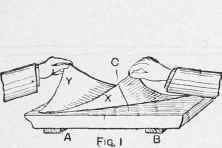

Fig. 2. Preparing Photographic Paper that does not require Toning.
Continue to:


My Books

