


Retaining Wall For Sunk Roadway
Description
This section is from the book "Cassell's Cyclopaedia Of Mechanics", by Paul N. Hasluck. Also available from Amazon: Cassell's Cyclopaedia Of Mechanics.
Retaining Wall For Sunk Roadway
Probably the best form of retaining wall in brick for a sunk roadway 40 ft. wide and about 40 ft. below the level of the land at each side would be a series of relieving arches on piers in four tiers as shown in Figs. 1 and 2. The front is filled in by a screen wall, giving the whole the appearance of a solid wall, although really the length of the archways is such as to prevent the mass of earth resting against it. To compute the length of arch required, Rankine's formula gives a sufficiently approximate result; I = cotan. R (h +x/(1+sin.R)2) ; where I = the length, h the clear height of each tier, x the depth of the crown of an arch below the surface, and R the angle of repose of earth, which may be taken at 45°. Calculating first the lowest tier, cotan. R = cotan. 45°= 1; h = 10ft.; x - 30 ft.; and sin. R = sin. 45° = .7071. 1 = 1 (10 + 30/1.70712) = 20.2ft.
In the second tier, x will equal 20 ft. and i = 16"8 ft. In the third tier, x = 10 ft. and l=.13.4ft. In the top tier, x is zero and l = 10 ft. Fig. 1 gives a vertical section of the wall, and Fig. 2 an elevation with the arches indicated. Retaining walls of such a height as this are exceedingly costly to erect, and unless the land at each side is of great value, the cheapest method of dealing with this case will be to buy a strip of laud at each side of the road and cut away the earth until there is a slope of 1 in l 1/2.

Fig. I.
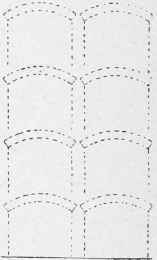
Fig. 2. Retaining Wall for Sunk Roadway.
Continue to:


My Books

