


Chapter I. Introductory
Description
This section is from the book "Alcohol, Its Production, Properties, Chemistry, And Industrial Applications", by Charles Simmonds. Also available from Amazon: Alcohol: Its Production, Properties, Chemistry, And Industrial Applications.
Chapter I. Introductory
"Alcohol." - The word "alcohol" is derived from the Arabic al-koh'l, denoting native antimony sulphide, which substance, in the form of an impalpable powder, has long been used by Eastern women for darkening the eyebrows and eyelashes. This custom is mentioned in Ezekiel (xxiii, 40), and also in the Second Book of Kings (ix, 30).
In course of time the word came to be used for fine powders generically. Thus in alchemical writings we find such expressions as the "alcohol of Mars" (powdered iron), "alcohol of sulphur" (powdered brimstone), and so on. Paracelsus speaks of antimony which has been changed into the alcohol - that is, reduced to fine powder; and in mentioning tartar, the sediment deposited from wine, he remarks: "Alcool, id est tartarus resolutus in minutas partes." Even in comparatively modern pharmacy, " alcohol ferri," or "ferrum alcolwlisatum" still denoted a powder of iron.
Primarily, therefore, "alcohol" indicated a dye or stain in the form of fine powder, and afterwards any fine powder. Exactly how the word came to be applied to the spirit obtained from wine is not very definitely known, though it is easy to understand how the change probably came about. Certain of the finest powders were obtained by the method of sublimation, and the resemblance of this process to the distilling of wine, whereby the finer part of the wine was obtained free from grosser particles, may well have suggested calling the spirit the " alcohol " of wine. In fact, a quotation from Quercetanus given by Schorlemmer1 - " spiritus vini alcoholisatus circulationibus " - indicates that the strengthening of spirits of wine by rectification was also called alcoholisation. As late as 1773, in Baume's " Chymie Experimental," alcohol is defined as meaning primarily "powders of the finest tenuity," and secondarily as " spirits of wine rectified to the utmost degree."?
Another suggestion is that the phrase "vinum alcalisatum" applied to spirit of wine distilled over potassium carbonate, through some confusion came to be written "vinum alcoholisatum," which afterwards b e c a me alcohol vini.1 The expression "vini alcool, vel vinum alcalisatum" occurs in Andreas Libavius's "Alchy-mia," published in 1597. Later, Boyle,2 describing the distillation of spirit from potassium carbonate ("white calx of tartar") and quicklime, says that "the phlegmatic part of the spirit of wine is soaked up by the alcalizate salt, and the inflammable part is freed from it . . . therefore, this alcohol of wine we peculiarly call the alcalizate spirit of wine."
1 "Rise and Development of Organic Chemistry," p. 91.
2 Wootton's "Chronicles of Pharmacy," 1, 327.
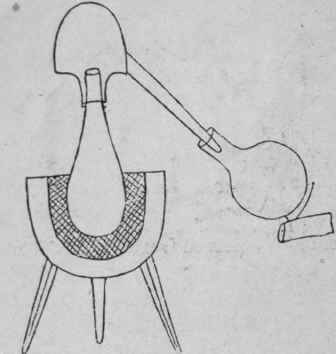
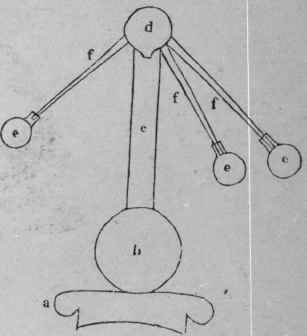
Fig. 1. - FORMS OF distillation apparatus employed by the ALEXANDRIANS.
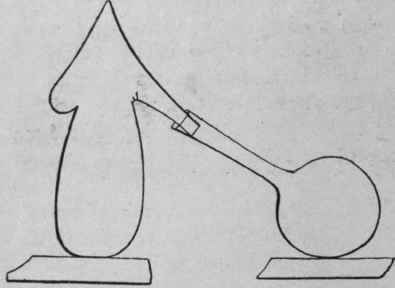
Fig. 2. - alembic and receiver figured by zosimus of alexandria.
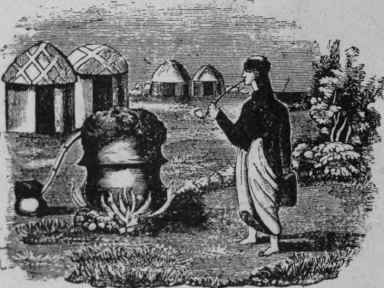
Fig. 3. - ancient still used by Kalmuck TARTARS.
The still is constructed of clay. A tube of cane or wood connects the bead with the receiver. Used for distilling koumiss.
1 Roscoe and Schor-lemmer's "Chemistry," 3, i, 284.
2 Opera, 1, 333.
Continue to:


My Books

