


(D) The Acetone Reaction
Description
This section is from the book "Alcohol, Its Production, Properties, Chemistry, And Industrial Applications", by Charles Simmonds. Also available from Amazon: Alcohol: Its Production, Properties, Chemistry, And Industrial Applications.
(D) The Acetone Reaction
Twenty-five c.c. of normal sodium hydroxide solution are placed in a flask similar to those used in the bromine test (a). To this is added 05 c.c. of the naphtha. The mixture is well shaken, and allowed to stand five to ten minutes. Into it from a burette iV/5-iodine solution is run slowly, drop by drop, the mixture being vigorously shaken all the time till the upper portion of the solution, on standing a minute, becomes quite clear. A few c.c. more of the N/5-iodine solution are added, as to get concordant results an excess of at least 25 per cent. of the x 2 iodine required must be present. After being shaken, the mixture is allowed to stand for ten to fifteen minutes, and then 25 c.c. of
1 Trans. Chem. Soc, 1919, 115, 193.
N/1 -sulphuric acid are added. The excess of iodine is thus liberated, and is titrated with N/10 sodium thiosulphate solution and starch. Half the number of c.c of thiosulphate solution used are deducted from the total number of c.c. of iodine solution added; the difference multiplied by 03876 = grams of acetone per 100 c.c. of the wood naphtha. This includes as ' acetone ' any aldehydes and higher ketones capable of yielding iodoform by this reaction.
If an excessive proportion of acetone is present a smaller quantity of the naphtha is taken, or the naphtha may be diluted to any convenient degree with methyl alcohol free from acetone, and the usual quantity, 0 5 c.c, taken - the result, of course, being corrected accordingly.
This estimation is based upon Lichen's well-known iodoform reaction of acetone, as adapted for volumetric determination by Messinger.1 The reaction may be formulated thus: -
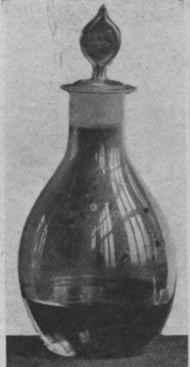
Fig. 36. - flask used for acetone and bromine tests of wood-naphtha.
(CH3)2O + 3I2 + 4NaOH =
CH3COONa + CHI3 + 3H1O + 3NaI.
The method is simple and rapid, and the results are good. They do not give the precise quantity of acetone when the naphtha contains any appreciable quantity of aldehyde or of the higher ketones (methyl ethyl ketone; methyl propyl ketone, etc.), as these are included in terms of acetone. This, however, is of no practical consequence in the case of wood naphtha to be used as a denaturant.
Continue to:


My Books

