


Medical - Health And Hygiene In The Nursery
Description
This section is from "Every Woman's Encyclopaedia". Also available from Amazon: Every Woman's Encyclopaedia.
Medical - Health And Hygiene In The Nursery
The Child's Muscles - Physical Culture is Commonly Neglected Until Children Reach the Schcol Age - The Value of Play - Garden Recreations for Fine Weather - Exercise in the Nursery
Herbert Spencer considered that the first requisite to success in life is to be "a good animal." This is especially true of children. The child who is not a good animal in the physical sense is handicapped in the race of life.
The boy or girl who is provided with good food, fresh air, and sufficient muscular exercise - the three birthrights of the child - starts life fairly.
The food of the child has been already considered; a later article will deal with fresh air and proper breathing. Meanwhile, the important subject of exercise and the development of the muscles in youth deserves careful study. This is an age which is intensely interested in physical culture. Athletics- and games are national affairs, and physical development is part of every school curriculum.
But what of the child before school age? What of physical education in the nursery?

Fig. 1. Standing erect with finger-tips on shoulders
In a sense, the muscles of the young child are gradually educated by Nature without external teaching. The baby who is learning to walk is learning day by day how to co-ordinate his muscles. First, he has to acquire the art of standing. Secondly, with infinite care and many a tumble, the difficult accomplishment of placing one foot before the other alternately must be mastered.
The brain is the guiding centre. The different motor areas of the brain are learning to work together. The business gradually becomes automatic, and the child at last walks without conscious effort or exercise of will.
In the same way the child's muscles are educated by brick-building, by all the games which he regards as play. The mother, therefore, can do a great deal to further the physical education of the child. She can organise his games. She can devote part of his play-hour to educating his muscles. Very few people realise the great good derived from regular training of the muscles.
The cramped mind and the cramped body are the result of neglected muscular training in youth. The child whose mother recognises the necessity for muscular training never suffers from weak back, spinal curvature, round shoulders, or muscular debility. The boy who, physically, is well trained has greater mental ability, self-confidence, and independence.

Fig. 2. The arms held out level with the shoulders
The Value of Play
In the first place, let the mother realise the value of play. Let her remember that the children who play games enthusiastically, who romp and enjoy life noisily, are all the time educating their muscles, developing their lungs, and gaining vitality and health. Teach a child how to run, how to play ball, how to derive the greatest good from such games as lacrosse and rounders.
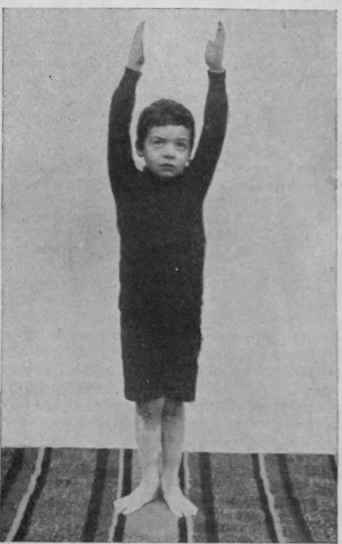
Fig. 3. The arms held perpendicularly above the head
Even in a limited space the child need not be prevented from obtaining regulated physical culture. Such a simple device as hitting a tennis ball against the wall for two or three minutes once or twice a day provides useful exercise for the muscles. This should be done for a short time with the right hand and then with the left hand, because ambidexterity should form part of the aim of physical education. The child's left hand is terribly neglected in most instances, but gradually we are being educated so as to understand the importance of training both hands. Leap-frog is another exercise and game combined which the small boy enjoys immensely.
In summer-time garden games are plentiful, and all sorts of interests can be devised for the children of those who are fortunate enough to possess even a small back garden. Give the little ones an hour of garden work every day, divided into two periods of half an hour each. Teach them to weed, to rake, to pick dead flowers, to pluck the fruit, to water the flowers, and you are making them more useful and more healthy members of the community.
Exercise In The Nursery
In winter a certain amount of exercise must be obtained indoors during the wet and cold weather, and these exercises should be systematically carried out, so that the child may have the muscles gradually developed without the risk of fatigue and strain.
Musical drill is another splendid method of supplying physical culture to children during the dark winter afternoons. Teach them first how to march and keep step with the music. Then let them do the following simple muscular exercises to a musical accompaniment. The child must stand with the heels together, the hands hanging, the body erect, and should rest the tips of the fingers gently on the shouldsrs.
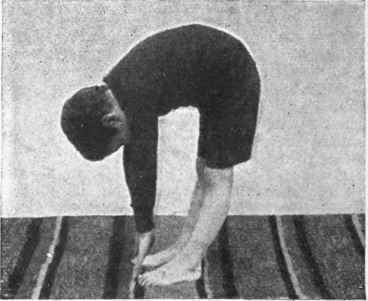
Fig. 4. Bending until the finger-tips touch the toes
1. Throw out the arms until they lie horizontally and level with the shoulders. Bring the tips of the fingers to the shoulders again. Repeat six times. (Figs. 1 and 2.)
2. Stretch the hands perpendicularly above the head, and bring the finger-tips back to the shoulder position. Repeat six times. (Fig. 3.)
3. With the hands above the head, bend the body at.the waist until the finger-tips touch the toes. Repeat six times. (Fig. 4.)
4. Swing the arms at full stretch round the head.
These four exercises develop the muscles of the arms and upper part of the body and spine. In the next article will be described, with photographs, the best exercises for the legs and hips, including barefoot exercises, crouching, trotting - all suitably adapted to the needs of young children.
But it must not be forgotten that games and exercises should be carried out in a well-ventilated nursery, so that the child is having a liberal allowance of fresh air.
Continue to:


My Books

