


Oress
Description
This section is from "Every Woman's Encyclopaedia". Also available from Amazon: Every Woman's Encyclopaedia.
Oress
Cross-stitch
Cross-stitch, as used in dressmaking, is an ornamental method of sewing in the tight band of a bodice, also of marking the centre of the skirt-band.
To work the cross for the latter, place a pin at the centre of the front of the band, thread a needle with twist - to match that used to "fan" the bones of the bodice - make a knot, and from the wrong side bring the needle through near the top of the band, about one-eighth of an inch to the left of the pin. Stick the needle through to the wrong side, near the bottom of the band, and about one-eighth of an inch to the right of the pin; draw it through, and bring it up again to the right side near the bottom of the band, and about one-eighth of an inch to the left of the pin.
Put the needle in near the top of the band, about one-eighth of an inch to the right of the pin, and draw the twist through. This should form a cross on the right side. As this cross should be thick, work the stitches over in the same places about three times. Take out the pin, and work two or three short, straight stitches over the centre of the cross, to secure it in position. To work the cross-stitch to fix the tight band" into a bodice, work the stitch in the same way, but pass the needle each time under the bone, so as to secure the band firmly to the bodice. The "tight band" in the back of the bodice is necessary to draw it well down, so that the back may set smoothly on the wearer.
French Knots
French knots, or, as this stitch is sometimes called, knot-stitch, is frequently used in conjunction with feather-stitching to make it still more ornamental; also in white and coloured embroidery, to form stamens in working daisies, and other flowers, etc. To work the stitch, thread a needle with cotton, twist, or whatever is to be used for working the knots; make a knot at the end, and bring the needle through to the right side of the work; hold the thread in the left hand, an inch or two from the material, and, holding the needle in the right hand, twist it round the thread three or four times - according to the size the knot is to be and the thickness of the thread with which it is being worked - twist the needle over the thread to the left, and under it to the right, still holding the thread firmly in the left hand; stick the needle into the work close to the place where the thread was first drawn through, and hold the twists of thread in their place with the left thumb, whilst drawing the needle and thread through to the wrong side. Pull the thread tight, to secure the knot firmly.
Another method of working the knot-stitch is to draw the needle up from the wrong side, hold the working thread between the thumb and first finger of the left hand, and twist it twice round the needle - over it to the left, under it to the right.
Turn the needle round from left to right, and form a back-stitch by sticking it into the material a few threads beyond where the thread was first drawn through, and up again a few threads in front of it. While holding down the two stitches that are on the needle with the left thumb, draw the needle and thread through gently, ready for the next stitch. Care must be taken not to pucker the material by drawing the thread too tightly between the knots. The knots must all be firm and evenly worked, and when working upon double material the needle should always be slipped between in passing from one stitch to another, so that the wrong side of the work may also look neat.
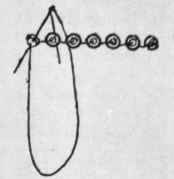
Diagram 2. How to work French knots, a most decorative stitch used in dressmaking
Continue to:


My Books

