


The Arts. III. The Guildhall School Of Music
Description
This section is from "Every Woman's Encyclopaedia". Also available from Amazon: Every Woman's Encyclopaedia.
The Arts. III. The Guildhall School Of Music

The Aims of the School - Musical Instruction for People with Small Means, Little Time to
Spare, and who do not Intend to Take up Music Professionally - How to Join - Terms, Fees,
Scholarships, etc. - Special Attractions, Operatic Performances, Concerts, and so forth
The Guildhall School of Music differs in many important particulars from the Royal College and the Royal Academy. It was established by the Corporation of London in 1880, and is situated near Blackfriars Bridge, on the Embankment. Its object is to enable all desirous of obtaining musical education, whether professional or amateur, to have lessons from professors of the highest ability.
In order to meet the requirements of those whose time is very largely occupied, instruction is given daily from 8.30 a.m. to 8.30 p.m. In this way, the school brings cheap and good musical education within the means of those who work all day. The school year consists of three terms of twelve weeks each, beginning on the fourth Mondays in September and April, and the second Monday in January, but students may join at any time, lessons thus missed being made up, or allowed for.
The intending student should write for the form of entry, which must be rilled up and signed by an alderman or a member of the Common Council. If the student does not know any of these gentlemen, the application form should be sent to the secretary, who will arrange an introduction for the purpose of nomination.
An appointment is then made for an interview between the principal and the student; at this a professor is chosen, and all made ready for the beginning of the lessons. There is no age limit for students.
The school occupies a handsome building in a very accessible part of the Embankment. It is administered by a music committee, the principal (Mr. Landon Ronald), the secretary, and the resident lady superintendent. In connection with the school, the secretary will give students introductions to an hon. consulting surgeon, and an hon. consulting physician. There is also an examination advisory board.
Luncheons and teas, at popular prices, can be obtained on the premises, and there is accommodation for the storing of bicycles free of charge. Among the other advantages of the school is a delightful little theatre, where from time to time well-known operas are produced. in which the orchestra, the singing, the acting, and the dancing alike impress the serious critic with the admirable quality of the training given by the school. A feature of these performances is that, with old-fashioned operas, old-fashioned instruments are used, so that in Purcell's "Dido and Eneas," for instance, produced in March, 1910, a fine harpsichord was brought over specially from Paris, and no instruments were introduced for which Purcell did not write 230 years ago.
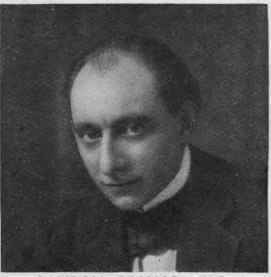
Landon Ronald, Esq
The Principal of the Guildhall School of Music Copyright, Dover Street Studios
At all concerts given by the orchestra or school choir, ladies are required to wear white or cream-coloured dresses. No student who has been less than two terms in the school is allowed to perform.
Lessons missed by the students are lost to them, those missed by the professors will be made up, and all arrangements must be made in the office of the school, and not with the individual professors. In the same way, notice given to the professor is not valid, but must be given half a term ahead to the secretary. Scholarships, Prizes, etc. There are a number of scholarships, founded chiefly by the Corporation of London and the worshipful companies of London, and there are also several medals and prizes, which are competed for annually in June and July by students of the school. The Corporation of London has founded no less than four scholarships. One, of £200 per annum, is divided into separate scholarships of £5 each; another, of £160, is given in two maintenance scholarships of £80 per annum; 150 is divided into five yearly equal scholarships; and, finally, the £100, the fourth donation, is divided into two special scholarships,
The Worshipful Company of Musicians gives five scholarships: one from itself, of £9 9s. a year, for students of composition; two of 23 a year from Mr. Andrew Carnegie, open to all, giving complete musical education; and two of the same value, called the "Ernest S. Palmer Scholarships," one of which is for ex-choristers of St. Paul's Cathedral and Westminster Abbey, and one for girls under eighteen years of age who show the best aptitude for reading at sight.
The other scholarships are: Worshipful Company of Mercers, £52 10s.; Worshipful Company of Merchant Taylors, £40; Worshipful Company of Salters, 21 (divided into two of £10 10s.); Worshipful Company of Saddlers, £21 (four of £5 5s. each); Worshipful Company of Girdlers, 10 I0s.; Worshipful Company of Grocers, £31 I0s. (two of £15 15s. each, for nominees of Grocers' Company); Worshipful Company of Goldsmiths, 10; Worshipful Company of Leathersellers, 10 10s. (two of £5 5s. each); Baron Johann Knoop, 75, for violoncello, an open scholarship, including maintenance; Max Hecht, £10, for British vocalists studying classic song, one year; B. C. Wain-wright Scholarship, £18 18s., for composition, one year; " W. M." Scholarship, £10 10s., orchestral wind instruments; John Brins-mead & Sons, £10, including use of piano, three years; Thomas Wingham Memorial, £6 6s., for composition, one year; the Cobb Scholarship, 20, for male violin student.
In addition to these a gold, a silver, and a bronze medal are awarded annually to those students of the school who obtain the highest mark-totals in the associateship examination on their first examination, except to those entering for the Elocution Diploma. Once in three years the Worshipful Company of Musicians gives a silver medal to the most distinguished student, male or female.
Continue to:


My Books

