


How Fungi Are Dispersed, With Hints For The Cultivator. Continued
Description
This section is from the book "The American Garden Vol. XI", by L. H. Bailey. Also available from Amazon: American Horticultural Society A to Z Encyclopedia of Garden Plants.
How Fungi Are Dispersed, With Hints For The Cultivator. Continued
A recent writer in the Annals of Botany has taken great pains to show that the large stink-horn fungi have their spores carried by insects, and are especially constructed with this object in view. He convinced himself by observation that this was the case in the common species, and then reviewed the various species growing in all parts of the world to show the special adaptation of the group as a whole. He shows that the spores are enclosed and protected until maturity, when the plant rapidly expands, not by growth, but by mechanical means, being released from confinement, reaching a height of several inches in about two hours, and this at a favorable time of day. Thus the plants are not liable to be destroyed by other animals or by accidents before insects visit them. Ninety-six per cent. of the species are bright colored, as compared with twenty-five per cent. of other fungi and seventy-three per cent. of flowers. Three-fourths of the species have the fetid odor.

Fig. 3.

Fig. 4.
While speaking of insects, we should not forget the case of earth-worms bringing up the germs of charbon or anthrax from a buried animal, and thus communicating the disease to cattle eating grass from the spot.
A smoking lamp fills the air of a room with particles of soot which may float as far as an adjoining room, and are large enough to be seen as they slowly settle. Particles which compose a cloud of dust driven by the wind, and even particles of dust about the house, are plainly visible separately when they settle. Having this in mind, we cannot question for a moment the ease with which spores of a puff-ball or of corn smut, too small to be seen separately, may float in the air or be carried long distances by the wind. The same is true of the spores of many other fungi, including some of those which forcibly eject their spores, mushrooms for example. Wheat-rust, whose winter spores remain attached to the straw, produce a kind of secondary spores (Fig. 7) which are adapted to being thus transported. The same is true of the cedar-apples (see March number, p. 137, Fig. 2). For the propagation of some fungi the presence of two different flowering plants may be necessary, as in the case just mentioned, where one stage of growth is on the apple tree, the other on the cedar. There should be no apple-rust where there are no cedar trees. A disease in a given plant may be kept alive from year to year by allied wild plants which harbor the fungus, as grape mildew on Virginia creeper.
The spores of many parasitic species remain for a time, at least, attached to the leaf or stem on which they grow, or imbedded in it, as do the winter spores of the grape mildew. The leaves are blown about by the wind, or perhaps make voyages on a stream of water. Rusted straw is gathered up and transported to another place with the spores of the fungus attached.

Fig. 5.

Fig. 6.
Spores which have the power of moving in water have been mentioned. There are also some fungi, certain smuts, which grow on submerged plants and whose spores must be disseminated by the currents.
It is very common for a fungus to have at least two kinds of spores, one of which cannot survive unfavorable conditions, but must germinate soon after maturity or perish. The other kind, the most highly developed fruit of the fungus, is usually made to resist unfavorable conditions. In wheat-rust, it is a thick-walled spore attached by a permanent stalk. The winter spores of the downy mildew of the grape are imbedded in the leaf and enclosed each in a thick-walled and durable spore-case. Pear-blight bacteria may live over winter in branches that have been cut off and produce the blight in other trees in the spring.
The ergot fungus forms a horn-shaped mass, in which it stores up a good quantity of food for itself. It falls to the ground in autumn and lies till spring, when growth is renewed and highly developed spores are formed, which at maturity are shot forth like arrows. Some are thrown upon the growing rye and other grass, where they renew their cycle of growth. In regard to the smuts of the cereals, there have lately been startling discoveries made by the German investigator, Brefeld. He found that smut spores (of corn, Fig. 9) placed in a nutrient solution, instead of producing tubes in the usual way of germinating, grew by budding after the manner of yeast (Fig. 10). The dung of animals that have eaten smutty corn has been found to contain similar bodies,and it is known that this mode of growth may continue indefinitely. If smutty corn is thrown into a manure pile, a similar result may be expected. In either case the fertilizer is infected. Then the farmer scatters it over the field and corn is planted.
As soon as the corn comes up the smut seizes upon it, enters and goes through its tissues in the usual way, and the result is a sooty mass of spores and damaged corn.
Different fungi get into their host plants in special ways. The" way corn-smut gets into its host was discovered only after years of trial. It enters only at the tenderest part of the very young stem when the corn is coming up. When the growth of the corn is fairly under way, no smut can infect it. The germinating secondary spore of wheat-rust gets into the barberry bush by making a hole in the epidermis, through which it passes (Fig. 8). Molds sometimes get into canned fruit and into the culture-tubes of the bacteriologist, where even bacteria cannot get in, because the molds form long slender tubes or threads which penetrate through crevices, while bacteria would lodge and go no further.
Fig. 7.

Fig. 8.
In some fungi, several of the above modes of dissemination occur, notably in potato-rot. grape-mildew and their allies. Figure 4 represents one of the fruiting filaments of the potato-rot fungus, with spores on the tips of the branches. During a dry afternoon these threads become dried up and twisted, somewhat like a microscopic shred of cotton. A very little moisture is sufficient to be absorbed and render them turgescent again, and in absorbing the water they quickly untwist, and the movement throws off the spores in all directions. There is no reason to doubt that they float easily in the atmosphere and may be carried a considerable distance, especially if the air is laden with dew or fog. The latter conditions are especially favorable to germination, for the spores germinate in water in this way : the protoplasm inside the spore divides up into several portions, each of which becomes a motile spore (Fig. 5). They all pass out through a small opening in the tip of the spore, and by means of their two cilia move about rapidly in a drop of water (Fig. 5). At length they come to rest and germinate by sending out a tube, which penetrates through a stomate into the interior of the potato leaf. Figure 6 represents a resting spore of an allied species, in several stages of germination.
It is protected by a thick-walled spore-case, which enables it to survive the winter, and at the proper time it germinates in the same manner as the summer spores just described.
Conclusions
Burn fallen leaves of diseased plants and branches cut from blighted pear trees.
Do not allow moldy or spoiled food to stand about the house, scattering spores. Keep free from molds and germs of all sorts, or get rid of them at their first appearance.
Cut out your corn-smut before the sooty mass is exposed to air.
Do not feed smutted grain or fodder to cattle, nor throw it into manure heaps, nor put manure containing smut spores on grain fields.
Practice rotation to avoid infection from fungi in the soil, in the fertilizer or on stubble, leaves, etc.
Fungicides are best applied on a dry day, when the only water that touches the spores is the poisoned water.
Harvard University. A. B. Seymour.
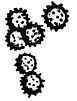
Fig. 9.

Fig. 10.
Continue to:


My Books

