


The Curculio (7). Part 3
Description
This section is from "The Horticulturist, And Journal Of Rural Art And Rural Taste", by P. Barry, A. J. Downing, J. Jay Smith, Peter B. Mead, F. W. Woodward, Henry T. Williams. Also available from Amazon: Horticulturist and Journal of Rural Art and Rural Taste.
The Curculio (7). Part 3
One Summer in my experience I escaped the curculio. I found here and there a few at first, but not one in a hundred of ordinary seasons, and I had a crop of fruit without trouble, and that was to me a new sensation - as if you, Mr. Editor, should experience one season's exemption from mosquitoes.
In my efforts to trace this strange circumstance to its cause, I remembered that the year before there had been no rain in that immediate neighborhood. We had been often threatened with showers, but they had always failed us, and the ground had become as dry and parched as the Libyan deserts. Since then I have gone through a series of experiments, and have found that the curculio will not live through its period of transformation in earth that is kept dry. The drought of the preceding season was undoubtedly the cause of my exemption from the pest that year. Had I used some of the curculio remedies so much in vogue, they might have had the credit. And all the credit they all have is due to some such adventitious circumstance. Not one of them has the least practical value. I saw a paragraph some time ago giving an account of the plan of Ellwanger & Barry, in the management of the curculio, and it is exactly the same as that I have always used, and which I believe was first described by the late Mr. David Thomas of Western New York.
It is a very simple operation, as seen by the cut - made of common muslin. White is better than unbleached; the curculio being dark, shows to more advantage. For small trees, one of five or six feet square, made of two breadths, answers a good purpose, and one person can manage it. For such trees the palm of the hand is sufficient to give the requisite jar; but for larger trees, a sheet 10 or 12 feet square will be necessary, and it will require two to manage it. Such trees, too, will require the blows of a mallet to jar them, but you must not strike the tree directly with the mallet, or you make a serious wound. Saw off a stout branch, leaving a stump one or two inches long, and if you will pare off the edges of this stump so as to present a convex surface, it will bear the blows of the mallet longer, and by careful management you make it last the whole season.
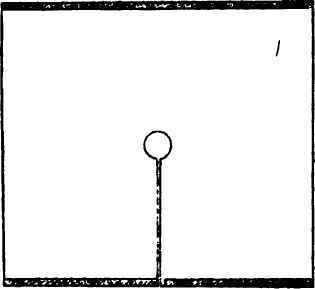
The beginner in the pursuit of the curculio will often overlook them, as they lay on the sheet. The little fellow folds himself up so closely and is so quiet, as to be mistaken for the dried buds, that are falling from the trees at this time; but in a few days the eyes become experienced, and the instinct that teaches them to escape observation as long as they are quiet, ceases to avail them in such a trap as this.
The next thing is the crushing process between the thumb and finger. Like other beetles, the curculio is hard and crisp, and requires some force to mash it - more than a fly - less than a flea! Some people have a conscience about the killing of insects - I have. I would not kill a spider nor an humble bee; neither of them would do me any harm if let alone, and I know they do a great deal of good.
The fruits are not only luxuries, but the necessaries of life; the curculio would appropriate them all without any hesitation if she wanted them. Man was created with dominion, and I think in this case is justified in pronouncing against them; and whenever I get a curculio fairly between my thumb and finger, I carry out this decision.
Much has been written about the curculio in this country, but most of it very crude. I have met with some of those writers that have confessed never to have seen one. Had this insect existed in Europe it would, from its great importance, have been thoroughly investigated by entomologists; but here we have had but few to devote their lives to this science, and our indigenous insects are but little known. My own investigations until recently were confined entirely to the means of preventing its ravages upon fruit; lately I have paid more attention to its habits of life - have not only summered, but wintered with it.
The larva (or worm we find in the fruit) when full grown eats its way through the skin, and immediately penetrates the ground. If the earth is sandy or loose, it will sometimes go to the depth of eight inches, and seldom less than three or four; there it prepares for itself a kind of cell, something similar to the cell of the mud wasp, and this is its cocoon - here it undergoes its metamorphosis. In a few weeks the white maggot without wings or legs will be a black beetle, ready either to run or fly. If you have them in confinement you may feed them with leaves or any of the fruits, and you may see that they eat, though very sparingly. You will generally find them perfectly quiet, but touch them, and instantly they are full of life; this will be the case all winter, if you keep them in a warm situation, but out of doors in our climate they are perfectly dormant. Where the vast army of curculios pass the winter it is hard to say positively, but I have found them in the crevises of the rough bark of trees, in walls, and even under the shingles on the roofs of buildings.
I have often supplied the young curculio with fruits, but have never known them puncture them, or make the crescent mark; hence I infer, that the opinion of some that we have two generations the same year, is a mistake.
Those who cultivate the apricot know that it blossoms several days before the other fruit trees, and the young fruit grows very rapidly from the start, but I have never seen this fruit so early but what the curculio was ready to pounce upon it as soon as it was large enough to bear the puncture; consequently, the curculio is ready to deposit eggs many days before any of the fruits except the apricot are large enough for her, and during this period of waiting I have seen her, or some other beetle so near like her that my experienced eye could detect no difference, making the crescent mark on the bark of the twigs of the plum tree themselves, and that led to the subsequent investigations that proved to my satisfaction that the curculio causes the black knot also.
In some places but little inconvenience is suffered from the Curculio. Where I have had the opportunity of investigating, I have found the soil a stiff clay, and conclude that the larva was not able to penetrate deep enough to be secure either from drought or some other contingency during its period of transformation.
Some people plant plum-trees over water; some pave the ground under them, and say that by these means they secure crops. If so, it can only be explained by insect instinct, which in this case teaches the parent that her little ones will not be safe in falling in such places, and she therefore chooses other trees. My own understanding is so at fault in all attempts to comprehend the wonders of the instinct of insects, that I will not dispute this proposition, and to prevent others from sneering.at what may seem so absurd, I will relate an instance of the instinct of another beetle still more wonderful.
The cockchaffer is a favorite food of rooks and crows; now, if the chaffer sees one of these enemies approaching, and has not time to escape, instead of simulating death, as the Curculio does, by drawing up her limbs and trunk, and seeming like a little round bug, he will sprawl his legs out at full length, and look for all the world just as a dead chaffer ought to, knowing, from instinct, that rooks will not eat bugs unless they kill them themselves. After that, let man stop all his nonsense, of boasting of the superiority of human reason. But the Horticulturist is not big enough, and I must stop.
In visiting the New York markets, I see fruits from almost every part of our country. The apricots, peaches, plums, and early apples from Georgia, the Caro-linas, and Virginia, have been marked by the Curculio. Later in the season, when the same fruits come down from the north, the same unmistakable mark is visible. Every year a large portion of the apples are what the country people call gnarly - have been tampered with by the Curoulio; many of them stung in several places, and so misshapen in consequence, that but a mere section of the apple will have a natural appearance. Our whole fruit crops seem, in some near future, to be'at the mercy of this little insignificant insect, so small that it takes near 25,000* of them to weigh a single pound. And the question arises, What can be done?
My mode of managing, if properly carried out, will be successful, but it is very laborious, and but few will persevere.
If you have large orchards of apricots and plums, when the soil and climate suit these fruits, the prices they will bring you will justify the expense of protecting them from the Curculio. If you cultivate cherries and apples, the jarring process is impracticable where the trees are of any size; in this case, be sure to have your stock under the trees as much as possible when the stung fruits are falling.
If any of my readers choose to try the various nostrums so highly commended by their inventors, all I ask is that they shall report fairly - don't jump at conclusions that may mislead others. And let every one remember, that Ellwanger and Barry have men employed throughout the Curculio season, in protecting their fruit by this jarring process - that they do protect it by this process - and not depend upon any thing else.
[The doctor's article is so long as to preclude remarks for the present. - Ed].
Continue to:


My Books

