


Immediate Massage In Sprains, Wrenches, And Bruises
Description
This section is from the book "Lectures On The Use Of Massage", by William H. Bennett. Also available from Amazon: Lectures On The Use Of Massage.
Immediate Massage In Sprains, Wrenches, And Bruises
As is the case with dislocations, the objects to be attained in the treatment of sprains, wrenches, and bruises are the restoration to the normal state by the rapid removal of effused products, the prevention of adhesions, and the avoidance of muscle-waste. Any treatment which fails to obtain these ends is defective. Further, it is, I am sure, undeniable that the only plan of treatment which will attain the desired end with certainty and in a reasonable time is that of immediate massage and very early passive movement - a plan which is, if intelligently used, applicable universally, with the exception, perhaps, of a few special cases.
First, with regard to sprains. For our present purpose by a sprain is meant an injury to a joint, a muscle, or other soft part by a wrench, a bend, or a twist. There is always some laceration of the tissues, but there may be no open wound. In the case of a joint the injury always involves some tearing of the fibres of the capsule, synovial apparatus, or cartilage. There is pain of variable degrees, and there may or may not be effusion into the joint. Generally, if the sprain is of any severity there is effusion into the joint; if the effusion follows immediately upon the injury it is blood; if it follows a day or two subsequently it is due to synovitis. I must again crave indulgence for emphasising such elementary points. The occurrence of this laceration in cases of sprain - which means, of course, a subcutaneous wound - led to the faulty practice of former times, which is even now, I fear, far too prevalent, of placing parts so injured for a long period in splints : the best possible method for facilitating the formation of adhesions and the perpetuation of muscle-waste, the main object of this mistaken treatment being to allow of the rapid healing of the wounded tissues - a point of comparatively small importance.
In order to make clear the plan of treatment which I use, and which I strongly advise you to adopt in these injuries, let us take the case of a man who has sprained his knee. At the time of his coming under observation - say, a few hours after the injury - the joint is painful, swollen from effusion (probably for the most part blood), and any attempt at movement of the joint is resisted. The first indication is the removal of the effusion. With this object the patient is, if possible, sent to bed and the limb is placed upon a light back-splint - a ham-splint being the most convenient - applied so that free access is left to the joint. Gentle smooth massage over the swollen joint is commenced at once. In very severe cases this is sometimes resented at first by the patient, whose resentment, however, soon subsides when he realises the soothing effect which the gentle rubbing produces. In the intervals of the rubbing fomentations of lead and opium may be laid upon the joint; the opium soothes somewhat, and the lead hardens the skin a little, which is useful in the subsequent management. From the first gentle passive movement of the patella is used, for the reasons which I have already sufficiently indicated. As soon as the effusion has distinctly commenced to subside, as is shown by the decrease in the tension of the joint, gentle passive movement (flexion and extension) is commenced, and if upon the commencement of the passive movement no increase of effusion occurs, the splint is put aside altogether. When the patient comes under treatment immediately after the injury the splint can generally be dispensed with on the third day. With the discarding of the splint gentle massage of the thigh and leg is added to the rubbing of the joint itself, the passive movement and the massage becoming more and more thorough as the effusion subsides. A compress of the kind mentioned may be used in the intervals if it is comfortable to the patient. Treated in this simple way there are few cases of severe sprain of the knee in which the patient may not be getting about comfortably in a fortnight, at the end of which time another fortnight of methodical exercises, either in a gymnasium or by means of a 'home' exerciser, will generally complete the cure. I have taken as an example a severe case requiring confinement to bed. The treatment of the milder forms is modified to the necessities of the case, the great points to be borne in mind being the necessity for avoidance of the use of splints after the effusion has commenced to subside, the immediate use of massage to the joint, and early passive movement. In all cases the early movement should be passive - the habit of sending the milder forms of sprains at once to the gymnasium is to be avoided. In no case of sprain should a cure be considered to have been obtained if any sign of wasting of muscle beyond that which comes from mere disuse remains. The longer the time which intervenes between the receipt of the injury and the commencement of the rational treatment the greater is the difficulty in rectifying the muscle-waste with its necessarily concurrent weakness, and in cases in which the parts have been long confined in splints a cure in the true sense is sometimes impossible.
The following points in the carrying out of passive movement in cases of sprain are of some moment. The first movement used should be those of the simplest kind; for example, flexion and extension in the hip or knee, antero-posterior movement in the shoulder; abduction and adduction should then follow, and finally rotation and circumduction in joints permitting of that movement. This sequence, however, is always interrupted for the following reason, which is of paramount importance: the last movement to be practised should be that which, so far as can be ascertained, was concerned in the production of the injury. Let me make myself clear. Suppose for a moment that a severe sprain of the shoulder has been caused by a fall on the hand or elbow, the arm having been at the time widely abducted from the side; the damage will be probably about the inner aspect of the capsule or under the acromion. In such a case passive abduction should be the last movement practised, as it would be the movement most likely to irritate the part immediately lacerated or bruised. Although it should be the last movement to be commenced it should not, however, be long deferred, seven days being probably the limit of time which can with safety be spared before its commencement.
Again, in the sprain occurring in internal derangement of the knee-joint the injury is almost always caused by either internal or external rotation. In such a case, therefore, the last movement to be practised is rotation. Indeed, it is, speaking generally, better to avoid rotation altogether in that particular class of case.
In sprains complicated by external wound it is clear that the plan which I have been advocating cannot immediately be adopted in its entirety, nor can massage be comfortably practised directly over the damaged part when the skin is abraded or raw; but in such circumstances massage of neighbouring muscles and passive movement should always be practised, the peculiarities of each case dictating the modifications which are necessary in the application of the treatment.
I had intended giving some details of the treatment of simple bruises by the same plan of massage and movement, but the allotted time has been more than spent. All, therefore, that I can say is that in these cases the method of its application and the objects are the same as those already mentioned - viz. the rapid removal of effusion and the prevention of matting of the injured parts.
In conclusion allow me to say that I have no desire that the treatment which I have been now advocating should be used to the exclusion of all others. My main object is to urge upon you the desirability of shaking off to some extent the incubus of the traditional routine treatment of fractures and the other kinds of injury of which I have been speaking by prolonged splinting, strapping, counter-irritants, and so forth, and, unless unavoidable circumstances prevent, to substitute a line of treatment which is, I am sure, rational, and will in the end be found by anyone who will take the trouble to acquire a personal experience of it, to produce in a general way results far superior to those obtainable by other plans.
The Ambulatory Treatment of Fractures.
This may be regarded as a modification of the method of treatment by massage and early movements; it is, therefore, conveniently referred to here.
The main principle of the treatment is the application of some form of instrument or immobilisation apparatus by which the fragments are retained in position in such a way that the upright position may be assumed during the healing of the break, the patient being allowed very early in the course of the treatment to bear weight upon the limb. It is a method which has not made any great progress in this country, partly, I fancy, because of the expense entailed in sometimes obtaining the adequate apparatus, although the main object is partly attained by those who adopt the immediate use of plaster of
Paris and other similar means of immobilisation in fracture of the legs, a region to which this mode of treatment must be for the most part limited in consequence of the difficulty of obtaining an efficient apparatus or arrangement in cases of fracture of the hip and thigh.
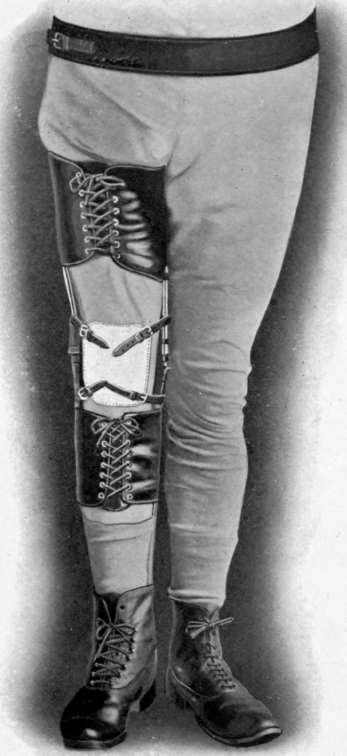
Plate V. Ernst's Instrument for Ambulatory treatment in slow or delayed union in fracture of the thigh.
Although such arrangements may be obtainable in specially favourable circumstances, it is obvious that for the ordinary practitioner the method can hardly come within the limits of practical work, at all events so far as recent fractures are concerned.
In delayed or soft union, however, the matter is different; in such cases there is, in my experience, no more efficient plan, short of operation, of bringing about a proper union than fitting the limb with a skilfully made apparatus which, whilst it prevents undue pressure between the fragments and bending of the parts at the seat of fracture, allows a patient to walk about with or without the aid of a stick or crutch. Plate V shows an efficient apparatus adapted to a case of delayed union in a fractured femur, and Mr. Ernst has contrived for me an admirable high boot containing concealed steel supports with a joint at the ankle which has given truly excellent results in similar conditions of the leg. It is moreover the best means with which I am acquainted of getting a patient rapidly on his legs after an ordinarv fracture of the tibia or fibula.
Continue to:


My Books

