


4. Anthrax (Mycosis Of The Intestine)
Description
This section is from the book "A Manual Of Pathology", by Joseph Coats, Lewis K. Sutherland. Also available from Amazon: A Manual Of Pathology.
4. Anthrax (Mycosis Of The Intestine)
The wall of the intestine is sometimes attacked by the anthrax bacillus. Several cases described as mycosis intestinalis belong to this group, although the name has also been used for other affections, such as septic inflammations and actinomycosis. The intestine may be the place of entrance of the bacilli. and the lesion will then be the primary one. On the other hand, the intestinal lesion may simply be part of the general infection, and concurrent with affections of other organs.
The lesion presents itself in patches situated most frequently in the small intestine, but also in the stomach and colon. . The patches are oedematous and infiltrated with blood, and there is generally a considerable dark slough on the prominences of the folds. The characteristic bacilli are found in the cedematous fluid and in the blood-vessels and lymphatics. The lymphatic glands are swollen, and infiltrated with blood. The bacilli are sometimes present in them in very large numbers.
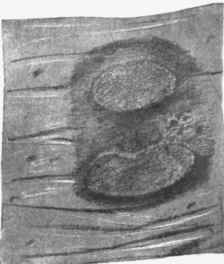
Fig. 399. - Cicatrices on a Peyer's patch from typhoid fever.
Cases of this kind have mostly occurred amongst workmen who have handled the hides of animals affected with anthrax. Probably the bacilli are allowed to contaminate the food, and so reach the intestine.
Continue to:


My Books

