


Nat. Order. Asclepiadeae. Hemidesmus Indicus, R. Br. Sans
Description
This section is from the book "The Materia Medica Of The Hindus", by Udoy Chand Dutt. Also available from Amazon: The Materia Medica Of The Hindus.
Nat. Order. Asclepiadeae. Hemidesmus Indicus, R. Br. Sans

Anantamula,

Sάrivά.
Vern, Anantamul, Beng. Hind.
In Sanskrit Medicine, Hemidesmus Indicus and Ichnocarpus frutescens are both called sάrivά and are described nnder the name of sarivadvaya or the two sarivas. They are often used together. When however sariva is used in the singular number it is the usual practice to interpret it as syamalatά (Ichnocarpus frutes-cens). The roots of these plants are said to be sweet, demulcent, alterative and useful in loss of appetite, disinclination for food, fever, skin diseases, syphilis and leucorrhoea. They are generally used in combination with a number of other medicines. The following are a few illustrations. Take of anantamula, root of Pavonia odorata (bάlά), tubors of Cyperus rotundus (mustaka), ginger, and the root of Picrorrhiza kurroa (katuki), equal parts, in all two tolas, and reduce them to a paste with water. This dose administered with warm water in the morning, is said to clear the bowels and relieve fever.1
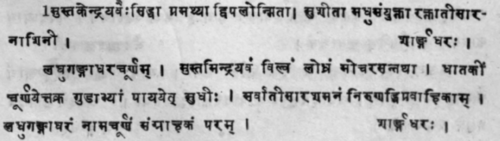
A decoction of the roots of colocynth, anantamula, sariva and Hedyotis biflora (parparta), prepared in the usual way, is administered with the addition of powdered long pepper and bdellium in chronic skin diseases, syphilis, elephantiasis, loss of sensation and hemiplegia.2
Continue to:


My Books

