


Cassia. Continued
Description
This section is from the book "The London Dispensatory", by Anthony Todd Thomson. Also available from Amazon: PDR: Physicians Desk Reference.
Cassia. Continued
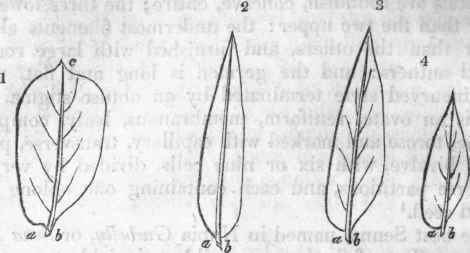
The best Senna, named in Nubia Guebelly, or Sena Mekke, in Egypt Sena of Seyde, grows wild, and yields two crops of leaves, the abundance of which depends on the periodical rains. The first crop is collected after the first rains, about the middle of September; the second, in the following March, at which time the fruit is at its full maturity. The plants are cut when the flowers begin to fall, and exposed on the rocks to dry in the sun. This class is the product of Cassia acuti-folia : it grows chiefly in a valley called Bicharie, near Syene, in Abyssinia. The second class is the product of the Cassia obovata: it is found chiefly in Upper Egypt, and is less purgative than the former. The leaves are picked, packed up in bales, and sent to Boullac, the great entrepot of Senna 2, where they are mixed with two other species of Cassia; one the C. lanceolata of Forskal; the other probably the C. angusti-folia of Willdenow, the leaves of which are longer, narrower, and sharper pointed than those even of the C. acutifolia, and come from Mocha; but the leaf with which Senna is adulterated is that of the Cynanchum oleafolium, known in Egypt by the name of Argel or Arguel. The proportions, according to Dr. Calloden, are five hundred parts of lance-leafed Senna, three hundred of obovate Senna, and two hundred of Argel. The two first admixtures are nearly equally good as the other Senna, but the last is truly an adulteration.
It can be readily distinguished by attending to the following rules:
1. The leaf of argel (2) is an inch or fourteen lines long, while that of Senna acutifolia and Senna obovata (1.4.) never exceeds nine lines. 2. The leaf of argel has a straight side; and the lateral nerves are not seen on the under disk, while those of Senna are conspicuous. 3. The leaf of argel is regular at its base (a, b), the two sides terminating at the same point on the petiole; but the Senna leaflets are oblique, one of the sides being larger, and produced lower on the petiole, than the other (a, b, 1. 3, 4).1 There is also reason for thinking that it is further adulterated with the leaves of Colutea arborescens, bladder Senna, those of Coriaria myrii-folia, and of box: but these are easily distinguished from Senna leaves. The Senna, after being thus mixed, is repacked in bales, at Alexandria, whence it is exported to Europe.2 A good deal of Senna has been imported from Calcutta under the name of East Indian Senna. It is evidently the Cassia lanceo-lata (3)3: it was formerly taken to India from the Persian Gulf, and was the growth of Mekka; but much of it is now cultivated at Tinnivelly, on the Malabar coast.
It is called Senna Mekki and Tinnivelly Senna, in the Indian bazaars.
1 Gartner de Fruct. ii. 312. t. 146.
2 Burckhardt says that the Bedouin Arabs, who are the chief collectors of senna, sell it to the merchants of Esne at about one pound sterling per camel load (from 400 to 500 weight)-Travels in Nubia, 4to. p. 31.
Qualities. - The odour of Senna leaves is faint, rather disagreeable, and sickly; the taste slightly bitter, aromatic, sweetish, and nauseous. Boiling water extracts about one third of the weight of the leaves employed, but it requires a pint of boiling water to extract all the active matter from j. of Senna leaves. The infusion has a deep reddish brown colour, with the odour and taste of the leaves. This infusion, when exposed to the atmosphere, deposits a lemon-yellow coloured, insoluble matter: and a precipitate is produced by the strong mineral acids, oxalic acid, the carbonates of the alkalies, lime-water, subacetate and acetate of lead, nitrate of silver, sulphates of iron, muriate of baryta, and several other substances. (See Infusum Sennas among the preparations.) Alcohol and sulphuric ether, digested on the powdered leaves, acquire a deep olive-green colour. When the ethereal tincture is poured on the surface of pure water, a dark olive pellicle remains after the evaporation of the ether, which is almost insipid, and has all the properties of resin; and a golden-yellow colour is communicated to the water.1 The alcoholic tincture is rendered only slightly milky by the addition of water, and scarcely any precipitate is produced; but a copious one is thrown down by chlorine.
The active principle of Senna, according to the experiments of MM. Las-saigne and Fenuelle, is a saline substance which they have named cathartin (cathartia). It is uncrystallizable, and as usually obtained, of a reddish yellow colour, deliquescent, with a peculiar odour, and bitter nauseous taste. It is soluble in alcohol and in water, but insoluble in ether.2 Its watery solution is precipitated by infusion of galls, and the subacetate of lead; but not by the acetate of lead, tartar emetic, gelatin, iodine, nor the alkalies, although the latter deepen its colour. According to Bouillon Lagrange, the residue of the watery infusion, evaporated to dryness and burnt, yields potassa, sulphate of potassa, carbonate of lime, magnesia, and silica.
1 Hist. Nat. et Med. des Casses, etc. Par L. T. Fred. Calloden de Geneve, M.D. 4to. Planches, Montpelier, 1816.
2 Nectoux says, that the palthier, or senna manager of Alexandria, acknowledged that the product of the two crops varies from 700 quintals to 1100 or more, one third of which is argel, and the sale is 1400 or 1500 quintals (more probably from 1500 to 1600)-----Phil Mag. i. c. Burckhardt says, that for many years, the senna trade has been exclusively in one hand, being farmed by Mohamed Aly; add that "M. Rosetti has paid for the monopoly of senna 150 purses per annum, or about 3500l."- Travels in Nubia, 4to. 1819. p. 53.
3 The Cassia Marilandica, a native of the United States of America, is a variety of C. lanceolata.
Medical properties and uses.-Senna is purgative, generally operating under four hours after it is taken; and is well adapted for all cases in which the bowels require to be certainly, yet moderately, evacuated. In many habits it is apt to occasion griping, and therefore requires the addition of some aromatic, as carraway or cardamom seeds, or ginger; and its operation to be assisted by drinking plentifully of weak broths or gruel. The griping seems to be occasioned by the resinous matter, as the infusion made with cold water does not gripe, although it purges. Its purgative powers are augmented by camphor, bitters, and decoction of guaiacum. Senna may be given in substance powdered; but the more usual form is that of Infusion. Decoction is a bad form, as the activity of the medicine is much impaired by the boiling: owing, according to Gren, to the total dissipation of the nauseous and volatile principles; but, in our opinion, it is owing to the oxidizement of the extractive, which also accounts for the severe gripings induced by the decoction.
The dose of the powder of the leaves is from Эj. to 3j. but it is seldom given alone.
1 This colour may be produced by some extractive being taken up by the ether, closely united to the resin.
2 Annales de Chym. et Phys. xvi. 20. Cathartin is obtained by precipitating a filtered decoction of senna by acetate of lead; and passing through the decanted fluid sulphureted hydrogen gas. The fluid is next evaporated to dryness, the extract digested in alcohol, and the alcoholic solution evaporated to dryness. This result is to be digested in alcohol acidulated with sulphuric acid, the effect of which is to throw down an insoluble sulphate of potassa, which must be separated by the filter. Any excess of sulphuric acid in the fluid must be precipitated by acetate of lead, after which sulphureted hydrogen is to be passed through the fluid, and this, being filtered and evaporated to dryness, is the cathartin.
Officinal preparations.- Confectio Sennce, L. E. Electuarium
Senna, D. Extractum Cassia Senna, E. Infusum Sennce compositum, L. D. Infusum Tamarindi cum Senna, E. D. Tinctura
Sennae, E. D. Tinctura Sennae composita, L. E. D. Syrupus Senna, L.
Continue to:


My Books

