


Salix
Description
This section is from the book "The London Dispensatory", by Anthony Todd Thomson. Also available from Amazon: PDR: Physicians Desk Reference.
Salix
Spec. Plant Willd. iv. 703. Cl. 22. Ord. 2. Dicecia Diandria. Nat. ord. Salicineae. G. 1756. Male. Amentum cylindrical. Calyx a scale. Corolla none. Gland of the base nectariferous. ------------Female. Amentum cylindrical. Calyx a scale. Corolla none. Style bifid. Capsule one-celled, two-valved. Seeds downy.
* With smooth serrated leaves.
Species 10. S. fragilis. Crack Willow. Smith, Flora Brit. 1051. Med. Bot. Sd edit. 13. t. 8. Hoffman, Sal. ii. 9. t. 31.
* * * With villose leaves.
Species 33. S. alba. White Willow. Smithy Flora Brit. 1071.
Hoffman, Sal. i. 41. t.7, 8. Species 101. S. caprea. Great Round-leaved Sallow. Smith,
Flora Brit. 1067. Hoffman, Sal. i. 25. t. 3.f. 1
1. Salix fragilis. Officinal.------cortex, Dub. Bark of the Crack Willow.
Syn. Ecorce de Saule (F.), Weidenrinde ( G.), Corteccia di Salcio (I.), Cor-teza de sauce ( S.).
This species of willow is indigenous, growing upon the banks of rivers, and flowering in April and May. It grows to a considerable height, sending off upright branches; which are covered with an even brownish yellow bark, and are very fragile at the base. The leaves are petiolate, from three to five inches in length, lanceolate, pointed, obtusely serrated, inflected, and glandular; smooth on both surfaces, shining on the upper; and, in the younger ones, ciliated at the apex. There are sometimes no stipules; but, when present, they are rounded and obscurely toothed. The male catkin is pale, cylindrical, rather lax, with ovate downy scales. The nectary is composed of two yellow glandular scales; the larger between the stamen and the receptacle, and the smaller between the stamen and the scale. The stamens are two, filiform, and smooth. The female catkin resembles the male; with the germen egg-shaped, supporting two bifid erect stigmas. The capsule is ovate, and contains many small seeds. The bark requires to be dried in an oven moderately heated.
1 Journal de Pharmacie.-Mars, 1837. p. 115.
Qualities.-The dried bark is inodorous, bitter, and austere.
2. Salix alba.1
Officinal.------cortex, Dub. Willow Bark.
Syn. Saule (F.), Weide (G.), Wilg (Dutch), Piil (Van.), Pihl (Swed.), Koro Wierzbowa (Pol.), Salice (I.), Sauce (S). Salgueiro (Port.).
The white willow is indigenous, growing in woods and moist places, and flowering in April and May. It is a large tree, with a cracked bark, and furnished with many round spreading branches; the younger of which are silky. The leaves are alternate, on short petioles, lanceolate, pointed, acutely and regularly serrated, with the lower serratures remote and glandular; pubescent on both sides, and silky beneath: the younger ones are altogether silvery and convoluted. There are no stipules. The catkins are terminal, cylindrical, elongated, slender, and many-flowered, with elliptical, lanceolate, brown, pubescent scales. The stamens are yellow, and a little longer than the scales: the style is short; and the stigmas bipartite and thick. The capsules are nearly sessile, ovate, brownish, and smooth.
The bark of this species-is easily separated all the summer. It has been used for tanning leather; and the inner part of it affords the miserable inhabitants of Kamschatka a substitute for bread.
Qualities.-The same as those of the former species.
3. Salix caprea.2 Officinal.------cortex, Dub. Willow Bark.
This species of willow is indigenous, very common in woods, flowering in April. It is a middling-sized tree, with the branches round, even, shining, and brownish, and the shoots pubescent. The leaves are alternate, petiolate, and varying in shape, being sometimes elliptical or roundish, pointed, large, undulated, waved, or serrated; smooth and dark green on the upper surface, and densely tomentose and veined on the under. The stipules are crescent-shaped or roundish, recurved, waved, and tomentose. The petioles are linear, and densely villose. The catkins appear before the leaves, are ovate, thick, many-flowered, with obovate, very hairy scales. The stamens are yellow: the stigmas nearly sessile, undivided, but at last occasionally cleft. The capsules are pedicelled, ovate, bellied at the base, and downy.
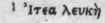
Theophrasti.
2 Siler Virgilii.
Qualities.-The bark of this species, like that of the two former, is inodorous, bitterish, and astringent.
The bark of the white willow only has been chymically examined; but as the other two species agree with it in their sensible qualities, it is probable that they agree also in other respects. Water extracts its virtues, and affords a decoction of a reddish colour, which is precipitated by a solution of isinglass, the carbonates of potassa and of ammonia, and by lime-water, which throws down a precipitate, at first blue, and afterwards buff-coloured: sulphate of iron also produces a dark green precipitate. The watery extract is reddish, brittle, has a bitter taste, and does not deliquesce. Digested in alcohol, this bark affords a greenish yellow tincture, which water renders turbid. When evaporated the extract is of a bright yellow colour, bitter, softens at a moderate heat, and emits an aromatic odour.1 The constituents of white willow bark, and probably of the two other species also, are tannin, bitter resin, extractive, gluten, and salicina.
Salicina, when pure, is white, in prismatic needle-form crystals, very bitter, and slightly aromatic. 100 parts of water, at 67° Fahr., dissolve 5.6 of salicina: boiling water takes up an unlimited quantity. It is also soluble in alcohol; but not in ether, nor in turpentine. Concentrated sulphuric acid reddens it deeply; nitric and hydrochloric acids dissolve it without any change of colour. It is not precipitated by infusion of galls, acetate of lead, alum, nor tartar emetic. It is composed of 2 proportions of carbon = 12.24 + 2 hydrogen = 2 + 1 oxygen = 8, making the equivalent = 22.24.
Medical properties and uses.-These barks are tonic and astringent. They have been given as substitutes for the cinchona bark; and in some cases intermittents and remittents have yielded to their use.2 They have also been efficaciously administered in cases of debility, dyspepsia, and pulmonary haemorrhages, and have apparently been more serviceable in phthisis and hectic fever than the cinchona. They may be given either in substance, or in the form of decoction. Of the powdered bark from 3 ss. to 3 j. may be given for a dose, combined with aromatics, myrrh, or the cinchona bark, as circumstances direct.
1 Ann. de Chimie, liv. 290. Thomson's Chymistry, 4th edit. vol. v. p. 221.
2 The bark of the white willow was first used by the Rev. Edmund Stone, of Chipping Norton, Oxfordshire. He gave it successfully in doses of one drachm of the powder every hour between the paroxysms, in tertians; and added one fifth of Peruvian bark, to augment its power, in obstinate quartans. - Phil. Trans. iii. 195.
Continue to:


My Books

