


The Dietetic Management And The Allen Treatment Of Diabetes Mellitus. Part 3
Description
This section is from the book "Lectures On Dietetics", by Max Einhorn. Also available from Amazon: Lectures on Dietetics.
The Dietetic Management And The Allen Treatment Of Diabetes Mellitus. Part 3
I have used the alcohol during the fasting period with but a limited number of patients. Most of them do well without it. Bouillon, coffee, tea, and plenty of water are the essential ingredients needed during the fast.
The following regime may be observed:
1. The patient is made to fast until the urine is sugar-free. During this time he takes a cup of tea in the morning (8 a.m.); one to two cups of bouillon at noon (12:); one cup of coffee at 4 p. m.; and one to two cups of bouillon at 8 p. m. In between, he is encouraged to drink one and a half to two quarts of water, or Apollinaris or Vichy. He is allowed to walk, part of the time and to busy himself with reading, etc., but he must be warned not to get over-tired. When fatigued he should rest in a rocking chair or in bed.
2. The urine having become free from sugar, feeding with green vegetables is begun.
3. As soon as the carbohydrates can be given in an amount of about 80 to 100 grams a day without the appearance of sugar in the urine, protein is given, - at first about 20 grams (three eggs) a day. Thereafter the protein is increased by about 5 grams a day until 1 gram of protein per kilo of body weight is reached.
4. This protein usually includes a small amount of fat, especially when eggs are eaten, but besides this amount fat is slowly added as such, by adding butter, cream or bacon to the diet. The amount of fat is slowly but steadily increased, - provided there is no ketonuria noticeable, - until the loss of weight is checked. The patient should, however, never get more than 30 to 40 Calories per kilo weight a day.
5. Whenever sugar reappears in the urine, a fast day should immediately be instituted. This will usually be enough to clear the urine of sugar. The diet is then resumed as before, - but about half the amount of carbohydrates is given at first, and then gradually increased again. But even if the patient continues sugar-free, one fast day a week should be maintained, especially in the severer forms of diabetes. In mild cases, this fast day can be replaced by one green vegetable day weekly, - the diet consisting merely of bouillon and green vegetables or salads.
Within the last two years, I have applied the Allen treatment in twenty cases of diabetes mellitus, - most of them were in the German Hospital; a few in the Post-Graduate and in my private practice, - and have been satisfied with the results. In most instances the urine became free from sugar on the third or fourth day of fasting. Usually the patients stand the fasting period without much trouble. In one instance, however, this mode of treatment could not be carried out. The patient referred to was a lady of about thirty-four, who had diabetes of the mild type. On the second day of fasting I found her in a condition of extreme collapse. She was hardly able to talk and almost lifeless. At the time, I and the other physicians in the hospital considered her death near. Alkalies were given to her per rectum and stimulants applied, and at the same time the patient was encouraged to take nourishment regardless of its character. It took about four or five days of this mode of treatment to have the patient recuperate from her severe attack of shock. This shows that extreme care is required during the fasting period. In the treatment of diabetes, the examination of the urine for sugar and acetone plays a most important part, especially with regard to the arrangement of the diet. For this reason I consider it advantageous to describe here the most important tests for sugar and the acid bodies in the urine. Some clinicians consider it essential to teach the diabetic patients to perform these tests for themselves. This will not always be necessary, but will occasionally be quite appropriate. For the qualitative and quantitative determination of sugar, the Benedict test is very convenient.
Benedict's Test | |
Sol. A | Sol. B |
Ammon. sulphate.. 1.2 gram | Potass, hydrate...... 20 grams. |
Copper sulphate... 2.6 grams. | |
Aquae destill.....50 c.c. | Glycerin ...... 100 (grams.) cc. |
Aq. ammoniae ......... 250 (grams) cc. (S.G. 0.90) | |
Aquae destill: ad......... 500 cc. | |
Solution 4 cc.
Urine: gtt. Sugar, per cent.
1 | = | 6.0 |
2 | = | 3.0 |
3 | = | 2.0 |
4 | = | 1.5 |
5 | = | 1.2 |
6 | = | 1.0 |
7 | = | 0.85 |
8 | = | 0.75 |
9 | = | 0.66 |
10 | = | 0.6 |
12 | = | 0.5 |
24 | = | 0.25 |
Mix in proportion of Sol. A 1 part: Sol. B 9 parts. Use 4 cc. of this solution.
Boil - and add urine drop by drop, with medicine dropper (gtt. 18 = 1 cc.) until the blue color disappears completely.
This test, although quite accurate, has the disadvantage that it is based upon reduction, which is not specific for sugar, as there exist other reducing substances in the urine which may give rise to mistakes.
The fermentation test, which can be easily performed with the Fermentation Saccharo-meter, is the most positive proof of sugar, and herewith directions for its use are given.
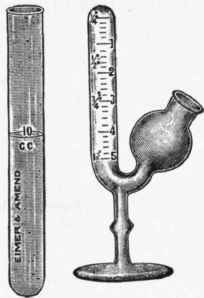
Fig. 1. - Einhorn's fermentation saccharometer. The fermentation sacchurometer can be obtained at Eimer & Amend, 205 3rd. Ave., New York.
Take 1 gram of commercial compressed yeast (or 1/16 of a cake of Fleischmann's Yeast) shake thoroughly in the graduated test tube with 10 cc. of the urine to be examined. Then pour the mixture into the bulb of the saccharometer. By inclining the apparatus the mixture will easily flow into the cylinder, thereby forcing out the air.
Owing to the atmospheric pressure the fluid does not flow back but remains there.
The apparatus is to be left undisturbed for twenty to twenty-four hours in a room of ordinary temperature.
If the urine contains sugar, the alcoholic fermentation begins in about twenty or thirty minutes. The evolved carbonic acid gas gathers at the top of the cylinder, forcing the fluid back into the bulb.
On the following day the upper part of the cylinder is filled with carbonic acid gas. The changed level of the fluid in the cylinder shows that the reaction has taken place and indicates by the numbers - to which it corresponds - the approximate quantity of sugar present.
If the urine contains more than 1 per cent, of sugar, it must be diluted with water before being tested.
Diabetic urines of straw color and a specific gravity of 1.018-1.022 may be diluted twice; of 1.022-1.028, five times; 1.028-1.038, ten times.
The original (not diluted) urine contains in proportion to the dilution two, five or ten times more sugar than the diluted urine.
In carrying out the fermentation test, it is always recommended to take besides the urine to be tested, a normal one, and to make the same fermentation test with it.
The mixture of the normal urine with the yeast will have on the* following day only a small bubble on the top of the cylinder. This proves at once the efficacy and purity of the yeast.
Likewise if there is in the suspected urine a small bubble on the top of the cylinder, then no sugar is present, but if there is a much larger gas volume, then we are sure that the urine contains sugar.
Continue to:


My Books

