


Chapter VIII. Turning Articles Of Square Section
Description
This section is from the book "Turning Lathes", by James Lukin. Also available from Amazon: Turning Lathes: A Guide to Turning, Screw Cutting, Metal Spinning and Ornamental Turning.
Chapter VIII. Turning Articles Of Square Section
IT would at first sight be deemed impossible to turn articles in an ordinary lathe of any other form than cylindrical, although, by means of rocking headstocks, actuated by rosettes, or cams, or special appliances, such work is done every day, and wheel spokes, axe handles, and other irregular forms, are shaped by thousands. Nearly a century ago, nevertheless, Bergeron published a method of effecting such work by the aid of a sort of chuck, round the periphery of which several bars of material were mounted, so that they might come in succession under the operation of the gouge and chisel. The method was precisely similar to that now to be explained, the chuck and its fittings being, however, improved and simplified. The apparatus is very cheap, and the work produced sufficiently satisfactory to be worth doing. There is also the advantage of being able to make from four to six articles at once, and precisely similar. The apparatus consists: first, of a square bar of iron, with centres drilled at the ends, to be mounted as if for turning. Upon it are fitted a pair of round discs of wood, which can be adjusted at any desired width apart, according to the length of the work. These are backed by smaller flanges of metal, which secure them to the bar by a wedge or screw. In the edges of the wooden discs are cut rectangular notches, to fit the bars of wood which are to be turned. The latter are secured, either by such iron clamps as are shown, or by any other efficient means, such as an iron hoop slightly larger than the discs, and thin wedges of hard wood.
Whatever may be the mode adopted, it must be capable of easy removal and readjustment. The drawings given, of the complete apparatus and its essential details (Figs. 22 and 23), will suffice to explain clearly the arrangement. The square bars thus mounted can now be moulded by turning tools held upon the rest as usual; but as they do not themselves revolve, except upon an axis common to all, the tools will only reach a small part of their respective surfaces, three-fourths remaining untouched. The bars are now loosened and remounted, with another side outwards, which will enable another fourth of the surface to be cut, the mouldings running into those previously made. Again the bars are loosened, and the process repeated, and after three readjustments the several bars will be found to have obtained a form of which the cross-section is apparently a square. The faces are, in point of fact, not quite flat, but curved, approaching nearest to a flat if the discs of the chuck are of large size.

Fig. 22. - Turning Articles of Square Section.
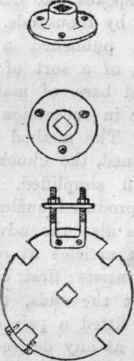
Fig. 23. - Chuck for Articles of Square Section.
This method is also capable of producing work of triangular section, the only alteration requisite being triangular instead of square notches in the discs of the chuck. The work also, or, at any rate, its extreme ends, must be carefully planed with three flat faces, to fit these notches. Other sections, such as octagon, hexagon, or quasi-elliptic, are possible, by different forms of notches to receive the ends of the rods; and, instead of four only, several pieces may be secured and turned at the same time. This kind of work looks very well associated with that of circular form. The top of a candlestick, for instance, may be made cylindrical, and the stem and base, or stem alone, square or triangular. The whole will also stand conspicuous as a turner's puzzle. A half-crown will purchase the whole apparatus, so that it is within the reach of all. This work requires care and sharp tools, taking very light cuts; and in making the discs, it is essential that the notches stand opposite each other. The two should, in fact, be clamped together, so as to enable the pair to be notched as one. Even the square bar may be of wood - so that the whole apparatus might be home made; or it may be purchased, either in the rough parts or finished, of the Britannia Company.
Continue to:


My Books

