


How To Whittle a Barnyard Chanticleer
Description
This section is from the book "Let's Whittle", by LeRoy Pynn, Jr.. Also available from Amazon: Let's Whittle.
How To Whittle a Barnyard Chanticleer
Use any desired wood block, 1 1/2 inches thick, 5 inches wide, and 6 inches high, and draw the pattern with the grain direction as shown by the arrow in Figure 46.
Begin the whittling at the top of the wings-the widest portion of the carving and then cut into the feet, forming the toes and spurs as shown in Figure 47.


Figure 46
Mark off the tail feathers, making four distinct sections. Figure 48. See Figure 49 for a rear view of the graduated tail.
Round out the body and neck; cut out the wattles-earlike projections under the bill. Be careful while carving this part because it is the weakest portion of the block. See arrow on Figure 50.
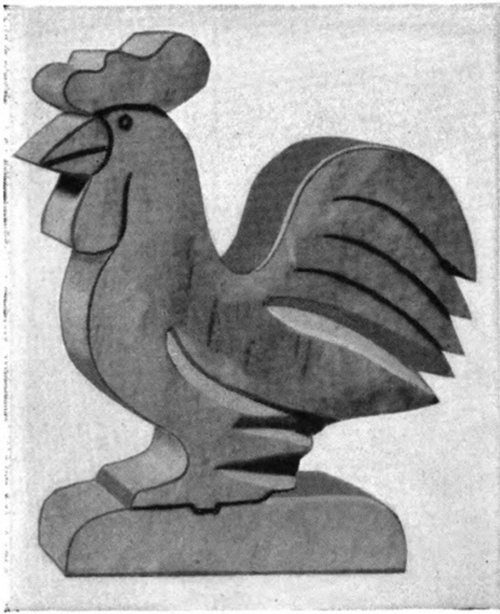
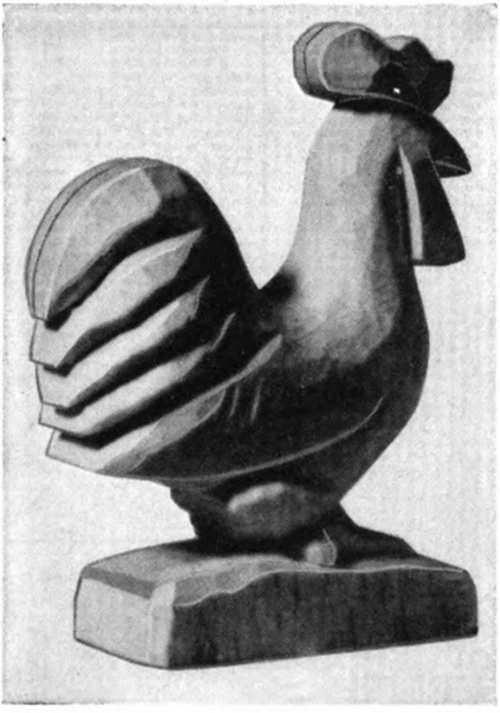
Figure 47
Figure 48

Figure 49

Figure 50
If this figure is carved from soft pine, follow the color chart, Figure 51, and shellac and varnish for a glossy finish, or wax to a high polish.
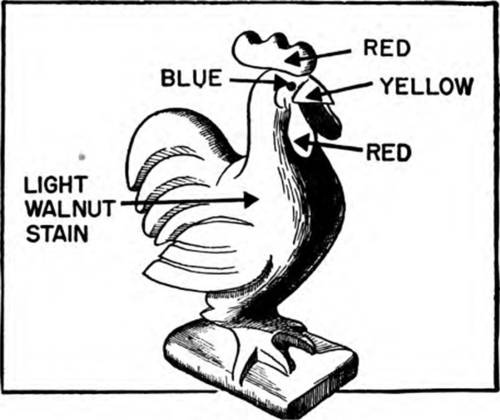
Figure 51
This is an excellent piece to try on black walnut, or a similar hard-surface wood. Proceed as before without painting but using a fine sandpaper go over entire job until it has a smooth texture. Then apply the medieval carver's finish described on page 126.
Continue to:


My Books

