


Hatch Details
Description
This section is from the "The Elements Of Wood Ship Construction" book, by W. H. Curtis. Also see Amazon: The Elements Of Wood Ship Construction.
Hatch Details
In general, a hatch is any opening in the deck, rectangular in shape, and which is fitted with a coaming. They are framed in the deck for various purposes. A cargo hatch is for the loading and unloading of cargo. An engine hatch is framed to make way for the ship's engines and also to permit the shipping or unshipping of various portions of the engines in case of repairs and replacements. The boiler hatch bears the same relation to the boilers as does the engine hatch to the engines. There may be small hatches framed for no other purpose than to permit ingress or egress to and from a compartment, or they may be framed over the bunkers for coaling purposes, although for the latter, circular manholes with metal frames and covers are more often used.
Any hatch directly exposed to the weather must be fitted with covers and tarpaulins so fixed that water cannot gain admission to the hold. Cargo hatches in decks under the weather deck are commonly fitted with covers so that cargo may be stowed over the hatches, but they are not fitted with tarpaulins or made watertight.
Where any hatch is fitted with covers, the covers must be so supported that they will carry any load that may be placed upon them. In hatches below the weather deck this load is, of course, the weight of the cargo on top of the hatch covers. In the weather deck it may be either the weight of cargo or the weight of water that may by accident be taken aboard in a heavy sea, according to whether or not a deckload is carried. This requirement that the covers be strong enough to carry heavy loads, necessitates, in the case of large hatches such as cargo hatches, the fitting of a removable system of beams under the covers, one type of which has been detailed in Figs. 145 and 146.
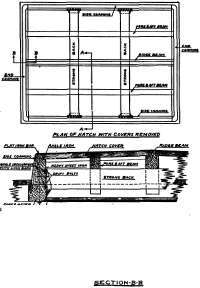
Figure 145. Hatch Details As In Weather Deck Hatch.
There are a number of different arrangements of these beams in common use but they all consist essentially in a number of fore and aft beams having their ends supported at the coamings, with intermediate support furnished by thwartship beams called strongbacks, the ends of the latter being also supported at the coamings, and both the beams and strongbacks being removable. The number and size of beams and strongbacks to be fitted depend upon the size of the hatch and the load which they must carry. The end supports must be so arranged as to permit the ready shipping and unshipping of all beams and strongbacks, and at the same time must be strong enough to carry the load that may come upon them.
The center, or ridge beam, in weather deck hatches is generally rabbetted for the covers. In lower deck hatches the covers are more commonly butted together at the center as shown in Fig. 146.
Referring to Fig. 145 it will be seen that the ridge and fore and aft beams rest on top of the strongbacks, and that they are dapped at the ends into the coamings as far as the back of the rabbet. Since this depth of dap does not furnish bearing sufficient to support the beams hardwood wedges, as shown in Section B-B are fitted under each end of these beams. These wedges must be thoroughly fastened with either button-headed bolts or boat spikes. The strongbacks in this figure are supported in angle iron hangers set on the face of the coamings. It will be noted that these hangers are fastened with a large number of countersunk head drift bolts, and also that they have lock bars set into the wood to furnish the additional required bearing. Below the hangers it is customary to place small hardwood wedges to prevent the cargo tackle and blocks fouling on the hanger.

Figure 146. Hatch Detail As In Lower Deck Hatches.
In Fig. 146, due to the smaller depth of the hatch, the beams and strongbacks must be set in the same line and all are supported by means of angle iron hangers. Here the fore and aft beams are not continuous but are cut in between the strongbacks. It should also be noted that the toes of the hangers are turned over at the top to furnish additional bearing to that given by the fastening, and that in addition to this the hangers for the strongbacks have one lock bar.
In many cases the angle iron hangers on the coamings are arranged to be set in flush with the face of the coaming, leaving these hatchways clear of all obstructions.
All exposed corners and wood surfaces on cargo hatches should be protected by iron work or sheathing. The entire inner face of the coamings and exposed hatch beams and fore and afters is generally lined with heavy sheet iron, or close spaced iron bars which should be fastened with either large wood screws or track spikes having countersunk heads. The rabbet should be protected with an angle iron and the lower inside corner with a quarter round chafing bar. Often the sheet iron sheathing is turned under the angle iron at the top and the chafing bar at the bottom. The tops of the coamings are generally protected with flat iron bars as shown in the figure. All of these irons may be properly called chafing irons. They should be fastened either with heavy wood screws or track spikes all of which should have countersunk heads.
Continue to:


My Books

