


Bilbao
Description
This section is from "The American Cyclopaedia", by George Ripley And Charles A. Dana. Also available from Amazon: The New American Cyclopædia. 16 volumes complete..
Bilbao
Bilbao, a city of Spain, capital of the Basque province of Biscay, 45 m. W. of St. Sebastian, on the Nervion, about 9 m. above its entrance into the sea at Portugalete; pop. about 18,700 It is a fine city, consisting of a new and an old town, connected by bridges, with rich convents a number of churches, schools, and other public buildings. The corporation derives a large revenue from tolls on imports and the monopoly of beef. The abattoirs of the city are among the best in Spain. Rope, anchors, leather, hardware, paper, hats, tobacco, earthenware, and other articles are manufactured, and there are several ship yards. Not far from the city are the highly productive iron mines of Veneras. Bilbao is the chief seaport of N. Spain, though only small craft can come up to the city, large ones landing goods at Olaveaga, 2 m. below. The registered shipping is between 500 and 600 vessels, and the fisheries are important. The annual value of imports exceeds $13,000,000. The exports of wool, once so important, have fallen off, owing to the preference given to Saxon wools; and the value of exports, consisting chiefly of wine, lead ore, zinc, iron, corn, and flour, has declined to about $1,000,000. The Bilbao and Tudela railway, completed in 1863, intersects at Miranda the North of Spain line, and places Bilbao in direct communication with Madrid and with France. There are steamers to Spanish, English, French, and Dutch ports.
Bilbao was founded in 1300, was occupied by the French in the Napoleonic wars, and was bravely defended against the Carlist general Zumalacarreguy, who was mortally wounded here in 1835. - The province of Biscay is also called Bilbao. (See Biscay).
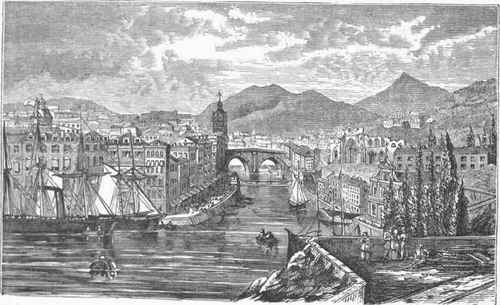
Bilbao.
Continue to:


My Books

