


Sound
Description
This section is from "The American Cyclopaedia", by George Ripley And Charles A. Dana. Also available from Amazon: The New American Cyclopædia. 16 volumes complete..
Sound
Sound, the sensation peculiar to the organ of hearing. This sensation is the final effect of a closely connected series of mechanical actions, which have their origin in some rapidly vibrating body, whence they are propagated progressively through the air to the membrane of the drum of the ear, and thence, through a series of small articulated bones, into the inner cavity. This cavity, tunnelled in the hard petrous bone, is filled with liquid and contains the delicate terminal fibrils of the auditory nerve. Each of these fibrils appears to be attached to the centre of a delicate rod or chord. These chords are stretched, and being of different lengths and diameters are generally supposed to be tuned to sounds extending through a range of several octaves. By the sympathetic vibrations of these tuned bodies they shake their attached nerve fibrils and thus give rise to sensations peculiar to sounds of various pitch. From the foregoing we see that the subject of sound is naturally divided into three parts. In the first division we shall consider the manner of production of sound, and the nature of those vibrations which, cause sonorous sensations.
In the second part we shall explain the manner in which these vibrations are propagated through the elastic medium existing between the vibrating body and the ear. In the third part we shall consider the manner in which the ear perceives a simple sound and analyzes a composite sound into its elementary sonorous sensations. - At the place of origin of every sound there is always some solid, liquid, or gaseous body in a state of rapid vibration. This vibrating body imparts its motions to any elastic medium with which it may be in contact, and the vibrations thus given to the contiguous medium are propagated in all directions. The contiguous elastic medium may be a solid, a liquid, or a gas. Proofs of the above statements are readily afforded by the following simple experiments. A sounding tuning fork is drawn over a piece of smoked glass, so that the point of a piece of foil, attached to one of its prongs, may just touch the glass. After this experiment we observe that the point attached to the fork has laid bare the glass in a sinuous line, as seen in fig. 1, thus showing that when the fork causes a sound its prongs are swinging: to and fro in a direction perpendicular to its length.
That a liquid may be the vibrating body at the source of the sound, is shown by placing a "siren" under water and forcing through it a current of water. If we take an organ pipe with glass sides and sprinkle in its interior a small portion of precipitated silica, we shall, on sounding the pipe, observe this very light powder rise in thin delicate vertical plates in certain portions of the pipe, while in intermediate places the silica remains at rest. Neither the tone of the pipe nor the positions of the plates of silica are altered in the least by pressure on the walls of the pipe; thus showing that the real vibrating body in an organ pipe is its contained column of air. It now remains to show that the medium through which the sonorous vibrations are propagated outward from the vibrating body may be either solid, liquid, or gaseous. One of the most beautiful experiments in acoustics was invented by Sir Charles Wheat-stone, and shows that sounds, even the most complex, may be transmitted through solids as readily as through the air. In the lower room of a house, or in a tightly closed box lined with felt, he placed a musical box. On the top of the musical box rests the end of a long light wooden rod which reaches to one of the rooms above.
The rod is insulated from the floor of the rooms by India rubber. No sound is perceived in the upper room until we place on the top of the rod a violin, a guitar, or any instrument with a sounding board, when the sounds of the musical box fill the upper room and appear to emanate from the musical instrument on the rod. That a liquid may be the medium for the transmission of sonorous vibrations is readily proved by placing on a resonant box a long cylindrical vessel filled with water, and then bringing in contact with the surface of the water a disk of wood attached to the foot of a vibrating tuning fork. The vibrations of this instrument are sent through the water, and reaching the top of the resonant box throw the latter into vibrations of the same period as those of the fork. That the air, a gaseous body, vibrates while it is transmitting sonorous pulses, can be shown by placing in the path of these vibrations a delicate membrane strewn with a light dry powder. The powder dances on the membrane while the sound is perceived. The vibrations of the air can also be detected by means of the so-called "sensitive flames," which are formed of jets of gas, issuing from cylindrical orifices under such great pressure that they are just on the point of flaring, or roaring.
These flames are so sensitive to aerial vibrations that the slightest sound, if of the proper pitch, will cause them suddenly to contract greatly in their lengths, and at the same time to give forth roaring sounds. These flames are generally most sensitive to acute sounds, such as a hiss or the jingling of a bunch of keys. (See Pyrophone.) - An analysis of sonorous sensations reduces them to three kinds: pitch, intensity, and timbre. 1. Pitch and the Determination of the Number of Vibrations of a Sounding Body. Pitch is that quality of sound by which we distinguish the position of sounds in the musical scale. One sound is thus said to be higher or lower than another. Pitch depends on the number of vibrations in a second which enter the ear. The pitch rises with the increase of the number of vibrations. In England, Germany, and America a vibration is understood to be a motion to and fro, while in France it is a motion to or fro. The sound having the lowest pitch is caused by 40 vibrations in a second; a smaller number of vibrations than this does not cause a continuous sonorous sensation.
The highest audible sound is caused by about 40,000 vibrations in a second; vibrations of greater frequency than this are not generally audible, though the limit of audibility of the highest sounds is different for different persons. Thus some cannot hear the chirrup of the cricket, while others perceive sounds one or two octaves above it. Dr. "Wollaston discovered this variation. The pitch of a sound may be determined by several methods, some of the most precise of which are: 1. By means of an instrument called a "siren," fig. 2, invented by Cagniard de Latour. It consists of a metal cylinder the bottom of which is perforated by a tube through which air is blown into the cylinder. The top of the cylinder is perforated with a number of holes. Just over this top and nearly touching it rotates a metallic disk on a vertical axis. This disk is perforated with the same number of holes as are in the cylinder. The form of the holes is shown in the section in the figure. They do not pass perpendicularly through the plates, but slope contrary ways, so that the air when forced through the holes in the top of the cylinder impinges upon one side of the holes in the rotating plate, and thus blows it round in a definite direction.
The disk in making one revolution opens and shuts the holes as many times as there are holes in the disk and cylinder, and hence the wind escapes from the cylinder in successive puffs, the frequency of which depends upon the rate of rotation. A sound is thus produced having a pitch which rises with the increase of velocity of rotation. The vertical axis has a screw cut on it which works in a notched wheel attached to a dial, which shows the number of rotations of the disk. To determine the pitch of a sound by means of this instrument, we gradually increase the rotation of the disk until the sound emitted approaches the pitch of the sound the number of vibrations of which we would determine. When the two sounds are quite near in pitch, the ear will perceive distinct beats produced by the joint action of the two sounds on the air. The velocity is now cautiously increased until the beats disappear. At this moment the counter is put in operation, and the disk is allowed to run for a known number of seconds; then the counter is thrown out of action and the number of revolutions of the disk read off.
On multiplying the number of revolutions of the disk by the number of its holes, and dividing this product by the number of seconds during which the disk was connected with the counter, we have the number of vibrations per second corresponding to the given sound. 2. The number of vibrations per second of a tuning fork, or of any rod or plate, can be determined very precisely by the following plan. The timing fork or rod has attached to it a piece of delicate foil, which just touches the smoked surface of paper covering a metallic cylinder. If the cylinder is turned while the fork vibrates, it is evident that the point attached to the fork "will trace a sinuous line on the cylinder. Now, if by any means we can mark off seconds of time on this sinuous trace, we shall have only to count the number of sinuosities between two successive second marks to have the number of swings made by the fork in a second. The above conditions are attained in the following manner: A break-circuit clock is placed in the primary or battery circuit of an induction coil; one of the terminal wires of the secondary circuit of this induction coil is connected with the tuning fork, while the other terminal wire is connected with the revolving cylinder.
At each second the break-circuit clock sends a spark from the point attached to the vibrating point, through the smoked paper, to the revolving metallic cylinder. It is evident that on counting the number of flexures contained between two successive spark holes in the fork's trace we have the number of half vibrations made by the fork in a second. When we have thus determined the exact number of vibrations, at a known temperature, given by a tuning fork, we may use the number of vibrations of this fork as a point of departure in determining the number of vibrations of any rod, plate, chord, or membrane, by means of a very simple and ingenious method recently devised by Prof. O. N. Rood, and described by him in the "American Journal of Science," August, 1874. Let us suppose that it is required to ascertain whether two tuning forks are in unison, or to determine the difference in the number of vibrations executed by them in a second. For this purpose a short piece of line steel wire is attached to each of the forks, and they are supported in positions so that their vibrations shall be at right angles to each other, as indicated in fig. 3. The wires may have a diameter of one or two tenths of a millimetre, or even less, and are to be attached with the least possible amount of soft wax or varnish.
They may be brought quite near to each other, or may if necessary be several inches apart. If the forks are now set into vibration and the intersection of the wires viewed against a bright background with a small telescope, it will be seen that an optical figure is developed, which is partly due to the same well known conditions that give rise to the acoustic figures of Lissajous, and partly to the circumstance that the wires move with less velocity when near their maximum deviation from the line of rest. Hence, if the difference in phase is zero, an appearance like fig. 4 is produced, which changes into fig. 5 when the difference in phase has increased to one half a complete vibration. Fainter indications of the same figures are shown in all cases, except when the difference in phase is one fourth, three fourths, etc, of a vibration, or nearly so. This figure is characteristic then of forks in unison, and the fact of its constancy will be the evidence of perfect unison. If the forks are not exactly in unison, fig. 4 will after some time change into fig. 5, and the number of seconds necessary for this change will measure the interval required by one of the forks in gaining or losing half of a complete vibration.
The focal length of the object glass of the telescope used was 120 millimetres for parallel rays, and when the aperture was reduced to two millimetres, sufficiently distinct vision of both wires could bo obtained, even when their distance apart was several centimetres. With this limited aperture, the light from a white cloud answered quite well. If the forks differ by an octave, an almost equally distinct and well marked figure will be produced, such as is seen in figs. 6 and 7, which represent the characteristic appearances in this case. This figure is quite as useful for purposes of investigation as for that of unison. Somewhat less distinct and more complicated figures are given by the quint, the duodecime, and the double octave. From the foregoing it is evidently easy with this method to bring a vibrating string into unison with a given tuning fork, or to adjust it so that the interval shall be a quint, octave, twelfth, or double octave, above or below. It is also easy to ascertain the number of vibrations made by a string in a given case, by the aid of a bridge and a properly selected fork making a known number of vibrations, the string being shortened till it furnishes one of the above mentioned figures, and therefore executes a known number of vibrations, after which the number of vibrations made by its whole length can readily be calculated by a well known law. 3. The following method of determining the number of vibrations of a sounding body is applicable to all cases, whether the body be solid, liquid, or gaseous.
After we have determined, by the method already described, the precise number of vibrations of a given fork, we make another fork higher in pitch than the former, which makes with the first eight beats a second; a third fork is then tuned until it gives eight beats with the second fork, or sixteen with the first. Thus a series containing many forks is formed, any fork of which makes eight vibrations more in a second than the fork next below it in pitch. On each fork is stamped its number of vibrations. To determine with these forks the pitch of a given sound, we find in the series of forks one which makes with this sound eight beats or fewer than eight beats in a second, and we count the number of these beats given during one minute or more. Dividing the number of beats found by the number of seconds during which the observation lasted, we have the number of beat3 made in one second by the fork and the given sound, and as the number of beats per second is always equal to the difference in the number of vibrations per second of the two sounds, it follows that we at once know how many vibrations per second the fork exceeds or falls short of those of the sound.
To ascertain whether the fork makes more or less than the sound in a second, we place a small piece of wax on a prong of the fork, and observe whether this causes the number of beats to increase or to diminish. If the number of beats increases, then the fork was lower in pitch than the sound, while if the beats are less frequent the fork was higher in pitch than the given sound. The series of forks just described is called after its inventor a Scheibler's tonometer. 2. The Intensity of Sound. The intensity of sound depends on the energy of the aerial vibrations contiguous to the ear. For sounds of the same pitch the intensity varies as the square of the amplitude of the aerial oscillations. The plans generally used are unworthy the designation of measures, being only rough comparisons. The writer first succeeded in measuring the relative intensities of sounds of the same pitch, and the reader is referred to the publication on the subject in the "American Journal of Science" for February, 1873. The principle of the method depends on the fact that if two sonorous impulses meet in traversing an elastic medium, and if at their place of meeting the molecules of the medium remain at rest, then at this place of quiescence the two impulses must have opposite phases of vibration and be of equal intensities.
By means of an appropriate apparatus the above conditions are brought about in the union of the two sounds whose intensities we would compare. We then measure the distances from the place of meeting of the two sounds to the points of origin of these sounds. The relative intensities of the sounds will be as the inverse ratio of the squares of these distances. But to determine the relative or absolute intensities of sounds of different pitch is one of the most difficult of experimental problems. The writer has recently succeeded in reaching approximate measures of the absolute intensities of sounds by measuring the amounts of heat produced when the sound vibrations are absorbed by India rubber. By knowing the exact fraction of the whole energy of the sound absorbed and the specific heat of the rubber, the mechanical equivalent of the entire sonorous vibrations, in fractions of a Joule's unit, can be calculated. It was thus shown that the aerial vibrations produced by a treble C fork, mounted on its resonant box and vibrated during ten seconds, will, if entirely converted into heat, raise the temperature of one pound of water 1/100,000 of a degree; or, in mechanical effect, will raise 54 grains one foot high. 3. Timbre of Sound, and Analysis of Sounds. Timbre is a term used to designate those special characters by which we distinguish between two or more sounds having the same pitch and equal intensities.
Thus, sounding the same note on a flute, a violin, a clarinet, and a piano, the ear at once distinguishes the instrument producing the note. Some preliminary knowledge as to the differences between a simple and a composite sound is necessary before giving an explanation of the cause of timbre. A simple sound is a sound which has only one pitch. Such a sound is produced when a tuning fork, mounted on a resonant box, is gently vibrated by drawing a bow across one of its prongs. All simple sounds are alike in timbre; the only differences existing between them are differences of pitch and of intensity. Thus, if simple sounds alike in pitch and in intensity were produced by four instruments differing even very much in construction, the ear could not give us the information by which we could distinguish one instrument from another. On examining closely into the nature of the aerial vibrations which produce a simple sonorous sensation, we find that this sensation is only experienced when the aerial particles swing to and fro with the same character of reciprocating motion as pertains to a freely swinging pendulum. But there are other sounds which are not simple but composite, being formed of the combination of several simple sounds of various pitch and intensities.
Thus, by attentive listening one can distinguish several sounds of various pitch in the sound of a piano string, or in that of a reed organ pipe. On analyzing these composite sounds, by methods presently to be described, we find that they can always be separated into two or more simple sounds, and that if we call the number of vibrations producing the lowest in pitch unity, then the remaining sounds will, in order of ascending pitch, bear to the first the vibration ratios of 1: 2, 1: 3, 1: 4, 1: 5, etc. The lowest sound perceived is generally the most intense, and is called the "fundamental." This is the sound which is indicated in musical notation, and which designates the pitch of the composite sound. But really when we produce one of the sounds indicated by musical notation, we generally at the same time evolve a long series of sounds bearing to each other the vibration relations of 1, 2, 3, 4, 5, 6, etc. This series of sounds is called the harmonic series, and is sometimes designated as the series of overtones of the fundamental sound. But the members of this series do not always all coexist; thus the sounds of the clarinet only contain the odd numbers of the series, viz., 1, 3, 5, 7, etc.
It is evident from the above facts that an indefinite number of different composite sounds can be formed by combining simple sounds and giving to them various relative intensities; and that each of these composite sounds will be characterized by its own peculiar timbre. This great discovery, that all simple sounds have one and the same timbre, and that the characteristic timbre of any other sound is due alone to the number and relative intensities of the harmonics or overtones forming the sound, was made by Helmholtz; he not only succeeded first in proving this by the experimental analysis of various composite sounds, but also by reproducing these composite sounds with their characteristic timbres by simultaneously sounding their simple sonorous components with their proper relative intensities. This explanation of timbre, as Helmholtz has shown, has a dynamic basis, and is the direct consequence of the celebrated theorem of Fourier, which may thus be rendered in the language of dynamics: Every periodic vibratory motion can always, and always in one manner, be regarded as the sum of a certain number of pendulum vibrations. - There are various methods of analyzing a composite sound.
They are generally founded on the fact that if we have two bodies which give exactly the same number of vibrations in a second, and vibrate one of them, the other, although somewhat distant from the first, will be thrown into vibration by the action of the aerial pulses which have emanated from the first body. This must necessarily follow, for the pulses which the second body receives from the air synchronize with the number of vibrations in a second which this body alone can give. This phenomenon may be called " co-vibration." Helmholtz in his investigations generally used as co-vibrating bodies masses of air contained in hollow spheres of various sizes. These spheres are called resonators, and one of them, as made by Konig of Paris, is shown in fig. 8. These spherical masses of air are so graduated in volume that a series of resonators is formed, and each resonator will resound only to the number of vibrations in a second which is stamped on it. The manner of using these resonators is as follows: The compound sound falls upon the open mouth of the resonator, while the nipple-shaped tube opposite the mouth is placed in one ear, and the other ear is closely stopped with beeswax.
If the sound, to which the mass of air contained in this resonator enters into co-vibration, exists in the composite sound, then the ear will perceive this sound with some intensity, to the exclusion of the other component sounds. Thus by placing to the ear each resonator of the series and noting those which resound, we can readily ascertain the simple sounds, whoso union forms the composite sound which we have analyzed. The writer has often replaced the resonators applied to the ear by tuning forks mounted on resonant boxes. If the mouth of one of these boxes, like fig. 9, be placed near a sounding reed pipe, and if the note of the fork on the resonant box exists in the composite sound of the reed, then this fork will be set in vibration and will continue to vibrate after the reed has ceased to sound; for the mass of air in the box acts like a resonator, and is set in vibration by the pulses of that harmonic of the reed which is in unison with it. But, as the fork is also in unison with the mass of air in the resonant box, it follows that it also is set in motion by the latter, so that, after the composite sound ceases, we find that the fork sings out alone, and thus shows that it has selected from a chorus of harmonics that one which is in unison with its own tone.
It has thus been easy, by using one fork after another of the harmonic series of the reed, to show the composition of its sound to a large audience. We have also succeeded with the following experiment. Forcibly sound the reed pipe and place around its mouth eight or more forks of the harmonic series of the sound given by the reed, with the mouths of their resonant boxes toward the reed pipe. After the reed has sounded for a few seconds, stop it, and we shall find that all of the forks are in vibration; and thus singing together, they approximately reproduce the sound of the reed. This experiment requires the resonant boxes, the forks, and the harmonics of the reed to be in exquisite unison. The reader may convince himself of the composite nature of the sound given by a piano string, by the following simple experiments. If we sound on the piano the 0 below the middle or treble 0, if we call this note C2, the harmonics of this sound will be C3, G3, C4, E4, Gr4, Bb4, C5, etc. But the seventh harmonic, or Bb4^, is wanting, because the hammers of the piano strike the strings at points about one seventh of their length, and hence this harmonic cannot appear.
If it did, it would cause harshness of timbre, for the seventh harmonic forms dissonant combinations with the other harmonics of the series. To show that all of the remaining harmonics exist in the sound of C2, depress slowly and firmly the key of C3; the hammer will rise, press against the string, and fall from it, but the damper of this string will remain raised. Now strike strongly the key of C2, and after holding it for a few seconds stop its sound. "We shall now hear the sound of C3 very distinctly, showing that it has been set into vibration by the vibrations of C3 which exist in the compound sound designated as C2. In like manner one can show that G3, C4, E4, G4, C5, etc, exist as components of the composite sound of the string of C2. The reader who desires further information on the subject of sonorous analysis will find descriptions of six experimental methods in "Researches in Acoustics," paper No. 5, "American Journal of Science " for August and September, 1874. - Reproduction of Sonorous Vibrations from the Curves made by Vibrating Bodies. Experiment has established that the sensation of a simple sound is alone produced when the aerial molecules vibrate with the same reciprocating motion as pertains to a freely swinging pendulum.
If we obtain the sinuous trace of a vibrating tuning fork or of a long elastic rod on a plate of smoked glass, fig. 10, we shall find, on making measures on these curves, that they are sinusoids or curves of sines, and hence can alone be produced by pendulum motions. But the curve produced by the fork can be made to reproduce the motions of the fork, only much slower, in the following manner: Cut a fine slit in a piece of paper, and slide it over the curve from right to left, as shown in fig. 10; then we shall see the portion of the curve exposed in the slit vibrating upward and downward with the same kind of motion as rules the oscillations of a pendulum. The aerial molecules and a point on the membrane of the drum of the ear vibrate thus when we experience the sensation of a simple sound. The majority of sounds, however, are composite. It is evident that a molecule of air or a point on the tympanic membrane can have only one direction of motion at one and the same instant, and therefore that a composite sonorous vibration will give to the molecule of air a motion which must be the resultant of the combined motions of all the pendulum motions' of its simple sonorous components.
Hence we may suppose a molecule of air, animated with a resultant motion like the above, to trace a curve which evidently will be the resultant of all the simple sinusoidal curves belonging to the sonorous elements of the composite sonorous vibration. "We can obtain this resultant curve as follows, and then we can reproduce from it the motions of a molecule of air, or of a point on the tympanic membrane, when these points are acted on by a compound sonorous vibration. Draw on the axis a b, fig. 11, sinusoidal curves having lengths related to each other as 1: 2 : 3: 4: 5 : 6. These curves will then be the separate traces of the first six harmonics contained in a composite vibration which causes a musical sound, such as the sound of a piano string. Another axis c d is now drawn below a b, and 500 equidistant lines, perpendicular to a b and c d, are drawn through the curves on a b and extended below the line c d. The algebraic sums of the ordinates of the curves on a b are now transferred to the corresponding ordinates on c d, and through points thus found is drawn the curve having the line c d for its axis. This curve may be regarded as the trace of the composite vibration of a molecule of air, or of a point of the tympanic membrane, on a surface which moves near these points.
Hence if we slide this curve along, in the direction of its axis, under a slit in a screen which allows only one point of the curve to appear at once, we shall reproduce in this slit the vibratory motion of the aerial molecule and of the point on the tympanic membrane. The writer has exhibited this motion in a continuous, or rather recurring manner, as follows: On a piece of Bristol board he drew a circle, and in one quadrant of this circle he drew 500 equidistant radii. On these radii, as ordinates, he transferred the corresponding values of the same ordinates of the resultant curve of fig. 11, diminished to one fourth of their lengths. He thus deflected the axis of the curve of fig. 11 into one fourth of a circle curve; and this, repeated four times on the Bristol board, rendered the curve continuous and four times recurring, as shown in fig-. 12. He now cut this figure out of the board and used it as a template. He placed the latter centred on a glass disk 20 in. in diameter. This disk was coated on one side with opaque black varnish, and with the template and the separated points of a pair of spring dividers he removed from the glass disk a sinuous band, as shown in fig. 12. The glass disk was now mounted on a horizontal axis and placed in front of a lantern, the diameter of whose condensing lens was somewhat greater than the amplitude of the curve.
The image of that portion of the curve which was in front of the condenser was now projected on a screen, and then a piece of cardboard having a narrow slit cut in it was placed close to the disk, in the direction of one of its radii. On revolving the disk he reproduced on the screen the vibratory motion of a molecule of air, or of a point on the tympanic membrane, when these are acted on by the joint impulses of the first six harmonic or pendulum vibrations, forming a musical sound. On slowly rotating the disk one can readily follow the compound vibratory motion of the spot of light; but on a rapid revolution of the disk, persistence of visual impressions causes the vibrating spot to appear elongated into a band. This band is not equally illuminated; it has six distinct bright spots in it, beautifully revealing the six inflections in the curve. By sticking a pin in the centre of fig. 12, as an axis about which revolves a piece of paper having a fine slit, the reader can gain some idea of the complex motion we have described.
Of course it is understood that in the above experiment the amplitudes of the vibrations are enormously magnified when compared with the wave lengths, and that it is really only when the amplitudes of the elementary pendulum vibrations are infinitely small that the resultant curves we have given can be rigorously taken as representing what they purport to; for the law of "the superposition of displacements" depends on the condition that the force with which a molecule returns to its position of equilibrium is directly proportional to the amount of displacement, and this condition only exists in the case of infinitely small displacements; yet the law holds good for the majority of the phenomena of sound. It is also to be remarked that in order to simplify the consideration of the curves, they are all represented with the same phase of initial vibration. Of course the resultants have an infinite variety of form, depending on the differences in their initial phases, and on the amplitude of the harmonic elements. In figs. 13, 14, and 15, we have drawn the resultant curves formed by combining the curves of musical sounds corresponding to the various consonant intervals indicated below the figures.
As these curves are the resultants formed by the combination of the curves of composite musical sounds, it follows that the components of these curves are not simple sinusoidal curves, as in the case of fig. 11, but are derived from the resultant of fig. 11 by reducing to one fourth the amplitude of that curve, and by taking wave lengths corresponding to intervals indicated below the figures. From the curves of fig3. 13, 14, and 15 can be reproduced their generating motions in the same manner as we have done in the case of the curve of fig. 11. As a periodic or recurring vibration can alone produce in the ear the sensation of sound, and as the duration of the period is always equal to the least common multiple of the periods of the pendulum vibrations of the components, it follows that in the case of a sound formed of a harmonic series the period equals the time of one vibration of the fundamental; but in the cases of other combinations the duration of the period increases with the complexity of the ratio of the times of vibration of the components; thus, the durations of the periods of the following combinations are placed after them infractions of a second: C3 + C4=1/256; C3 + G3 = 1/128; C3+E3=1/64; C3 + E3 + G3=1/256; C3 + E3 + G3 + C4= 1/17 of a second. (C3 stands for the treble C; C4 is the C of the octave above it.) - Transmission of Sound. If air were incompressible, a motion produced at any point, of its mass would instantaneously be transmitted to every other point of the atmosphere.
Thus, if we imagine a long tube, open at one end and closed at the other by a piston which moves in the tube without friction, it is evident that if this piston were pushed into the tube a certain distance, the air would at the same time move out of the tube at the open end. But air is compressible and elastic, and after the piston has been pushed into the cylinder, a measurable interval of time will have elapsed before the air moves out of the open end of the tube. This interval is the time taken by sound to traverse the length of the tube. The velocity of sound is 1,090 ft. in a second at 32° F., and it increases almost exactly one foot in velocity for each degree of elevation of temperature above 32°. Now imagine the piston to move forward into the tube over a minute fraction of an inch, and that it occupied 1/10 of a second in making this forward motion; then the length of air compressed at the instant the piston has come to rest will be equal to 1090/10, or 109 ft. If the piston makes its movement in 1/100 and in 1/1000 of a second, the length of air compressed in the tube will be respectively 10.9 and 1.09 ft. But such a compressed portion of air cannot remain at rest, by reason of its elasticity.
It immediately expands, and in so doing presses forward on the undisturbed air in front of it and on the interior wall of the tube. The column of compressed air in thus regaining its natural density has compressed an air column of equal depth in front of it; this in its turn reacts on the back column and prevents it from rarefying, while at the same time it has compressed another column of equal depth in front of it, and so on. Thus the sonorous pulse, as it is called, is transmitted through the whole length of the tube. A beautiful illustration of the manner in which a sound pulse is propagated is afforded by attaching to a sounding board a long, elastic spiral spring of brass, while the other end is held in the hand. On separating two of the coils of the spring with a finger nail, and then allowing them suddenly to come together, a pulse or compression will be thrown through the whole length of the spring to its further end, where striking on the sounding board it will cause a sharp rap. This action against the board will be reflected from the board to the hand, and again from the hand to the board, and so on several times in succession.
When the piston above spoken of makes a backward movement, it creates a vacant space in the tube, into which the air rushes by virtue of its elasticity, and thus a certain depth of air is rarefied; this first cylinder of rarefied air in retracting to its natural dimensions causes rarefaction in an equal depth of air in front of it; this second rarefied cylinder of air now reacts on the first, brings it to rest, and causes rarefaction in a third equal column of air, and so on. Thus the rarefaction, like the compression, is transmitted through the whole length of the tube. When a compression traverses the tube it successively brings the molecules of air nearer together, while a rarefaction in its progress separates the aerial molecules; hence, if we imagine the piston to move backward and forward with a regular vibratory motion we have rarefaction succeeding compression in regular order, and the effect on any one molecule of air is to give it a like regular motion backward and forward. In the above discussion we have, for simplicity, supposed the piston to have a uniform velocity during its motions; but this, as we have already seen, is not the case with freely vibrating elastic bodies, for they have the same character of reciprocating motion as that of a freely swinging pendulum.
To explain what will be the effect on the air of such a motion, we will suppose that the piston vibrates through a very small distance, a a', fig. 16, making equal excursions on one side and the other of the position of equilibrium m m'; and as the piston vibrates like a pendulum, it will increase in velocity as it goes from a or from a' to m m', and diminish in velocity as it goes from m m' to a or to a'. Let T be the time taken by the piston to make a semi-vibration, that is to say, a motion from a to a' or from a' to a. Divide this time T into exceedingly small and equal parts t, during which the piston will also go over very small but unequal spaces, increasing with the velocity from a to m m', and diminishing with the velocity as the piston goes from m m' to a'. The first very small displacement of the piston, accomplished during the timet, will produce in a very thin layer of air, which touches the piston, a very feeble degree of compression, and this compression will progress forward into the air of the tube. The very small succeeding motion of the piston during the next succeeding t will produce a slightly greater condensation, which will travel behind the former condensation with the same velocity.
The third displacement of the piston will produce a still greater condensation, and so on, until the dis-placement which brings the piston to the position m m', which, being the greatest of all, will produce the greatest condensation. If the piston continues its motion to a', with a velocity which is now gradually decreasing, a new series of condensations will take place, less and less in degree, which will travel behind those of the first scries. These two series will bo symmetrically placed on one side and the other of the maximum condensation, if we suppose that the two semi-oscillations of the piston are equal, and if we neglect the very small amplitude of oscillation a a r. If a Λ' is the space through which the first condensation progresses in the time T, then all the condensations which have succeeded it during the movement of the piston from a to a' will be distributed in the space a' A'. If we represent by ordinates these condensations at the moment when, the piston having arrived at a', the first condensation is at A', we will form a curve a' a A', whose maximum ordinate M a will represent the condensation produced by the piston at the moment of its passage through m m'. Let us now suppose that the vibrating piston returns on its path, it will produce by this motion a series of increasing dilatations during the time ½ T, and then decreasing dilatations until the instant when the piston reaches a.
These dilatations will travel behind the condensations, and when the piston has returned to a, in which case the series of condensations will have reached the position A' a A, these dilatations will be distributed in the space a A', and the diminution of density of the layers of air can be represented by the negative ordinates of the curve a β A', below the axis of the curve a A'. The state of air in the tube at the instant when the vibrating piston, departing from a, arrives at n p, m m', n' p', a' is indicated by the curves n N, m M, n' N', a' A'. If the piston makes another complete vibration from a to a' and from a' to a, a new series of condensations and of dilatations, distributed in a space equal to a A, will travel behind the first series already described. The dilatation and condensation contained in a' A, and produced by a complete vibration of the body at the origin of sound, i. e., by an oscillating motion from a to a' and back from a' to a, is called a sonorous wave. A sonorous wave is always formed of two parts, one half of air in a state of condensation, the other half of rarefied air.
The sum of all the condensations in the condensed half of the wave is represented by the area of the curve a' a A'; and if we divide this by the interval T of a half vibration of the body, we have the mean condensation of the half wave. This mean condensation can be calculated, and it has been found that for the sound given by 250 vibrations per second, which corresponds nearly with the lowest 0 of the violin, this compression gives for the compressed half of the wave an increase of 1/679 to the ordinary density of the atmosphere. The length of a wave is evidently the distance through which the air has been affected the moment after the first complete vibration of the sonorous body has been made. If we designate this length by 7, we can calculate the wave length by dividing the velocity v of sound in a second by n, the number of vibrations the sounding body makes in a second; or, l= v/n. By a sonorous wave surface is understood that surface which is at such a distance from the point or points of origin of the sound that all points in that surface have the same phase of vibration at the same instant of time.
Thus, it is evident that if we have a small sphere of air which successively and rapidly increases and diminishes its volume, we shall have alternate spherical shells of compressed and of rarefied air surrounding the vibrating sphere. If we view a surface in one of these shells, in every part of which surface the particles of air are moving in the same direction with the same velocity, we shall have the sonorous wave surface. The acoustic wave lengths and wave surfaces are not mere creations of the imagination, but have a real existence. The author of this article first devised a method by which one can readily detect the phases of vibration in the air surrounding a sounding body, and thereby has succeeded in measuring directly in the vibrating air the length of sonorous waves, and has determined in the air surrounding the vibrating body the form of the wave surface. (" American Journal of Science," November, 1872.) It is evident that the ultimate effect of the passage of sonorous waves through the atmosphere will be to cause the molecules of the air to swing to and fro with the motions of pendulums.
It is also apparent that all the characteristics of the periodic motion at the source of the sound will be impressed on the surrounding air and transmitted through it to a distance. - Reflection of Sound. It follows from the very nature of sound pulses that if a sonorous wave meet a hard smooth surface, or encounter the surface of separation of two media of unequal elasticity, reflection of sound will take place, and the laws of reflection will be the same as in the case of light, viz.: the angle of reflection will equal the angle of incidence, and both the incident and reflected ray will lie in the same plane, which is at right angles to the reflecting surface. These laws admit of a ready experimental proof. If two concave parabolic mirrors, formed of metal backed with hard wood or plaster of Paris, be placed opposite each other at a distance of 10 or 15 ft. with the axis of the mirrors in the same line, and a watch be placed in the focus of one of the mirrors, it will be found that the sonorous pulses emanating from the watch will be reflected from the first mirror upon the surface of the second mirror, and here by a second reflection will be conveyed to the focus.
This fact can be ascertained by leading to the focus a tube terminated at one end by a small funnel, while the ear is applied to the other end of the tube. In the article Optics it has been shown that the action just described is a necessary consequence of the laws of reflection given above. - Refraction of Sound. Sound waves are also refracted, and their refraction is due to the same cause which produces refraction of the rays of light; i. e. to the change in velocity which occurs when the sonorous beam enters a refracting medium. When the sonorous wave surface falls upon the refracting medium so that it is parallel to the refracting surface, there will be no refraction, or change in the direction of the sound, but only a change of velocity. But when the sonorous wave surface forms an angle with the surface of the refracting medium, the change in velocity causes the refraction of the sonorous beam, so that if the velocity of the sound is less in the refracting medium than it was before it entered it, the sound will be refracted toward the perpendicular to the refracting surface. The refraction will be away from the perpendicular when the velocity of the sound is greater in the refracting medium than it was before it entered it.
It follows from the above action, that for the same media there will be a constant ratio existing between the sines of the angles of incidence and refraction, and also that the incident and refracted ray will be in the same plane at right angles to the refracting surface. (See Light, vol. x., p. 439.) The experimental verification of these laws, however, is not so easy as in the similar phenomena of light. The experiment best adapted for this purpose is one devised by Sondhaus and represented in fig. 17. He constructed a lens, L, of sheets of collodion, having the form of portions of a sphere, and united these sheets to the opposite sides of a metal ring. On inflating the envelope thus formed with carbonic acid gas, a lenticular form was given to it. A watch was placed at W, on the axis of the lens, and it was found that the sound waves were refracted to the conjugate focus of the lens at F. If at F we place a bent pipe with a funnel-shaped mouth, and replace the watch at W by a small organ pipe, the refraction is detected by seeing grains of a light powder dance on the membrane closing the upper mouth of the bent pipe at c. - Interference of Sound. Another necessary consequence of the nature of sound vibrations and of the manner of their propagation is, that if the condensed half of a sonorous wave meet the rarefied half of another sonorous wave, and these waves have the same length and the same energy of vibration, there can be no vibratory motion at their place of meeting, for the directions of the vibrations in the two half waves are opposed, and the intensities of these opposed vibratory motions are equal.
These conditions are fulfilled in various well known experiments, and it is one of the best established facts in acoustics that two sound vibrations may meet and produce silence at the place of their meeting; this is known as the phenomenon of the interference of sound. Dr. Thomas Young studied this phenomenon attentively, and its contemplation led to his great discovery of the similar phenomena of the interference of light, which formed the basis of his reasoning in establishing the undulatory theory of light. To Dr. Young we owe one of the simplest known means of exhibiting and studying the phenomena of interference of sound. If a vibrating tuning fork be held in a vertical position at a short distance from the ear, and then rotated around its vertical axis, it may be observed, when the surfaces of the prongs of the fork are opposite the ear, that sound will he perceived; hut when the edges of the fork formed by the meeting of those surfaces are opposite the ear, it will be found that no sound, hut entire silence, occurs. This phenomenon is readily explained.
First, it is necessary to know that the prongs of a vibrating fork alternately approach to and recede from each other, as is readily seen when we obtain on a piece of smoked glass the trace of two delicate wires attached to the ends of the prongs of the vibrating fork. A trace thus made is accurately shown in fig. 18. When the prongs recede from each other, condensations will be produced in the air opposite the faces c c' (see fig. 19, which represents a plan of the ends of the prongs); but while these condensations are thus formed rarefactions are produced in the air opposite the opening between the prongs at r r'. The reverse of these actions occurs when the prongs approach each other. The result of the actions will be evident from the figure, where the full lines show the centres of shells of condensed air, and the dotted lines the centres of shells of rarefied air. These shells alternate, and meeting along the planes p, p, p, p, passing through the vertical edges of the fork, they neutralize each other's action. W. Weber has shown that the points of quiescence in this case must lie in hyperbolic sheets.
This must be so, for the difference in the distance of every point of quiescence from two fixed points must be a constant quantity, which in this experiment will be equal to the half of the wave length given by the fork. The writer has used this experiment of Young to show the reflection of sound from flames and from sheets of cold and heated gases, such as carbonic acid gas and hydrogen. Two resonators were placed as in fig. 20 with the planes of their mouths at a right angle, and in this angle was firmly fixed the fork to whose note the resonator resounded. The broad face of one of its prongs faced the mouth of one resonator, while the space between the prongs faced the mouth of the other resonator. By trial the two planes of the fork are placed at such distances from the resonators that complete interference of the vibrations issuing from their mouths is obtained, and the only sound that reaches the ear is the faint one given by the action of the fork on the air outside the angle included by the mouths of the resonators.
If in these circumstances we place before the mouth of one of the resonators a flat coal-gas flame, we shall find that this flame reflects part of the sound which falls upon it, and thus partially screens the resonator, so that sonorous vibrations of diminished intensity now enter this resonator, and therefore the balance of interference no longer exists, and a sound issues from the resonator which has not the gas flame opposite its mouth. But if a piece of French tracing paper be placed before the mouth of the latter resonator, the balance of interference will be restored, thus showing that the reflecting power of a gas flame is equal to that of tracing paper. In a similar manner the writer has shown and approximately measured the reflecting power of sheets of cold carbonic acid and hydrogen gases. - Change of Pitch caused by Translation of the Sounding Body. One of the most remarkable phenomena is the change in pitch caused by the motion of a sounding body to or from the ear; or, what is the same, by the motion of the ear to or from the source of sound. When the sounding body and the ear approach, we perceive a rise in the pitch; when they recede from each other, a fall in pitch occurs.
This is a fact known to all who have listened to the rapid change in pitch of a locomotive whistle which occurs at the instant it passes us; the same phenomenon is yet more marked when the listener is on a train which passes another going in the opposite direction while the whistle of the latter is sounding. If we suppose each train moving at the rate of 30 m. an hour, and the pitch of the whistle while the trains are approaching to be that of the 0 next above the treble, the pitch will" fall by about a semitone while the trains are receding from each other. The following simple considerations will afford the means of calculating the change in wave length produced by a known velocity given to a sounding body of a given pitch, and will also serve to solve the inverse problem, viz., the velocity of the sounding body which causes an observed change in its pitch. If the sounding body moves toward the ear over a space S in one second, it is evident that in these conditions more vibrations or wave lengths will enter the ear by the number of wave lengths contained in S. If l represent the wave length produced by the vibrating body when it is stationary, and l' the wave length when it moves toward the ear, N the number of vibrations per second of the sounding body, and V the velocity of sound per second, we shall have N= v/l, and l'=l (v/v+s); and S, the velocity of the sounding body per second, will be S=V (l-v/l). - Perception of Sounds and their Analysis by the Ear. The ear may be divided into three portions: the outer, the middle, and the inner ear. (See Ear.) The organ of Corti is enclosed in the ductus cochlearis of the inner ear, a canal of triangular section which forms an ascending spiral of two and a half turns around the modiolus.
It is bounded on two of its sides by the scalae, and on its third by the membranes lining the outer wall of the cochlea. The upper wall of the ductus cochlearis is formed by the membrana Reissneri, which separates it from the scala vestibuli, and its lower wall is the lamina spiralis and the elastic membrana basilaris, which separate it from the scala tympani. The ductus is closed at its upper end, and at its lower end it communicates with the sacculus hemisphericus by a fine duct. The arch of Corti rests upon the membrana basilaris, which extends beyond the base of the arch to the membranous outer wall of the cochlea; and over the arch spreads the membrana tectoria, covering the rods of Corti and the hair-cell chords as with a roof, but leaving the outer portion of the elastic membrana basilaris exposed. The effect of these anatomical relations is to bring the sound vibrations to act with the greatest advantage on the hair-cell chords, which are supposed to be the parts of the inner ear that are tuned to the range of sounds appreciated as musical by the human ear.
If a simple sonorous vibration enter the inner ear, then one of these chords, vibrating synchronously with it, will shake the nerve fibril attached to this chord, and thus give the sensation of a simple sound; but if a composite sonorous vibration enter the ear, several chords will enter into vibration, each vibrating to one of the definite simple vibrations forming the components of the compound sound. These hair-cell chords may be compared to the tuned strings in a pianoforte, which readily respond to a note sung over them. If the note be formed of a simple sound, then only one string of the piano will answer back. If the sound bo composite, the strings will decompose it into its simple component sounds, and the position of these simple sounds in the musical scale can be determined by observing which of the strings of the piano have entered into vibration. This experiment shows how the ear is supposed to appreciate a simple sound, and to decompose a compound sound into its simple sonorous sensations. The relation of the various parts of the inner ear is such as to cause the chords of the organ of Corti and their attached nerve filaments to make half as many vibrations in a given time as are made in the same time by the membrane of the drum of the ear.
The relations which the form of the scale bears to the sonorous waves traversing them will be modified according to the existence or non-existence of a communication between the scalae. On this point there seems to be some difference of opinion; but in explaining the functions of the scalae, first on the supposition that the scalae are continuous, and then on the assumption that they are not continuous, but closed at the place where the passage called the helicotrema is supposed to exist, it will be made highly probable that no communication exists between the scalae, or at least if one exist it must be by a very contracted passage. E. Weber was the first to point out the peculiar molecular actions which exist when the dimensions of a body are very small compared with the length of the sonorous waves which traverse it; and Helm-holtz based his investigations on " The Mechanism of the Ossicles of the Ear " on the theory of Weber, which Helmholtz gives in these words: " The difference in displacement of two oscillating particles, whose distance from one another is infinitely small compared with the wave length, is itself infinitely small compared with the entire amplitude of displacement." It is evident that the sonorous compressions and dilatations which may exist in any body depend entirely on the differences in the phases of the vibrations constituting the sonorous wave, and when the body has a depth equal to half a wave length it can embrace the maximum amounts of condensation and of rarefaction.
But condensation and rarefaction can alone produce lateral action on the walls of a straight canal traversed by sonorous vibrations; and hence, if the length of the canal be but a small fraction of the wave, there exists throughout the canal but little difference in phase of vibration, and therefore but little lateral action. The united length of the scalae is but a small fraction of the mean length of the sonorous waves which traverse it; for if we take 4½ metres as the mean length of the waves which are propagated through the scalae, and 59 millimetres as the length of the united scalae, it follows that the latter is only 1/72 of the mean wave length. Now if we imagine the scalae straightened, and as forming one continuous tube with a free communication at the helico-trema, then the mean wave traversing them will cause only 1/22 of the lateral action which this same wave would produce if the scalae had the length of one half of the wave; and it follows that the whole liquid of the scalae will vibrate forward and backward almost as an incompressible mass, approaching in character the oscillations of a solid piston in a cylinder; therefore, the action against the walls of the ductus cochlearis will be very slight.
But now consider the change in effect on the ductus which takes place when it, together with the scalae, is wound up into such an ascending spiral as really exists in the ear. The molecules of the liquid in the scalae, thrown forward and backward by the vibrations of the stirrup bone, tend to move in straight lines, but the curved form of the scalae causes them to press against the outer or peripheral part of the upper wall (membrana Reissneri) of the ductus cochlearis and against the outer part of the lower wall (membrana basilaris) when the stirrup bone moves inward, and when it moves outward this action of compression is relieved from the two opposite walls of the ductus. But these actions on the walls of the ductus, produced by the vibrations of the stirrup bone, are opposed to each other, and since they take place simultaneously and with about the same intensity (by reason of the assumption of the free communication of the scalae), the hair-cell chords cannot vibrate, but will only experience compressions and dilatations like the fluid in which they are immersed. Therefore, there appears a physical basis for the opinion that either there is no communication between the scalae, or if one exist it must be through a very constricted passage.
Indeed, if we adopt the latter view, then everything works to produce the maximum effect upon the co-vibrating chords of the organ of Corti; for, when the stirrup bone moves inward, the pressure is thrown upon the outer border of the upper wall or roof of the ductus, thence across to the peripheral portion of the basilar membrane. This action, we may say, takes place simultaneously throughout the whole length of the ductus, moves downward the floor of the basilar membrane, and thus presses the fluid of the scala tympani against the sound membrane and moves this membrane outward. But when the stirrup bone moves outward, the pressure is relieved from the elastic basilar membrane which is now moved upward, while the round membrane moves inward. There are also other anatomical facts besides the inclination of the membrana Reissneri to the plane of the membrana basilaris, and the inclination of both these membranes to the plane perpendicular to the axis of the cochlea, which favors an opinion that the outer or peripheral part of the basilar membrane receives the main part of the vibrations which enter the ductus cochlearis.
The auditory nerve fibrils are not attached to the Corti rods or pillars, as was formerly imagined; and hence these bodies cannot be the co-vibrating parts of the ductus; but the Corti pillars appear to act as supports for the lamina reticularis, between which and the basilar membrane are steadily and tensely stretched the hair-cell chords, and to these chords are attached the auditory nerve fibrils. The very fact that the number of these hair-cell chords increases with the higher development of the ear, shows their important functions; for, while in man they are arranged alternately in five rows and number 18,000, in other mammalia there are only two or three rows. These hair-cell chords are more perpendicular to the basilar membrane than the Corti rods, and are also different in their forms, having swellings in the middle of their lengths. These swellings must cause them to act like loaded strings, and thus each hair-cell chord is peculiarly well adapted to co-vibrate with only one special sound. And these hair-cell chords are so directed in reference to the sound pulses which enter the ductus that their lengths are in the direction of these pulses, and therefore they cannot be directly set in motion by these vibrations.
Indeed, they appear to hold the same relation to those vibrations as the antennal fibrils of the mosquito bear to sound vibrations which exist in the directions of these fibrils. The writer has shown by direct experiment (" American Journal of Science," August, 1874) that in these conditions the fibrils of the mosquito remain at rest, although when the same sound pulses fall athwart the fibril it may be set into energetic vibrations. The hair-cell chords, therefore, cannot be set into vibration by the action of the feeble pulses which may reach them directly through the membrana Reissneri from the scala vestibuli; and furthermore, the shielding influence of the membrana tectoria tends to prevent this direct action on the chords. If this view be correct, that these chords receive their vibrations from the basilar membrane, to which their ends are attached, and not directly from the impulses sent into the ductus, it necessarily follows that these chords bear to the membrane to which they are stretched the same relation as stretched strings bear to the vibrating tuning forks to which they are stretched in directions perpendicular to the lengths of the forks. Hence it follows that a chord in the ductus will vibrate only half as often as the basilar membrane to which it is fastened.
As the basilar membrane, the tympanic membrane, and the air contiguous to the latter vibrate together, it follows that the auditory nerve fibrils vibrate as frequently as the tympanic membrane and the molecules of air outside of the head. The following experiment illustrates very well the foregoing explanation of the mode of audition. A membrane, loosely stretched on a frame, is placed in a vertical position near a reed pipe, which, as we have already seen, gives a highly composite sound. Strings of various lengths and diameters, loaded at their centres, are fastened to the membrane and stretched to a fixed support. On sounding the reed pipe, only those strings in tune with the harmonics, or simple sounds, existing in the sound of the reed pipe, will enter into vibration; similarly, when the sound of the same reed pipe enters the ear and vibrates the basilar membrane, the only hair-cell chords which enter into vibration are those which are in tune with the elementary vibrations existing in the composite sonorous vibration produced by the reed pipe. And it is to be observed that as the loaded string makes one vibration to two of the membrane, so the hair-cell chord makes only one vibration to two of the basilar membrane or of the membrane of the drum of the ear.
If it be true that when simple vibrations impinge on the ear the tympanic and basilar membranes vibrate twice, while the co-vibrating body only vibrates once, it follows that if the same simple vibrations be sent directly to the co-vibrating parts of the ear, without the intervention of the basilar membrane, we shall perceive a sound which is the octavo of the one experienced when the same simple vibrations entered the ear through the tympanic membrane. Hence it appears that this hypothesis can be brought to the test of experiment in the following manner: If we vibrate a fork near the ear, and closely apprehend the character of its sound, we experience a sensation which certainly does not contain that corresponding to the higher octave of the fork. Now press the foot of the fork firmly against the zygomatic process, close to the ear, directing it somewhat backward, and we shall distinctly hear the higher octave of the fork singing in concert with its real note. If the auditory canal be now closed by gently placing the tip of the finger over it, we shall perceive the higher octave with an intensity almost equal to that of the fundamental note. The same sensation, though less intense, may be obtained by placing the fork on any part of the temporal bone.
One can also perceive distinctly the higher octave when the fork is placed on the parietal bone, about two inches in front and an inch or so to the side of the foramen, with its foot directed toward the opposite inner ear, while the auditory canal of this ear is gently closed with the finger. In these circumstances the higher octave is often heard, with some persons, to the almost entire exclusion of the lower, or of the proper note of the fork. These experiments have been made on the ears of several accomplished musicians, and the results have invariably agreed with those described above. - Duration of residual Sonorous Sensations. For a long time it has been known that the sensation of light endures an appreciable time after the cessation of the entrance of light into the eye. The durations of the residual sensations corresponding to lights of different colors and intensities have been generally determined by finding the number of flashes of a given light in a second required to blend and produce a continuous sensation. The durations of the residual sonorous sensations had never been made the subject of investigation until the writer began the study of these phenomena, and succeeded in determining the law connecting the pitch of a sound with the duration of its residual sonorous sensation.
The manner of determining the data of this law is similar to the method employed in the study of the analogical phenomena of light. Intermittent sonorous pulses were sent into the ear by means of perforated revolving disks, and the rotation of the disk was brought just to that velocity required to blend the separated pulses. It was thus found that if we represent by N the number of vibrations per second producing a given sound, and by D the duration of the residual sonorous sensation of this sound, then the law connecting the pitch, or number of vibrations per second, with the duration of the sonorous sensation, will be expressed by D= ( 53248/ N+23 + 24) .0001. This is the expression of the law given in the article Harmony. Besides the application of this law to the elucidation of the fundamental facts of musical harmony, there are other and new classes of phenomena which it has served to point out. For instance, as the duration of the residual sonorous sensation is less as the pitch of the sound is higher, it follows that at the instant of the cessation of the aerial vibration, producing a given composite sound, the timbre of this sound must instantly begin to change; for the residual sensations of the higher harmonics will disappear one after another, in the order of descending pitch, until there remains in the ear only the sensation corresponding to that of the lowest or fundamental harmonic.
The knowledge of the law given above led to a new method of analyzing a composite sound by means of a perforated rotating disk. Thus, on rotating with great velocity a large disk, with sections cut out of it, before a reed pipe, and placing the ear close to the disk, we have the composite sound reaching the ear in a series of impacts which succeed each other so rapidly that even those of the highest harmonic of the reed blend into a continuous sensation; but on gradually lowering the, velocity of rotation, the impacts of this highest harmonic can no longer blend, and we perceive this harmonic beating alone on the ear. This fact can more readily be confirmed by the aid of the resonator corresponding to this harmonic. A further slight lowering of the velocity of rotation brings out the beats of the next lower harmonic, and so on, until the velocity has been so diminished that the beats of the lowest or fundamental harmonic are perceived. Then all the component sounds of the reed are beating on the ear in unison, but the effects they severally produce on the ear are very different; for the higher harmonics, notwithstanding their feebler intensities, must be heard more distinctly, because their intermittences are the furthest removed from the number that cause the blending of their separate impulses.
In other words, the number of impacts of the highest harmonics approaches nearer than the lower to the number of beats required to cause them to give their greatest dissonant effects; it having been determined that it requires about 4 / 10 of the number of sonorous impacts, which blend into a continuous sound, to produce the most dissonant sensation that can be obtained by a series of separated beats falling on the ear. - The following are the most important works on sound: Chladni, Traite d acoustique (Paris, 1809); Peirce, "An Elementary Treatise on Sound" (Boston, 183G), which contains an excellent catalogue of works and memoirs on the subject; Airy, " On Sound and Atmospheric Vibrations, with the Mathematical Elements of Music" (London, 1868); Donkin, "Acoustics" (Oxford, 1870); Acoustique, in Daguin's Traite de physique (Paris, 1870); Akustik, in vol. i. of Wullner's Lehrbuch der Experimentalphysik (Leipsic, 1870); Helm-holtz, Die Lehre von den Tonempfindungen (Brunswick, 3d ed., 1870; English translation, by A. J. Ellis, 1875); Sedley Taylor, "Sound and Harmony" (1873); Tyndall, "On Sound" (new ed., 1875); and A. Guillemin, Leson: notions d'acoustique physique et musicale (1875).

Fig. 1.

Fig. 2.

Fig. 3.

Fig. 4.

Fig. 5.

Fig. 6.

Fig. 7.

Fig. 8.

Fig. 9.

Fig. 10.

Fig. 11.

Fig. 12.

Fig. 13. - Resultant Curve formed by combining the curve of a musical note with that of its octave.


Fig. 14. - Resultant Curve formed by combining the curve of a musical note with that of its fifth.

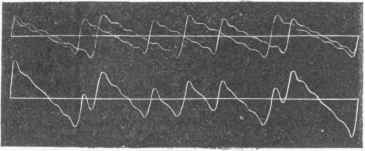
Fig. 15.- Resultant Curve formed by combining the curve of a musical note with that of its major third.


Fig. 16.

Fig. 17.

Fig. 18.

Fig. 19.
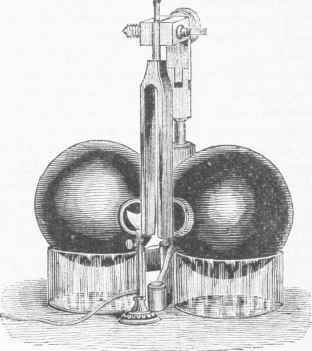
Fig. 20.
The Sound #1
The Sound, a narrow strait, forming one of the passages between the Cattegat and the Baltic, and separating the Danish island of See-land from the coast of Sweden. In its largest sense it extends N. and S. 66 m., and opposite Copenhagen it is about 15 m. wide. But the name is properly confined to the narrowest part of the passage, which between Elsinore and Helsingborg is not more than 3 m. wide. The Great Belt gives a wider and deeper communication between the Cattegat and the Baltic, but the Sound is most frequented because shorter and favored with better winds. The depth ranges from 4 to 20 fathoms. The Danish kings formerly owned the territory on both sides of the strait, and from time immemorial levied duties on all vessels passing through it; but this is done no longer, the right having been bought off by other nations, under treaties concluded in 1857.
Continue to:


My Books

