


William Whewell
Description
This section is from "The American Cyclopaedia", by George Ripley And Charles A. Dana. Also available from Amazon: The New American Cyclopædia. 16 volumes complete..
William Whewell
William Whewell, an English philosopher, born in Lancaster, May 24, 1794, died in Cambridge, March 5,1866. He graduated at Trinity college, Cambridge, in 1816, obtained a fellowship, and was professor of mineralogy from 1828 to 1832. In 1838 he was elected professor of moral theology or casuistry, in 1841 became master of Trinity college, and in 1855 vice chancellor of the university of Cambridge, when he gave up his professorship. His first publications were mathematical works for the use of students of the university. In 1833 he published "Astronomy and General Physics considered with reference to Natural Theology,11 being the third Bridgewater treatise (new ed., 1864). This was followed by philosophical works, the most important of which are: "Four Sermons on the Foundations of Morals "(1837); " History of the Inductive Sciences11 (3 vols., 1837; 3d ed., 1857); "Philosophy of the Inductive Sciences11 (2 vols., London, 1840; remodelled in 3 parts, 1858?60); "Lectures on the History of Moral Philosophy in England" (1852; new ed., 1862); and " The Platonic Dialogues for English Readers" (3 vols., 1859-'61). Among his other works are: " Architectural Notes on German Churches" (1835); "Thoughts on the Study of Mathematics" (1835); "On the Principles of English University Education " (1837); " On Liberal Education " (3 parts, 1845-'52); " Of the Plurality of Worlds" (anonymous, 1853); and "Lectures on Political Economy" (1863). He also translated and edited numerous works.
An account of his writings, with selections from his correspondence, was published by Isaac Todhunter in 1876.
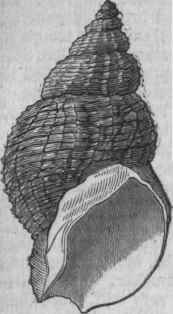
Common Whelk (Buccinum undatum).
Continue to:


My Books

