


Leek
Description
This section is from "The American Cyclopaedia", by George Ripley And Charles A. Dana. Also available from Amazon: The New American Cyclopædia. 16 volumes complete..
Leek
Leek (allium porrum), a plant of the same genus with the onion, a native of the shores of the Mediterranean, and naturalized in other parts of Europe. It has been long in cultivation, and was probably known to the ancient Egyptians. Like the onion it is a biennial, but differs from that in having flat leaves, and in not forming a large flattened bulb; in the leek the lower part of the plant, which may be regarded as an elongated nearly cylindrical bulb, is the edible portion, the size of which is increased in cultivation by drawing the earth up around it. The seeds are sown in spring in very rich ground, and the plant is given the same cultivation as the onion, and is ready for use in the fall. Leeks cannot, like the onion, be kept in the dry state, but if required for use during winter must be preserved in trenches, like celery. In mild climates they may pass the winter in the open ground without protection. The second year the plant throws up a stem 2 to 3 ft. high, which bears an umbel of white flowers marked with purple. Though the odor and flavor of the leek are decidedly alliaceous, they are very distinct from those of the onion; and it is much used, especially by Europeans, as an ingredient in soups and stews.
The dish "cock-a-leekie," known at least by name to the readers of Scott, is a favorite with the Scotch; it consists of an old fowl stewed to tenderness with an abundance of leeks. - Several native and one introduced species of allium are known to farmers as wild leek and wild garlic. They are objectionable in pastures, as they impart to the milk and butter from the cows which feed upon them a most disagreeable odor. One species which occurs in wheat fields, bears small bulblets instead of seeds; these are not much larger than a grain of wheat, and when mixed with the grain injure the flour. Good cultivation and a proper rotation of crops are the only remedy.
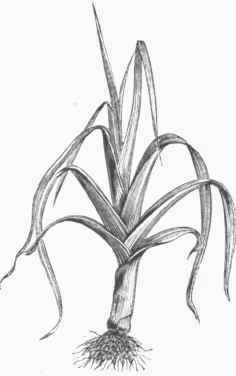
Leek.
Leek #1
Leek, a seaport town of Prussia, in the province of Hanover, on the Leda, about 1 m. above its entrance into the Ems, and 16 m. S. of Aurich; pop. in 1871, 8,932. It has three churches (Reformed, Lutheran, and Catholic), a Mennonite meeting house, a synagogue, a gymnasium, and an industrial school. It has considerable navigation and ship building, and an increasing number of manufactories.
Continue to:


My Books

