


The Engadine. Part 8
Description
This section is from the book "Engadine - John L. Stoddard's Lectures", by John L. Stoddard. Also available from Amazon: John L. Stoddard's Lectures 13 Volume Set.
The Engadine. Part 8

Avalanche Galleries On The Bernina Pass.
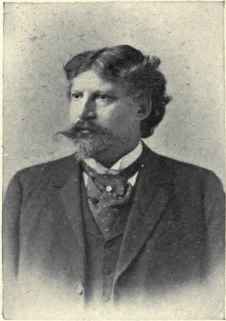
My Friend, Francois Barberat.
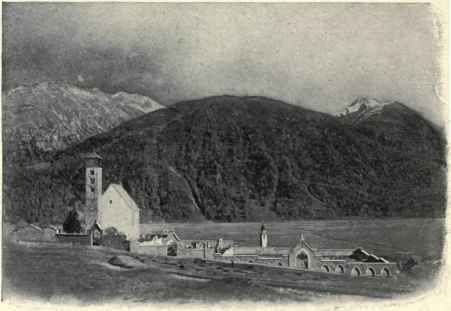
The Court Of Peace, Samaden.
Sleep, noble soul! Thy clarion voice no more Shall thrill enraptured thousands with delight;
No whisper greets us from the silent shore Whereto thy gentle spirit took its flight;
Yet something tells us we shall hear again
Those seraph tones, - a nation's joy and pride;
Love would not call thee back to earthly pain. Yet ah ! if love could save, thou hadst not died !
Less than an hour's drive beyond Samaden lies the healthand pleasure-resort of St. Moritz. Perhaps I should have said resorts; for under the one saintly name are grouped two separate localities, -the Village and the Baths. The former, built upon a bluff above the northern border of a pretty lake, enjoys the proud distinction of occupying the loftiest site in the whole Engadine valley. The latter, on the lake's southwestern shore, seems somewhat humbled by a realization of the fact that it is more than two hundred feet nearer the sea level. This difference truly is not great, but it enables St. Moritz the Village to look down on St. Moritz the Baths, and no less certainly compels the Baths to look up at the Vil-lage. The latter way of looking is proverbially the harder; and hence the lowlier hamlet, in the autumn, - possibly stared out of countenance, - shuts its myriad eyes, and hibernates, while the superior Village, always wide awake, boasts of receiving even in winter more than a thousand guests. So far as business methods are concerned, these settlements represent
" Two souls with but a single thought "
(The exploitation of the foreigner), " Two hearts that beat as one "
(At his approach).

The Monument.

St. Moritz, Upper Engadine.

The Village.

Sils, Near St. Moritz.

The Lake Of St. Moritz.
Moreover, they are now united not only by this tie of interest, but by a thousand railroad ties, which underlie a trolley line, - a fact which pleases those who like electric trams among the Alps. The Smart Set is especially in evidence at St. Moritz. The hotels are enormous and luxurious; the amount of clothing worn - and not worn - by the guests affords abundant opportunity to study art and nature; the corridors and drawing-rooms at night gleam scarcely less with diamonds than with electricity; and lest a single entertainment should be lost, the hotels furnish blotting pads for every bedroom, containing lists of all the balls which are to take place during the week. If, therefore, this is what one seeks amid the awful majesty of Switzerland, one should assuredly go to St. Moritz. To some extent, indeed, a quiet traveler can escape it by gliding out upon the lake in one of the cushioned boats with dainty awnings, which wait all day along the shore; but the fair sheet of water is not large enough for one to get entirely beyond the sight and sound of what he fled from on the land; and on this bit of liquid emerald breezes are not always zephyrs. Of course there is another side to St. Moritz. Its stainless, vivifying air brings to it invalids as well as idlers, and its remarkable iron springs are blessings just as permanent and potent as its sheltering hills. In fact, the serious health-seekers, who in the handsome, well-appointed Kurhaus test the efficacy of these waters, find themselves strengthened and exhilarated by their use. But quest of health alone would never bring to St. Moritz the crowds that flock there in such numbers. The deity of the place is Sport, which is so firmly seated here upon its throne, that it no longer goes away in winter, but reigns here practically the entire year. The "cold-air cure " for lung diseases had already brought for many winters numerous visitors to Davos - the scene of Beatrice Har-raden's well-known story, "Ships that pass in the Night" - before the hotel managers of St. Moritz awoke to the advantage of having winter seasons of their own. At last, however, they bestirred themselves to provide double windows and steam heating, whereby their patrons could be comfortable, even when the outdoor temperature might be twenty degrees below zero; and such, indeed, was their activity, that St. Moritz has now more winter visitors than its neighboring rival. Unquestionably life at Davos, although not without its pleasures, is taken much more seriously than at St. Moritz, where more than a thousand people, mostly English, spend the winter merely for the sake of outdoor pastimes. The skater's rhythmic movement through the crystal air on ringing blades of steel; and the tobogganer's exciting plunge, with savage zest and breathless swiftness, down a frozen track, a thrill with the intoxicating sense of pleasure purchased at a risk of peril; these, and the still more hazardous sport of "skee-ing" down a mountain side, are practiced here with a persistency and rapture almost inconceivable to most American adults. In pleasant weather people spend the entire day here in the open air. It is true, the days in winter are extremely brief, their minimum duration being four and a quarter hours. Hence one must make sport while the sun shines, and a moment's loss of solar warmth is so regretted, that lunch is often served al fresco to those who will not go for it to their hotels. On stormy days, of course, and after dinner, these outdoor games must be replaced by indoor entertainments such as "bridge" and dancing. Occasionally an arm or leg is broken in the day, a reputation shattered in the evening; but que voulez-vous? "What else," one asks, "can be expected ?" It may be a surprise to most Americans to know that there exist in Europe literally thousands of adults who make such outdoor sports the principal object of their lives, and who select their place of residence, their associates, and even their modes of living, chiefly with reference to the possibility of finding and enjoying "Sport," to which both gray-haired men and women often give themselves with the enthusiasm shown by children for their tops and marbles. These champions of hockey, tennis, football, "curling," "skee-ing," and a host of other outdoor pleasures, regard us in the United States as either too absorbed in money-getting, or too lazy to take a necessary amount of exercise. There is some truth in this; but if we go too far in one direction, our English cousins go as far in the other; and it is not impossible that their excessive zeal for sport has much to do with that alleged decadence in commercial energy and individual enterprise, which their own journals constantly deplore.
Continue to:


My Books

