


Fracture Of The Ribs
Description
This section is from the book "The Horse - Its Treatment In Health And Disease", by J. Wortley Axe. Also available from Amazon: The Horse. Its Treatment In Health And Disease.
Fracture Of The Ribs
Having regard to the large and exposed surface formed by the back ribs, and the peculiar occupation and surroundings of the horse, fracture of the ribs is much less common than might reasonably be expected.
If the front ribs are protected against external violence by thick muscles, and also by the scapula or shoulder-blade, those behind are possessed of great elasticity, and, having no fixed attachment below, are much more capable of yielding to external force without breaking than those in front. Both, however, are now and again forced beyond their powers of resistance, and a fracture follows. This may be transverse, as in fig. 337, oblique (fig. 344), or vertical, with or without displacement. The displaced fragment, if directed inwards, may puncture the pleura or the lung, thus inducing complications of pleurisy or pneumonia, or both, or it may pass through the skin and convert a simple into a compound fracture.
Both these events add very materially to the danger of the case, and too often give it a fatal turn.
Causes
Fracture of the ribs is usually the result of external violence. Sometimes a kick from another horse, at others a collision with the shaft of a trap, or the pole of a coach or brougham, will cause it; at others it results from a fall on a hard surface, where the legs slip from under the body and the ribs strike the ground first and without any break in the fall.
Symptoms
Fractures of the ribs frequently occur without displacement, and undergo repair without interference of any kind. In these cases there is nothing to be seen outwardly, and, excepting a slight thickening over the line of fracture, there is' nothing to be felt. The part is tender to touch, and deep pressure causes the patient to recede from it and to emit a subdued grunt. Tenderness may be found to exist on neighbouring ribs, and some stiffness will be observed in turning.
Where the broken parts are displaced or contused, more or less swelling appears over the site of fracture. By following the ribs downwards with the fingers before this occurs, the breakage will be recognized as an irregularity in its continuity, with more or less projection of one of the broken segments from the general surface. With this will be associated great soreness at and about the seat of injury.
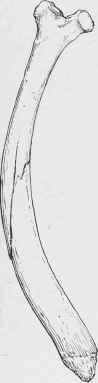
Fig. 344. - Oblique Fracture of Rib (third rib, right side, outer aspect).
The fracture may be complicated with perforation of the chest or an external wound. In the former case pleurisy of a local or general character will be excited, or should the lung be punctured or torn, as sometimes occurs, signs of pneumonia will be present, or both may exist together. In these cases the breathing will be more or less disturbed, accompanied by cough, and the more serious symptoms incidental to disease of the chest. An external wound connected with traumatic injury to the pleura and lungs is a serious complication, and one which is invariably attended with the greatest danger.
Where the broken ends of the bone are sharp and cutting, the intercostal blood-vessel may be divided and give rise to haemorrhage.
In fracture of the front ribs severe lameness of the fore-limb on the side of the injury is of common occurrence. This would seem to result from the movement of the broken bone by the serratus magnus muscle, which not only enlarges the chest in the act of inspiration, but supports the trunk as in a sling (fig. 44, Vol. I) between the fore extremities.
Treatment
In cases of simple fracture, without displacement, it is good practice to place the animal in slings for a fortnight or three weeks, and then provide him with a good straw bed and keep him quiet.
Where displacement has occurred, by which the lung is interfered with, it might be necessary to attempt re-position notwithstanding that the operation is attended with considerable danger.
For this purpose an incision will require to be made over the seat of fracture. The finger or a suitable lever must then be carefully introduced and brought to bear on the inner side of the front edge of that portion of the bone whose point is directed inwards, and when the chest expands in the act of breathing an attempt should be made to bring the displaced fragment into position by pressing it outwards.
Before proceeding with the operation the hair should be closely clipped off the part, and the skin thoroughly washed with soap and water, and then well irrigated with carbolic or some other antiseptic solution. Instruments should also be disinfected, and the wound subsequently treated anti-septically.
If the displacement does not interfere with the lung, it is not desirable to interfere with it. Time and a period of rest in slings is all that can be done to effect a union.
Where a wound is produced at the time of the fracture, advantage should be taken to rectify displacement, if such exists, by the method above described under antiseptic precautions.
Continue to:


My Books

