


How To Become A Teacher Of The Pianoforte
Description
This section is from "Every Woman's Encyclopaedia". Also available from Amazon: Every Woman's Encyclopaedia.
How To Become A Teacher Of The Pianoforte
In this article, specially contributed to Every Woman's Encyclopaedia, Mr. Oscar Beringer, so well known as the director of the Philharmonic Society and Examiner to the Royal Academy of Music and Royal College of Music, explains lucidly, and with the authority of wide experience, why the musical profession is overcrowded. Yet a word of encouragement finds place in his advice to the novice, for he bids those to whom music is indeed a vocation to follow their bent, and shows how they may best attain their goal
Advantages Of An Academy Training
Few things are more regrettable than the fact that there is a vast army of men and women who, thinking they would like to become teachers of the pianoforte, do so without finding out previously whether they are in the least suited to such a profession.
Of pianoforte teachers, at the moment, the supply far exceeds the demand. Among the upper and middle classes music is not so generally included in the educational curriculum as it was some years ago. At one time it was considered " shocking " not to have learned to play the piano. Nowadays, there are so many other subjects to be learned that pianoforte teachers find pupils increasingly difficult to secure. In many cases those who want to learn attend some big school of music, probably intending to become teachers eventually, after they have passed a few examinations. This, however, is not the way in which teachers of the pianoforte are made.
For the hundreds of students at schools or academies of music, there are but few posts open for competition. Pupils have a way of overlooking this fact; and often see only themselves, imagining they have but to secure the necessary certificates for work to fall into their hands. Many of them think that a long list of private pupils or a position in some school can be had for the asking.
They are terribly mistaken. It is perhaps as well that marriage prevents many of them, the feminine section especially, from realising their mistake in the bitterest fashion, thus saving an already overcrowded profession from an absolute deluge of incompetent teachers.
The truth of the matter is that most of these aspirants start their career without being in the least fitted for it. Only a small percentage of musical students in England are really fitted to become teachers of the pianoforte. Yet to do so is their hope. The real pianoforte teacher is born, not made.
Let me not be misunderstood. There is always room and work for competent and genuine teachers. It is only because so many who are not fitted for this arduous profession take it up and secure a certain amount of work that the pinch is felt all round, and the market appears to be overcrowded. At the moment there are undoubtedly too many pianoforte teachers, but not too many good ones. The really great ones can be almost counted on the fingers. Therefore, before outlining the best method of training for pianoforte teaching, I should like to say a little about the qualifications demanded from a teacher of any value, and ask those who take up music teaching because it seems "as good as anything," to pause before making a grave mistake.
Before all else, patience is demanded from the teacher of the pianoforte. But patience is useless without musical ability. The ideal teacher must be a thorough musician in order to succeed. And not only must he or she be master of the piano, but must have studied music practically and scientifically.
Much more is expected of the pianoforte teacher to-day than was formerly the case. Music marches with the times ; and mere superficial knowledge of scales, arpeggios, and pianoforte literature is not enough. The most vital factor is a real talent and gift for music, which is innate, and can never be acquired.
Next comes the ability to teach. Many a fine executant is a poor teacher. A real teacher must not only be a good executant, but also able to impart knowledge.
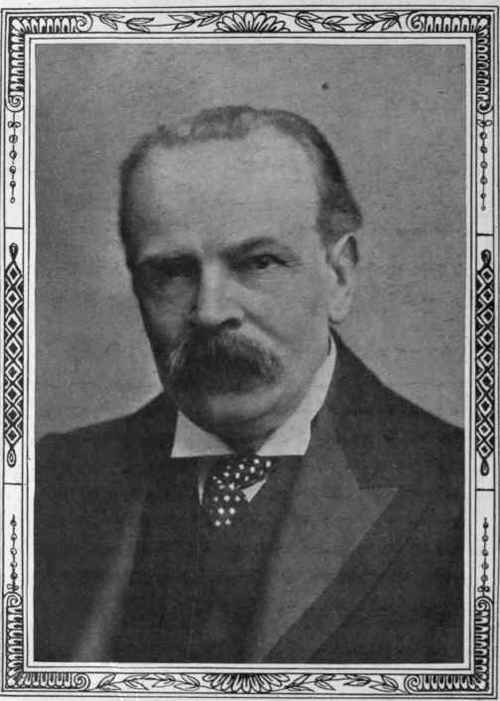
Mr. Oscar Beringer, Director of the Philharmonic Society and Examiner of the Royal Academy of Music and Royal College of Music, one of the greatest living authorities on his art
Photo, J. Russell & Sons
A musical training is by no means cheap ; and, save for those at the top of the tree, the emoluments are far from great. Some of the great pianists find that concert playing, without teaching to support it, is useless as a means of livelihood. A girl who makes up her mind that " music " is to be the aim of her life must be prepared to devote several years to her training, without the hope of making a penny to balance her expenditure. The last thing I should desire to say to all and sundry would be : 'become a teacher of the pianoforte. Pass your exams., and a position is waiting for you, also a good income all your life! Rather, I would say:
" Pause, and consider carefully. Is music really your metier ? Do you feel that it is music or nothing ? Are you convinced that there is that spark of genius in your soul and your finger-tips that renders music the only thing worth having in the world ? If so, be a teacher, or an executant, or both! If not, then treat music only as a pleasure."
Among the additional subjects in which modern pianoforte teachers ought to be qualified are ear training, choral training, training of children's voices, and a knowledge of Tonic Sol-fa. The newest and highest examin-ation of the Royal Academy of Music is for the Associateship of the Academy. This is the best examination for teachers, and includes all the above mentioned subjects.
Then, too, if a teacher desires to pass well, she must be a skilled executant, thoroughly conversant with harmony and form, and able to analyse musical compositions. This means much hard work ; and if musical ability is lacking, it is labour thrown away.
A teacher in most schools, it should be remembered, has to give instruction in choral singing and the training and development of children's voices, in addition to pianoforte lessons. This is important.
The quickest and surest method of training for pianoforte teaching is to join one of the musical academies in England. In London, the Royal Academy and Royal College of Music rank highest. The Guildhall School of Music also does good work, but does not appeal quite so strongly to professionals. Every big provincial city - Liverpool, Manchester, Birmingham - has its own school or college of music.
It is wiser for many reasons for a would-be teacher to join an academy or college rather than go to a private teacher. A private teacher can provide, as a rule, instruction in only one subject ; therefore additional fees have to be paid to learn other branches.
This is both expensive and unsatisfactory. For practically the same fees it is possible to join an academy, and learn everything that is bracketed with the profession of pianoforte teaching.
The instruction, too, is given by specialists in each particular branch. As a member of an academy, a student lives in a musical atmosphere, talks music, and thinks music ; attends concerts, and gets to know musicians of all kinds - a factor that proves useful in after life. In short, she becomes saturated with music in every form.
Having passed the necessary exams., and armed with the needful certificates, an ex-student who has shown promise naturally stands the first chance of any work or position that happens to rest with the heads of the academy.
A private clientele is hard to work up, and is always uncertain ; though, for a good teacher, fees are deservedly high, a guinea a lesson being charged by most well-known teachers. But for a woman especially, a definite position at a private school or a London County Council school is more assured, though perhaps not quite so remunerative or artistic. Private pupils fluctuate ; but a fixed salary does not.
If a prospective teacher of pianoforte lives in the country and cannot attend an academy, her wisest course would be to seek the principal organist of the district, and ask his advice. Probably he would teach her himself, or could recommend somebody reliable.
Though the English market is terribly overcrowded, there is room for good teachers in the Colonies; in fact, such are wanted. In South Africa, Australia, and Rhodesia - all countries that are opening up - new schools are rising, new towns are starting, new people are settling. Good pianoforte teachers have a far wider field there than at home. In South African schools salaries range from £150 to £350 a year. And in Australia there is more room still. I can only reiterate - the world wants teachers who can teach, and for them there is work.
Continue to:


My Books

