


True Love Stories Of Famous People. Two Warriors In Love - Wellington And Wolfe. Part 3
Description
This section is from "Every Woman's Encyclopaedia". Also available from Amazon: Every Woman's Encyclopaedia.
True Love Stories Of Famous People. Two Warriors In Love - Wellington And Wolfe. Part 3
Her third son, in fact, was never a favourite with Lady Mornington. And Lord Morning-ton died when the boy was in his infancy. Even his brothers looked coldly on him. In fact, they almost despised him, for Arthur they regarded as the duffer of the family, a dreamer, a waster, deficient both in brains and spirit. And with this reputation he went to school. Nor was he able there to live it down.
Now, we have been told, and told, surely, till we are tired of hearing it, that Napoleon was defeated on the playing fields of Eton. It is curious, therefore, that the very hero of Waterloo should have been known at Eton as a dullard. But it was so. In school games, indeed, Arthur Wellesley took little or no part. As a scholar he was an utter failure. Nor did he form even a single friendship among his schoolmates.
In short, he was an unpopular boy, who shunned and was shunned by his fellows. And, when he left school, he was sent into the Army, not because he really wished to be, not because he showed any signs of genius, but mainly because the Army seemed to be the proper and only possible vocation for a younger son of such mediocre ability. Surely a remarkable and inauspicious beginning for a great career!
He secured his first commission when eighteen years of age as an ensign in the 73rd regiment. But ultimately, in 1793, thanks mainly to the generosity of the eldest brother, he was able to purchase the lieutenant-colonelcy of the 33rd, the regiment in which he served for many years.
And it was at about this time that began the first and also the last real love story that his biographer can chronicle. As one of the aides-de-camp to Lord Westmorland, then Lord-lieutenant of Ireland, Wellesley, of course, moved much in society - that is to say, he had to attend state functions at the Castle in Dublin. And it was at one of these functions - a dinner-party, I believe - that he first made the acquaintance of Lady Catharine Pakenham.
Although he had not met the girl before, he must already have heard of her, for she was well known as one of the most fascinating of the beauties who frequented the viceregal Court. Nor did Wellesley find her reputation exaggerated. Indeed, seated next to her, the young soldier fell an immediate victim to her charms. At last he felt that he had found somebody who understood him, somebody who could give him that sympathy he lacked so sadly.
In fact, he was very happy and lost no time in renewing the acquaintanceship. It quickly ripened, day by day becoming closer, until at last Wellesley dared to tell Lady Catharine that he loved her. And she - in reply she said she loved him also. And the great Duke lived the happiest moment in his life.
But from love's young dream he soon received a very rude awakening. The Earl of Longford, Lady Catharine's father, was more than angry when he heard of what had happened. That a young officer, a younger son, with no means other than his pay, and no apparent prospect of bettering his position should dare thus to steal Catharine's heart - the impudent young puppy! His lordship put his foot down firmly, and separated the would-be lovers peremptorily. Nor was there any pledge between them save a tacit understanding that both should wait till better times.
And so Arthur Wellesley went his way sad and disconsolate. So sad, in fact, that he thought of abandoning the Army, and seeking more remunerative work. Indeed, he begged his brother to procure for him a position in the Customs office. His brother tried. But, fortunately, the application was refused. Had it been granted, what might not have happened? The fate of Empires often depends on very slender threads.
In 1797, therefore, as a colonel, the future victor of Waterloo sailed with his regiment for India. For ten years he was away. Ten years - it is a long while. And not once during all this time did he write to Lady Catharine, nor she to him. But, then, how could he write? A man with Wellesley's stern sense of honour would hardly carry on a secret correspondence with anybody, much less with a girl whose good name he valued highly, the girl he loved.
Yet still he remained true to her. Once he had offered her his hand and heart. Whenever she might be able to accept it, it should be hers to take. This was his determination.
And on his return to England he sought her out forthwith, and renewed his suit. And now his position was a very different one. The Earl of Longford, indeed, welcomed him warmly, and encouraged him in his wishes, for Wellesley, the hero of Assaye, was no longer an obscure, unheard-of soldier, but a great man with clearly a great future before him, a man who had deserved well of his country, and whom any father would be proud to let his daughter marry.
But ten years - it is indeed a long time, a big chapter out of the book of a girl's life. And time had wrought its inevitable changes. The man, it is true, had only ripened in his manhood. But the girl - she had passed irrevocably beyond her girlhood days. No longer the fresh young creature who once had fired a soldier's heart, she was now a woman, and an embittered woman, embittered, perhaps, by the long absence of her lover, for during all those years of separation not one word had she received from him. And then, again, even her beauty had faded. Some say that she had lost it altogether, that an attack of smallpox had robbed her of every charm.
Nor was Wellesley unconscious of the change. But blindly he shut his eyes to it, and in due course married her. Honour left him with no alternative.
But alas! the marriage did not prove a happy union. How could it have been? Once it has been allowed to burn low, it is hard, very hard, to rekindle the fire of love.
But Wellington, although never a lover his wife, was always a just and generous usband. And she for her part ever regarded him with unbounded admiration. Still, she failed utterly to understand him. His interests were never her interests. And then, again, she was afraid of him, and, because she was afraid of him, practised foolish and unnecessary little deceptions on him. This he could not tolerate, this and debt. And the duchess was wilfully extravagant: keep herself free from debt she could not.
And so each new year saw the breach grow wider which separated wife from husband. Before long not even patience could span it. It was a fatal rift. And it sprang into being almost on the wedding day. Wellington then discovered that at the time when he returned from India his wife had been engaged to another man - another man whom she threw over callously in order that she might many him. For this he never forgave her, not because of her attachment for the other man, but because she herself had not told him of it. Henceforth, she never held his confidence.
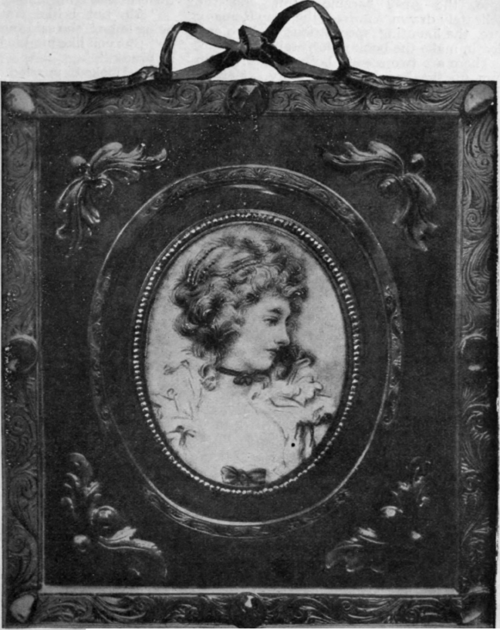
The portrait of Miss Katherine Lowther worn by Wolfe up to the very day before his death. Subsequently it was returned to her, at the request of her dying lover, set in jewels A reproduction from the original, now in the possession of Lord Barnard
It is a sad story. Yes; even greatness has its penalties. This Wellington himself maintained often and often. But surely the woman deserves more pity. Her loss was irreparable. She failed to win the love of the Iron Duke, she who really had the opportunity. And to have won the love of such a man surely would have been a prize beyond all price.
Continue to:


My Books

