


September - Third And Fourth Weeks. Flowers. Sept. 16-30
Description
This section is from the book "The Garden Week By Week Throughout The Year", by Walter P. Wright. Also available from Amazon: The Garden Week by Week Throughout the Year.
September - Third And Fourth Weeks. Flowers. Sept. 16-30
Arum Lilies
Plants in the garden that have been checked by being cut round with a spade will be ready to lift now. They should be potted as fast as they are taken up, as if left lying about they might get dry and sustain a check which would cost them all their foliage. In any case they are apt to lose a leaf or two, but that is of no great consequence. The small plants may go into 5-inch pots, the larger into 6-inch or 7-inch. Fibrous loam, with a quarter of decayed manure or leaf mould, and some sand, will suit them. They may be kept rather dry for a few days after potting, but as soon as they start growing again watering must be resumed. They will be quite comfortable on a greenhouse stage. When buying Arum Lilies, remember the great merits of the variety called the Godfrey; it is remarkably free alike in growth and bloom.
Winter Flowering' Begonias
It is time to give attention to the beautiful fibrous-rooted Begonias which are so useful for winter flowering, notably Gloire de Lorraine and Turnford Hall, which are pink and white respectively. In earlier chapters it was suggested that they should be rested after flowering, and that when shoots broke from the pruned stumps they should be taken off as cuttings and struck. The young plants which resulted ought to be nice specimens now, suitable either for culture in pots or for hanging baskets. If they are in quite small pots they may be transferred to 5-inch or 6-inch, which will be large enough for flowering them in. They should go into a light house with a minimum temperature of 550 to 6o°. This will be warm enough to bloom them in, and to keep them in beauty for many months.
Bush Chrysanthemums
Many amateurs find that the culture of Chrysanthemums on the three-stem principle for fielding limited numbers of very fine flowers, although full of interest, has its drawbacks. It does not yield plants suitable for low groups, or for rooms, or for producing large quantities of cut bloom. Bush plants, grown from cuttings in spring and pinched two or three times, will serve these purposes admirably. They will soon produce buds, which are likely to produce terminals (see previous remarks) in clusters, and these can be thinned or not at discretion. If disbudding is practised, it should only be done moderately, as clusters of small flowers not only look nice on the plants, but are very useful for cutting. The plants may be fed with liquid manure twice a week. Liquid from natural manure ought not to be used much darker than the colour of amber.

Fig. 73. - Lifting Arum Lilies.
a. The line around the plant where the tool should be inserted to raise the plant.
b. The plant duly potted.
Early Hyacinths
Reference has been made to the potting of white Roman Hyacinths for early bloom already, but some amateurs like to have early flowers of the large Dutch Hyacinths, and they may be interested to hear that there are several good sorts which are suitable for early blooming. Amongst them may be noted the single blues Charles Dickens and Regulus (the former is the better of the two), the double white La Tour d'Auvergne, and the single reds, Amy and General Pelissier. Bulbs of these varieties are generally procurable before the end of September. They may be potted singly in 5-inch pots, in loam, leaf mould, and sand, with the tips protruding about half an inch, and plunged in cocoa-nut fibre refuse for about six weeks, then put in a warm house.
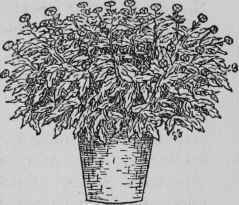
Fig. 74. - Disbudding Bush Chrysanthemums.
This shows severe disbudding, only central buds being retained. The disbudding may be lighter if desired.
Christmas And Lenten Roses
We glanced at a few fine varieties of these beautiful plants in an early chapter, and saw that they were well worthy of the attention of all flower lovers. The Christmas Roses (Helleborus Niger and other species and varieties of Helleborus) are particularly valuable, because they produce large flowers - in most cases pure white - in autumn and winter. The Kew plan of colonising them among hardy Ferns out of doors was mentioned. The Fern fronds act as a shelter, and as they decay form a carpet, so that there is no fear of soil being splashed up to stain the purity of the lovely blossoms of the Christmas Roses. Readers who are lovers of hardy Ferns might consider this plan of associating two distinct, yet in their way equally attractive, classes of plant. The combination might be formed in any shaded and sheltered spot. The colony would prove attractive both in summer and winter. September is the best month of the year for planting Christmas Roses. They delight in a deep, cool soil. If they are put in a yard apart there will be plenty of room for planting the Ferns between them in the following spring. For the present, some clean litter may be scattered round the plants when they come into bloom, to act as a protection and a preservative of their purity.
Poinsettias
These brilliant plants, struck from portions of old stem as advised a few weeks ago, and grown in frames, ought now to be placed in a greenhouse.
Berry-Bearing So/anums, planted out of doors in the same way as Arum Lilies, may now be similarly lifted and potted.
Violets
The time is near when Violets that are intended for flowering in frames in winter must be lifted. As a preparatory measure, they may be checked by driving a spade round them a few inches away from the central crown. If Violets are being grown in pots, any runners which form should be cut off, or they will rob the old plants.
Continue to:


My Books

