


5. Tumours Of The Testicle
Description
This section is from the book "A Manual Of Pathology", by Joseph Coats, Lewis K. Sutherland. Also available from Amazon: A Manual Of Pathology.
5. Tumours Of The Testicle
These are mostly somewhat malignant in their characters, and there is a peculiar tendency to a mixed structure.
Enchondroma is not infrequent in the testicle. It is usually mixed with other forms, but it may occur pure. As the tissue hero is heterologous it often shows malignancy. Thus it has been found growing into the lymphatics and blood-vessels around, and it forms secondary tumours in the lungs. For the rest, the occasional occurrence of fibromas, lipomas, myomas of the striated variety, and even osteomas, has been observed.
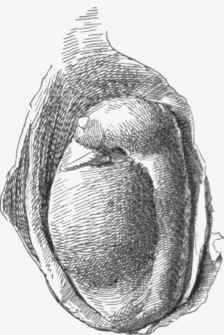
Fig. 473. - Tuberculosis of testicle. The epididymis is greatly enlarged and partly surrounds the testicle.
Cystic Tumours
The cystic tumours of the testicle show considerable analogies with those of the mamma and are capable of a somewhat similar division. The cysts in all cases originate in gland tissue, which is believed by some to be the regular seminal tubules, but, according to Eve, is rather the rudiments of the Wolffian body which are retained at the hilum of the testis, as similar remains exist at the hilum of the ovary. The tumours originate chiefly at the hilum, and the tissue of the testis may be spread over them.
The tumours may be of considerable size, and present cysts of various shapes and sizes. The cysts are usually lined with cylindrical epithelium which is sometimes ciliated. The epithelium sometimes has the characteristic goblet form, such as that in the colloid ovarian cystoma.
The stroma varies greatly in structure. It may be fibrous, in which case the tumour may be called an Adeno-fibroma or a Cystic fibroma, or it may be sarcomatous, in which case the term Adeno-sarcoma or Cystic sarcoma is used. In some cases it has the structure of mucous tissue, hence Cystic myxoma. It is not uncommon to find pieces of cartilage in the stroma, and pieces of striated and of smooth muscle have been found.
Dermoid cysts are also met with having a complex structure like those of the ovary and containing hairs and sebaceous matter.
The spermatocele is also properly a cyst of the testicle, but it is considered below along with hydrocele.
Sarcomas occur frequently mixed with the tissue of other tumours, as the myxoma, enchondroma, etc. Even when the tumour is a pure sarcoma there may be combined the structures of various forms of this tumour, spindle cells, round cells, and mucous tissue. There may, however, be a simple round-celled sarcoma. The sarcomas generally form large tumours of soft consistence and rapid growth, and usually originate in the substance of the testicle. They occur in comparatively young persons, and are prone to metastasis, the secondary tumours occurring mainly in the lungs.
Cancer of the testicle connects itself with the cystioand adenoid sarcomas. It appears that not infrequently the glandular tissue in these tumours has more of the irregular atypic cancerous character than of the strictly glandular, and in particular the epithelial masses do not possess a membrana propria. These characters are also expressed in the fact that sometimes these tumours extend to the neighbouring lymphatic glands, while others penetrate more readily into the veins.
Proper cancer of the testis is mostly a large quickly growing soft tumour - Medullary cancer. It involves the whole organ as well as the epididymis, converting them together into a massive tumour. It may also extend along the vas deferens, and to the lymphatic glands, inguinal, ]umbar, and pre-vertebral. From these glands it may extend to the radicles of the portal vein and so produce tumours in the liver, or more frequently to the radicles of the vena cava, producing tumours in the lungs. In the midst of the tumour we may have cysts formed by mucous or fatty degeneration.
The cancerous tissue is derived from the epithelium of the seminal tubules, and the stroma from the interstitial tissue. In a case of cancer of the testicle in an infant the author found the interstitial tissue presenting the characters of mucous tissue. It is necessary to mention that tumours may arise in connection with the blood-vessels, which have a resemblance in their structure to cancers, but which are properly plexiform angio-sarcomas.
Continue to:


My Books

