


13. Corbelling
Description
This section is from the book "Constructive Carpentry", by Charles A. King. Also available from Amazon: .
13. Corbelling
Corbelling. Corbelling (Fig. 17) gives a better support for timbers to rest upon. This often is made a place of decoration, or part of a cornice, or the base of the spring of an arch. 14. Brick walls. (A.) Brick walls vary in thickness in accordance with the requirements in different cities, but in general the thickness of the first story of the ordinary three-story dwelling is the width of three bricks or 13 inches, and the width of two bricks for the stories above, the foundation walls being from 4 to 8 inches thicker.

Fig. 16. - Lintels and Rowlock Arches.

Fig. 17. - Corbelling.
(B.) Upon the top of a brick wall, a wooden plate should be fastened by means of bolts extending down into the brick wall about three feet, to give a place to which the rafters may be secured, as shown in Fig. 18, and to strengthen the top of the wall.
(C.) Wooden bricks are pieces of seasoned wood made the size of a brick, but a little larger in the back than in the face, so that they will not pull out easily, and set in the wall at the proper places, to give a nailing for the finish and for the partitions.
CD.) A solid outside wall less than 16 inches thick should never be plastered directly upon the inside, as a long driving rain will soak through. A better way is to fur the inside with 1" strips and to proceed as if upon a stud partition, though the insurance men generally object to this method. ■ In consideration of their opinion, it is a good plan to nail a horizontal piece at the top and the bottom and every few feet between, to prevent the circulation of air, though this to some extent destroys the efficiency of the air space, as ventilation is checked.
A ventilated wall, or a wall so constructed that there are continuous air spaces in it, will prevent the moisture from coming through; it is warm in winter, cool in summer, and light in weight, but as it is an expensive wall to build properly, it is not used so much as it should be. Painting the outside of a brick wall is a fairly efficient method of preventing the rain from finding its way through, and in case poor bricks are used, as is common in some parts of the country, the wall should be painted. From an artistic standpoint, a painted brick wall is decidedly objectionable, as the texture of the bricks, and their soft color effects, are thereby destroyed.
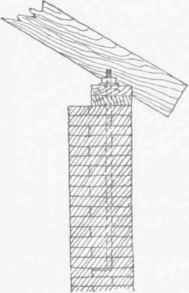
Fig 18. - Wooden Plate for the Top of a Brick Wall.
(E.) If the inside of a building is to be plastered, the brick wall should be laid roughly, and the joints should have no more mortar in them than is necessary to give the wall stability, as the open joints will help the plaster to take firm hold of the bricks.
Continue to:


My Books

