


Lumbering And Varieties Of Wood. Part 4
Description
This section is from the book "Elements Of Woodwork", by Charles A. King. Also available from Amazon: Elements Of Woodwork.
Lumbering And Varieties Of Wood. Part 4
Shingles should be of wood which will resist decay, and which has the least tendency to warp and split.
Boards which are to be used for siding should hold paint well, and be as free as possible from the tendency to warp, split, and twist when exposed to the weather.
(B.) All material used in framing a building should be weather-dried in good drying weather for at least thirty days for each inch in thickness, and that used for inside and outside finish and floors should be thoroughly kiln-dried, and kept in a dry place until ready for use. These condi tions are not always obtainable, but if the best results are desired,.they should be followed as closely as possible.
The woods hereafter described comprise the principal varieties used by the wood-workers of the United States.
(C.) Ash (deciduous, or broad-leaved) is an open grained, light-colored wood, in which the porous portions of the annual rings are quite prominent, thus making it somewhat coarse-grained.
It grows in the Northern states, and is a wood of medium weight and hardness. It is tough and elastic, the young growth being much used in the manufacture of wagons, machinery frames, and for similar purposes, as it is not expensive, quite easily worked, and very strong. It has a tendency to decay, and is often badly infested with insects; therefore it is not suitable for building construc tion or for contact with soil.
Ash grows in forests with other broad-leaved trees, and is plentiful in many localities. There are two kinds of this wood recognized in commerce: the white, which is light-colored, and the black, which is of a brownish tinge, though there is little difference in the grain of the two. Sap is not considered a defect, but is regarded as the best part of the tree for some purposes. The wood grown in the Northern states is generally tougher than that grown farther south.
The wood from the older and larger trees is not so tough and hard as that from the younger growth, and is much used for cabinet work and for interior finish. It should be filled with a paste-filler, after which it may be brought to a fine polish. The wood holds its shape well and is useful for the purposes mentioned.
(D.) Apple (dec.) is not used for construction, as the proper dimensions cannot be secured, and as it is very stubborn to work. It is one of the best woods known to re sist splitting, and is much used for chisel and saw handles.
(E.) Basswood, or linden (dec), is a soft, porous wood, which shrinks considerably in drying. It is used for the backing of veneer work, for drawer bottoms of the com mon grades of furniture, for case backs, and similar pur poses, and is also much used in the manufacture of spools and other small articles which are made in large quanti ties. In building construction, basswood is used for ceil ings, and for other work where strength is not needed, though for use in such places it should be thoroughly seasoned, or the joints will open.
If steamed, basswood may be bent to almost any form. Steaming also cures to a great extent the tendency of this wood to shrink and swell.
(F.) Beech (dec.) is adapted for use in places where the ability to resist a heavy strain or hard wear is necessary, as in plane stocks, tool handles, and parts of machinery. In building work, it is used to some extent for flooring and for inside finishing. It is used also for furniture, though the difficulty of working it makes it more expensive than other equally desirable woods.
If exposed to alternations of dryness and dampness, it decays rapidly; if submerged, it gives fair satisfaction.
Beech trees are common through the Ohio and Missis sippi valleys, and are found to some extent in all of the states between the Great Lakes and the Atlantic seaboard.
(G.) Birch (dec.) is one of our most useful hard woods. It is found in abundance in the broad-leaved forests of the Eastern states and Canada. There are two varieties recognized in commerce, the red and the white birch. The former is used considerably for inside finish and for furniture. It takes a stain well, and may be made to imitate cherry or mahogany so exactly as to deceive any one but an expert. When finished in its own natural color, it is a satisfactory wood for the above uses, but as it ages, it turns to a muddy brown; as it is a stubborn wood to work, it is not popular.
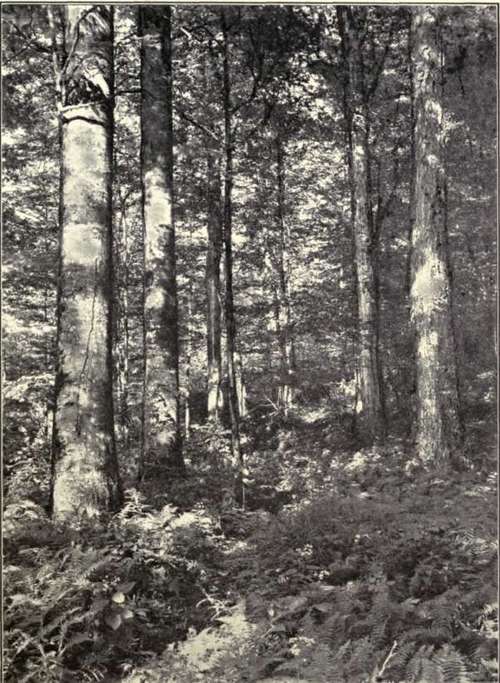
Fig. 18. - Beech and Sugar Maple Forest.
Canoe, or paper, birch is softer than the red variety, and is used to some extent by paper pulp makers, and for the manufacture of spools, dowels, and a large variety of small articles.
(H.) Butternut or white walnut (dec.) has a good grain and color; it is quite soft, though not so easily worked as are some harder woods, for it has a tendency to string while being dressed to a fine surface. It does not absorb mois ture readily, and holds its shape under trying conditions.
Butternut does not split easily, takes a fine polish, and is used considerably for furniture and for interior finish.
(I.) Cedar (coniferous, or needle-leaved) is of two varieties, the red and the white. The former is used con siderably for cooperage and veneers, lead pencils, and for lining moth-proof drawers and chests, as its strong odor and bitter taste protects it from the ravages of insects. The supply of red cedar is becoming limited, and it is now too expensive for common use, though our forefathers used it for shingles. The unwise and avaricious cutting of this valuable timber and of others, notably white and Georgia pine, has destroyed what would have been a supply for all time, if the cutting had been properly controlled.
White cedar is much more plentiful, and a much inferior wood; it is used for shingles, water tanks, boat building, and in the manufacture of barrels and cigar boxes. It is a very durable wood, and shrinks but little in drying. It is well adapted for burying, though not strong enough to resist a very heavy strain. It grows faster than the red cedar, and makes a larger tree.
Continue to:


My Books

