


Distillation. Part 4
Description
This section is from the book "Distillation Principles And Processes", by Sydney Young. Also available from Amazon: Distillation Principles And Processes.
Distillation. Part 4
Orris Root
In the case of orris powder, stills similar to those used for herbs generally, as shown on p. 463, are employed. The distillate is a paste known as concrete orris, and consists largely of myristic acid (b.p. 318° C.) with a small quantity of the valuable ketone irone (b.p. about 260° C), both of which on account of their low vapour pressures distil over only very slowly with steam, thus involving the distillation of a large proportion of water.

Fig. 201.
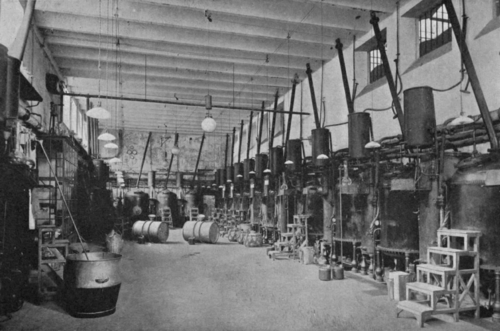
Fig. 202. - Usine de Grasse. Appareils de Distillation. Antoine Chiris.
Cohobation
In spite of the low degree of solubility of irone in water the loss of this valuable body, if the aqueous portion of the distillate were discarded, would be considerable, but" by returning this water to the still and using it to distil over a further quantity of oil the loss is minimised. This method is known as "cohobation," and is frequently employed when the oils concerned are difficult to separate from the aqueous portion of the distillate by reason of their solubility or tendency to emulsify in water.
In order to effect the return of this water several devices are employed. A usual method is to elevate the condenser and receiver at a level higher than that of the liquid in the still and to return the aqueous portion of the distillate to the still by means of a gravity feed. This method can only be used if the pressure inside the still is quite small, and in any case a liquid seal must be provided in order to prevent the egress of vapour by this inlet. The sealing may be effected by continuing the inlet pipe to well below
Main Condenser the still or, better, by passing the incoming liquid through a U-tube of considerable height, each 2 feet of height being equivalent to 1 lb. per square inch pressure inside the still.
The Antoine Chiris Plant
This is the method employed by Messrs. Antoine Chiris at Grasse, and can be seen in the accompanying photograph (Fig. 202), which is of general interest. The essential details of the plant are shown in the diagram, Fig. 202a.
The vapour from each still ascends by the wide pipe to a condenser on the roof, and the partly cooled distillate returns by the small pipe to a small coil condenser and thence it flows into a glass separating flask placed on a level with the top of the still. In this flask the essential oil separates from the water by flotation and is run at suitable intervals into the small storage " coppers " which can be seen standing on the floor. The aqueous layer passes from the bottom of the separating flask by means of an S-shaped side tube into a funnel, which is connected to a U-shaped pipe reaching to the floor and rising again to a short distance above the bottom of the still, finally entering at the side.

Fig. 202a.
John Dore & Co.'s Still. - The accompanying design (Fig. 203)1 shows a still which is very suitable for distilling substances such as orris or cloves where cohobation is desirable. The still is provided with a stirring gear, which keeps the mass in motion and ensures that it is completely treated. The condenser is designed to present a thin film of large area of vapour to the cooling water, thus ensuring rapid condensation. Two Florentine separating receivers collect the distillate, the second one serving as a liquid seal by means of which the aqueous portion of the distillate is returned to the still for cohobation.

Fig. 203. - John Dore & Co.'s Still.
Economy Of Heat And Water
The distillation of a large quantity of water involves the consumption of a large quantity of heat which is ultimately dissipated by the condenser water, and the process of distillation finally resolves itself into a transference of heat from the fuel employed to the condenser water which is run to waste. The process is obviously very extravagant and many schemes have been devised in order to minimise this waste of energy; frequently, also, economy in condenser water is of considerable moment, especially in districts where at times droughts prevail. In certain industries which involve the evaporation of large quantities of liquids the multiple effect apparatus has been employed with considerable advantage, but no attempt seems to have been made to use this device in the essential oil industry, although the difficulties involved are by no means insuperable. An economy which is, however, widely practised is that of feeding the still with water heated beforehand by the hot vapour coming from the still. Such a device is depicted in the accompanying design (Fig. 204),1 and consists essentially of a preliminary condenser (18), the cooling water for which is obtained from the receiver (25) after separation of the oil, obtained during the distillation, by means of the separators (24). A pump (26) is used to circulate this water, which becomes heated in the preliminary condenser (18) and returns to the still by the valve (27). The water is thus circulated cohobatively and on entering the still has a temperature neighbouring on 100° C, so that the quantity of heat saved is equal to that required to heat the water from the temperature of the distillate in the receiver to 100° C. The whole of the latent heat of the steam is dissipated in the main condenser (19) and is lost, but about 13 per cent of the total heat, neglecting radiation losses, is saved and a corresponding economy of cooling water is effected.
1 Designed by John Dore & Co., London.

Fig. 204.
A similar, well-known method is to feed the still with part of the hot water coming from the condenser, but this does not effect any economy of cooling water and only a very little of the heat. Occasionally small steam injectors are used to return the condensed aqueous layer to the still for cohobation, but this effects little or no economy of heat and none at all of cooling water.
1 Designed by Deroy Fils, Aine, Paris.
An economy of cooling water can readily be made by resorting to aerial radiation for an initial condensation. In the distillation of orris the condensation is almost entirely by aerial radiation, many yards of wide bore copper pipe being erected in a suitably elevated position. A better product is said to be obtained in this instance than with water-cooled condensers.
Continue to:


My Books

