


Chapter XII. Fistulae

Description
This section is from the book "Diseases Of The Rectum And Pelvic Colon", by Martin L. Bodkin. Also available from Amazon: Diseases of the rectum and pelvic colon.
Chapter XII. Fistulae
A Fistula is the result of an abscess, or burrowing of pus to a greater or lesser degree into the surrounding tissue. The term has been derived from the Latin word fistula, meaning a reed, pipe or tube-like channel, and is applied almost exclusively to the fistulous tracts found in the rectal region.
Arieses Fistula are variously described by different authorities. The division recognized generally will be considered as follows: the complete, the blind external and the blind internal.
Fistula are also classified according to the tissue through which they pass or beneath which they may ramify, as follows: Those which pass beneath the skin are called subcutaneous; those beneath the mucous membrane, sub mucous; where they traverse the tissue underlying both they are called -submerge-cutaneous; again those which pass on the outer side of the muscles of the rectal wall or anus are called sub muscular The names horseshoe, complex, and complicated fistula are applied to other forms that describe the shape, while others designate the organs involved, such as the recto-vagina, recto-vesicular recto-urethra and recto-labial.
Complete Fistula This form of fistula has two openings, one external opening in the skin, and one internal opening in the rectal walls, which make a complete fistulous sinus. It may be tortuous, or it may have lateral branches which have extended from the main tract. As a rule, the internal opening of a complete fistula is situated between the sphincter muscles, unless there is a sub mucous burrowing; it may then be higher in the rectum.
Blind External Fistula In this form there is an opening through the skin only.
Blind Internal Fistula - The blind internal fistula opens only into the rectum. There is no opening on the skin surface. The fistula may burrow beneath the mucous membrane, the muscles, or sub-much-cutaneously
Etiology. Fistula are the result of an abscess,-the origin of which may be specific or non-specific - which does not heal, the result of imperfect drainage and reinfection. Males are more often affected than females. The disease is one of middle adult life, but there are many exceptions to this statement, as children sometimes suffer from fistula at a very early age. The constitutional condition is probably one of the greatest factors in abscess formation in children, as tuberculosis, syphilis, and protracted intestinal diseases are marked predisposing causes. In the adult, constitutional conditions and catarrh inflammations of the rectum seem to be the most pronounced factors in the formation of abscesses as the result of infection carried either through the blood vessels, the lymphatics, to an ulceration in the mucous membrane of the rectum following an injury; or to the presence of a malignant or non-malignant growth, or invasion from a neighboring organ or bony structure.
Symptoms. The discharge of pus, with the occasional filling up of the fistulous tract, sometimes accompanied by fever, pain, a chill and malaise, are the common symptoms. Ocular and digital examination with the aid of a small probe will reveal the fistula.
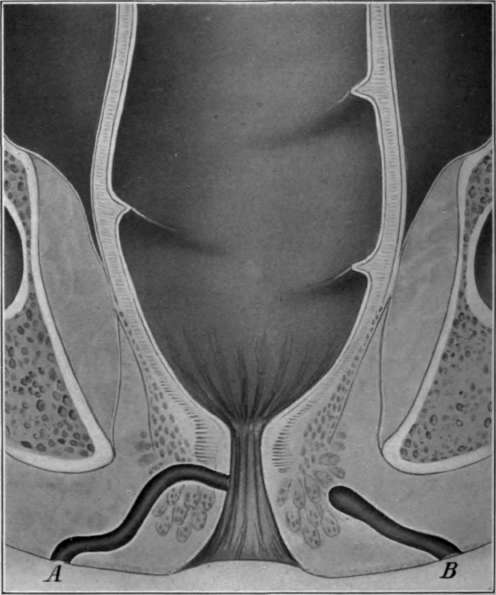
Fig. 36. Fistula A, complete; B, blind external.
Diagnosis. A fistulous opening on the skin resembles somewhat a pimple with a central ulceration and a ring of inaugurated tissue, which may be surrounded by an area of redness. The opening internally on the mucous membrane is more readily found by the sense of touch, which will make out a pin-head opening with an inaugurated ring completely surrounding it. The eye seldom discerns the small opening, not only on account of its small size, but from inability to hold the parts in a position to see the opening. A fistula may be found at any part of the rectum, dependent upon its abscess origin. It may vary in size, and in the number of branches. It may be a long, short or a tortuous tract. There may be more than one fistula existing independently at the same time. In tubercular patients, or those suffering from specific diseases, there is generally the characteristic appearance of such disease.
A typical fistula is best illustrated by the complete fistula, which opens internally in the rectal cavity and externally on the skin. One opening in the rectum is the rule, but there may be an exception to these simple forms. More than one external opening is apt to be found more frequently than a number of internal openings. External fistula are more easily recognized, as the external opening can be seen and the tract readily probed. The blind internal fistula has the usual characteristic doughy swelling over the tract, with subjective symptoms of painful defecation, the discharge of pus from the rectum, occasional filling up and with possible fever. The direction of a fistula may be found by palpation and probing. In some instances it will be found very tortuous and the bending of the probe may be necessary to Keep within the proper sinus. Care should be exercised not to force the probe through the sinus into the surrounding tissue.

Fig. 37. Fistula A. Mind internal; B, complete subcutaneous.
The theory for diagnosis of complete or blind internal phis-tulae suggested in recent literature on the subject by Goodall and Miles will be found correct in from ninety to ninety-five per cent. of cases, and is therefore of great diagnostic value. If one can find the true course of the sinus with a probe, by such a correct theory of diagnosis the operative procedure becomes very easy.
This scheme divides the anal ring into an anterior and posterior section. By drawing an imaginary transverse line through its center, it is divided into halves, the upper portion being the anterior, and the lower portion the posterior. The complete fistula, having an opening on the skin surface posterior to this transverse anal line, will be found to have its internal opening in the posterior median line between the sphincter muscles. A fistula having its external opening anterior to this imaginary transverse anal line, will be found to have its internal opening on a direct line between the sphincter muscles.
Continue to:


My Books

