


30. Edges
Description
This section is from the book "Elements Of Construction", by Charles A. King. Also available from Amazon: Elements of construction.
30. Edges
Edges. There are two forms of edges used in sharpening scrapers, - the square and the beveled edge; in sharpening either of these, the edge should be filed, whetted, and turned with a burnisher. This imparts a wire edge, indicated in Fig. 52, A and B, which shows enlarged views of the two forms of edges of scrapers. If the eye glances along the edge of a properly sharpened scraper, the edge will appear slightly curved; this edge must be given it by filing. After the scraper is filed, each corner which is to be turned must be whetted to a perfectly keen edge upon an oilstone, as the object of sharpening a scraper is to " turn " this edge at an angle with the sides of the scraper.
By "turning" the edge of a scraper is meant pushing the particles of steel, which form the corner, over, so that they will form a wire edge which will stand at an angle with the sides of the scraper. When the edge has been skillfully turned, it will cut like a very finely sharpened and adjusted plane, and will work either with or against the grain without tearing the wood. Notice carefully the angle of the burnisher with the sides of the scraper, as at a, Fig. 53, and as in Fig. 54, which indicates approximately the angle at which it should be held across the edge when seen in the view illustrated of either a square or beveled edge scraper, the vertical lines indicating the scraper. The stroke must be from the bottom, up, as indicated. At A, Fig. 55, is shown the top view of the burnisher as it makes each of the strokes in turning the edge of a square edge scraper; notice that the burnisher swings in an angle of about 15°, one stroke only being made at each angle.
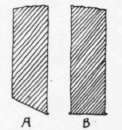
Fig. 52. - Edges of Scrapers. A, beveled edge; B, square edge.
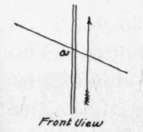
Fig. 53. - Angle of Burnisher with Sides of Scraper.
At B, Fig. 55, is shown the method of turning the edge of a bevel edge scraper; the student will notice that the angles are similar to those shown at A, except that the first stroke is made at nearly the same angle as the bevel of the scraper. An edge may often be turned at one stroke, and more than three should rarely be necessary. If more than three are made, the edge may be turned too far, which is worse than not being turned enough. The strokes should be made in the order indicated by the figures of the angles of the burnisher; otherwise it will be difficult to obtain satisfactory results.
The amount of pressure necessary to apply at this stage of the work cannot be described, but can only be discovered by practice. A steady, moderate pressure is all that is needed, but care should be used that the angle of the burnisher does not change during the stroke. This will give an edge suitable for common counter, or table, tops, for hardwood floors, and similar work, if the skill to use the burnisher properly has been acquired.
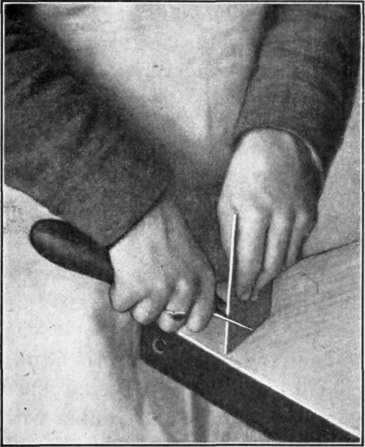
Fig. 54. - Method of Grasping Scraper for Sharpening.
The burnisher should be slightly lubricated with oil, or with the end of the tongue, as this assists it to slide over the edge of the scraper without scratching.
If a scraper is to be used upon very fine work, a different shaped edge should be made; it should be whetted to four perfectly square and keen corners, each of which will furnish an edge. This is a more difficult method of sharpening a scraper, but it gives four edges suitable for fine work. The edge should be turned by carrying the burnisher as shown at A, Fig. 55, making the strokes at the different angles in the order indicated by the numbers. In sharpening any scraper, care should be used that no strokes are made back of the square, as stroke bc of Fig. 56. Keep the burnisher pointing down all the time, as indicated at a, Fig. 53, as in this lies the chief difficulty. Two or three strokes should be sufficient to sharpen the scraper.
To turn the edge of a scraper properly, a burnisher is necessary. This tool should be made of the hardest steel, and is often made by the workman himself from an old file, ground perfectly smooth and polished. Perhaps the most satisfactory burnisher within easy reach of the woodworker may be made from a nail set, which may be fitted to a handle and ground to an awl point. The back of a narrow chisel or gouge may be used, though these are rather clumsy. The burnishers found in stores are generally of little value, as they are apt to be soft, and any steel which can be cut with a file is useless as a burnisher for sharpening scrapers, as the scraper will cut into it, instead of turning over.
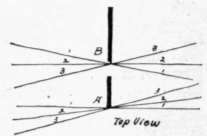
Fig. 55. - Top Views of the Angles of the Bubnisher.
If satisfactory results are not obtained, there may be several causes: the scraper may not be of just the right temper or texture; the burnisher may be soft or rough; the edge may not have been turned over evenly, or it may have been turned over too far, as indicated in an exaggerated way at a, Fig. 56, which is the result of carrying the burnisher around too far, as shown by the line bc. This may be remedied by using the awl point as shown at dy Fig. 57, holding the scraper and burnisher in about the same relative positions as indicated, and guiding the burnisher by the thumb, which should be carried on the square edge of the scraper, moving with the burnisher its entire length. In this way the edge may be turned back to its correct angle, when a very light touch in the usual way will generally make the desired edge.
If either the scraper or the burnisher is not of the right texture, throw it away, as it is worthless. If the burnisher is rough, it may be made smooth upon an oilstone. If the edge of the scraper is rough, it may be turned back again by laying the scraper flat upon the bench, the rough side up, and the burnisher passed over it several times; then proceed as with a new edge. In general, this is not so satisfactory as it is to file, whet, and sharpen the edge all over again, especially if the corner has been turned several times.
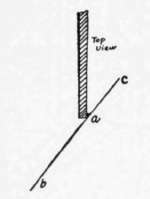
Fig. 56. - Angle to be avoided in Sharpening Scraper.
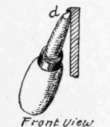
Fig. 57. - Turning Back the Edge of a Scraper.
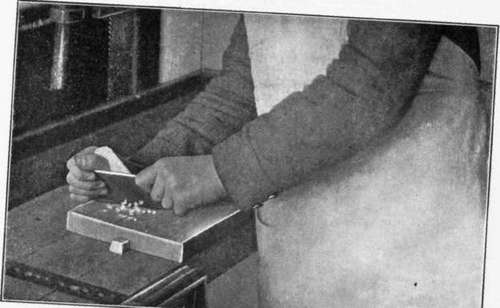
Fig. 58. - Method Of Grasping The Scraper When Working Upon A Broad Surface.
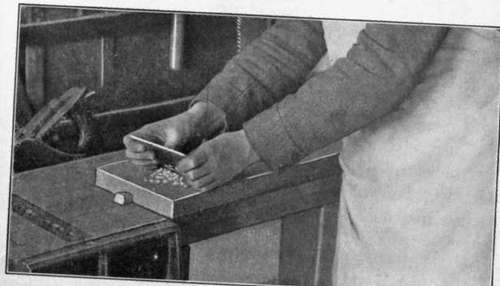
Fig. 59. - Method Of Grasping Scraper The Scraper When Working Within A Small Area.
Though it may seem from the above explanation of the methods of sharpening scrapers that it is a very complex operation, it will be seen that it is not a difficult matter, if it is once worked out. Usually it demands a little time and practice to acquire the knack that will make it possible to do the sharpening surely and well.
In using a scraper, it may be grasped as shown in Figs. 58, 59, 60, as best suits the work being done, and the strokes should be with the grain. In using this tool, as in the use of most others, the easiest way generally is the most efficient. As the young workman gains experience, he will gradually acquire the correct methods to use his tools for all the various purposes within their scope.
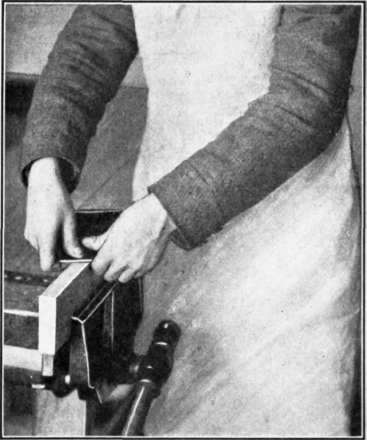
Fig. 60. - Method of Grasping the Scraper when working upon an edge.
Continue to:


My Books

