


4. The Try-Square
Description
This section is from the book "Elements Of Construction", by Charles A. King. Also available from Amazon: Elements of construction.
4. The Try-Square
The Try-Square (A.) consists of the beam (Fig. 5, a), which is generally of metal-lined wood, and the blade (6), which is a thin piece of steel.
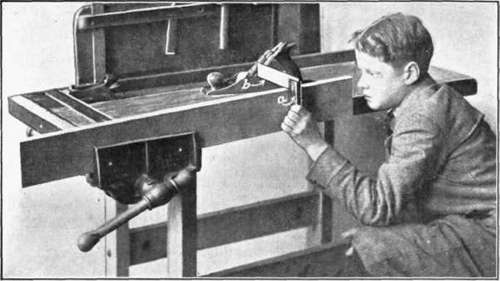
Fig. 5. - Position of Try-square in Squaring an Edge. a, the beam ; b, the blade.
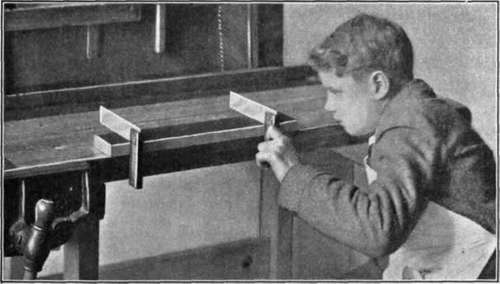
Fig. 6. - Use of Two Try-squares to See if Piece of Wood is Out of Wind
(B.) Too much care cannot be exercised in the selection of this tool, as one which is not perfectly true may cause much trouble. To test a square, hold the beam against a perfectly straight and square edge of a board which is wide enough to allow a knife line to be made the entire length of the blade. Then turn the square over, the other side up, and, holding the beam against the same edge, move the blade to the line. If the jointed edge of the board and the square are perfectly accurate, the knife line and the edge of the board will perfectly coincide.
(C.) The use of this tool in squaring an edge is shown in Fig. 5. The piece being squared should be in such a position that the try-square will be between the eye and the light; in this way, the slightest inaccuracy may be detected. In Fig. 7 is shown the position of the try-square when used to make a line by the edge of the blade. If working from the edge indicated, hold the beam against the edge with the thumb, and at the same time hold the blade down with one or two fingers, using the others to steady the square in its place upon the board.
(D.) Two try-squares may be used to see if a piece of wood is "out of wind" (i sounded as in kind) by the method indicated in Fig. 6.
Two pieces of wood known as winding sticks, of exactly the same width and perfectly parallel, are often used in manual-training schools for this purpose; they are rarely used in a shop, however, as a workman generally will use two steel squares if the piece is too large to be sighted accurately without some aid of this sort.
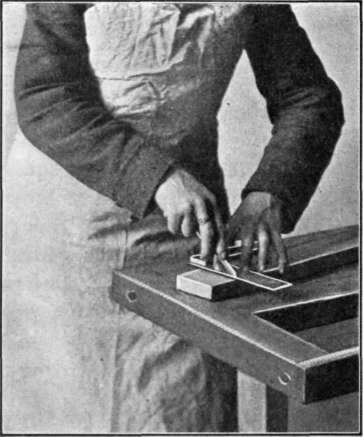
Fig. 7. - Position of Try-square when Making a Line.
Continue to:


My Books

