


Pottery To Pottery
Description
This section is from the book "Sanitary Fittings And Plumbing", by G. Lister Sutcliffe. Also available from Amazon: Sanitary fittings and plumbing.
Pottery To Pottery
Joints of this kind occur at the outlets of closets connected directly with the drains. This direct connection ought never to be made except in outbuildings, as it necessitates the drain being brought inside the building, and as one or more joints must be made below the level of the floor. A few strands of gasket may be gently caulked into the socket, and the socket should then be filled with neat Portland cement. Similar joints may be made in the pottery waste-pipes of laboratory and other sinks.
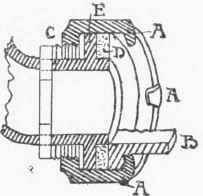
Fig. 194. Twyfords' Connection, Brass to Pottery.
Iron To Iron
The most important joints of this kind are those in iron soil-pipes and branches, and are almost invariably socket joints caulked with molten lead. In scamped work putty is sometimes used, but this is certain to lose its plasticity in time, and the joint ceases to be airtight. A better joint is made by running the socket full of neat Portland cement, care being taken to prevent the cement passing into the pipe. Rust joints are also occasionally used, but the caulked lead joint is the best. A flanged joint is useful when it is required to fix a length of pipe to the top of a stack in such a position that the joint is above the eaves or wall. The flanges are bolted together, red lead or an india-rubber washer being interposed to make the joint tight. Iron sink-traps are sometimes made with screwed outlets for fixing into the screwed sockets of iron waste-pipes. The joint between a cast-iron closet hopper and trap is generally formed by means of flanges bolted together with a rubber washer between.
Iron To Other Materials
Various methods of uniting iron to lead and other metals have already been described. An iron soil-pipe may be connected with a stoneware drain by a cemented socket-joint, and a pottery closet outlet may be connected to an iron branch-pipe by a bolted flanged joint with india rubber washer, or by an iron socket made specially wide to receive the pottery spigot and run with neat cement.
Continue to:


My Books

