


Chapter XXI. Waste-Pipes
Description
This section is from the book "Sanitary Fittings And Plumbing", by G. Lister Sutcliffe. Also available from Amazon: Sanitary fittings and plumbing.
Chapter XXI. Waste-Pipes
Definition
The term "waste-pipe" may with advantage be confined to pipes receiving discharges from fittings which are used for personal ablution and for washing crockery, domestic utensils, vegetables, etc, while the term "soil-pipe" may be applied to all pipes receiving discharges from fittings used for the reception of urine and faeces. The latter class includes water-closets, slop-hoppers, and urinals. All other fittings will fall into the former class. Certain general rules are applicable to all waste-pipes-that is to say, to all pipes receiving discharges from washing-up sinks, wash-tubs, lavatories, and baths.
General Rules
1.All waste-pipes ought to be dis-cojinected from the drains by being made to discharge over or into trapped gullies.
Whether the end of the pipe may be connected to the side of the drain-trap between the grating and the surface of the water depends to some extent upon circumstances. Some sanitary authorities insist on the point of discharge being not less than 18 in. from the drain-trap; others require it to be immediately over the grating; and others, again, allow the connection to be made into the side of the trap above the standing water. The first position is the best for the purpose of preventing drain-air passing up the waste-pipe, but unless the channel leading to the trap is protected by a grating, under which the waste-pipe discharges, it is apt to become choked with leaves, etc.
2. Every waste-pipe from a single fitting ought to be provided with a trap, fixed as close to the fitting as possible.
In the case of ranges of similar fittings, such as lavatories, a main waste-pipe is often provided with branches to the several fittings, and the main waste only is trapped. The objections to this arrangement will be discussed in the next chapter.
3. Waste-pipes must be so arranged that the water from any fitting must not be made to pass through more than one trap on its way to the external gully.
Double trapping is sometimes practised, especially when the waste-pipe is connected directly with the drain, but it is a great mistake. Such an arrangement is shown in fig. 195; the bath A, lavatory B, and sink C are separately trapped and connected to the main waste D, which is trapped at E. When the bath is emptied, the air contained between its trap and the trap at E must escape somewhere, and this will probably be done by forcing the trap of one of the lower fittings; again, the rapid discharge through the trap E will almost inevitably siphon out one or more of the traps above.
4. The traps of all long waste-pipes, and of all waste-pipes receiving discharges from more than one fitting, ought to be ventilated, in order to prevent the water being siphoned out of the traps.
If the traps are properly ventilated and the waste-pipes are properly laid and jointed, there can be no objection to connecting two or more fittings to one main waste-pipe. The traps of single fittings with short waste-pipes are often left without anti-siphonage pipes; thus there is little necessity (as far as siphonage is concerned) to ventilate the trap of an ordinary kitchen sink, the waste-pipe of which is, perhaps, less than 3 ft. long. But the more rapid the discharge is from the fitting the more necessity there is for trap ventilation. An old-fashioned lavatory basin with, say, 1-in. plug and 1 1/2-in. trap and waste-pipe, is much less likely to cause siphonic action in the trap than a modern quick-waste lavatory, especially if the latter is fitted with a trap and waste-pipe only 1 1/4 in. in diameter.
5. All long waste-pipes, and all waste-pipes receiving the discharges from two or more fittings, ought to be carried up (full-size) as ventilation-pipes, the upper ends to terminate at suitable points above the neighbouring windows and at a sufficient distance from them.
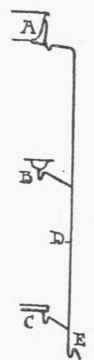
Fig. 195. Double-trapped Waste-pipe. Faulty Arrangement.
This may seem a counsel of perfection, but as waste-pipes often become foul, and unless ventilated contain air more or less impure, it is a good plan to allow a free current of air to pass through them. Waste-pipes from fittings on the upper floors of buildings are sometimes made to discharge over cast-iron rain-water heads, from which cast-iron rainwater pipes lead down to the gully below. The iron heads and pipes are not only quickly corroded, but they are almost certain to be fouled, and the foul air escaping from the head and joints may be drawn into the house through the nearest windows. Even this arrangement is, however, better than a long unventilated waste-pipe fixed inside the building and buried, or half-buried, in plaster. According to the new "Drainage By-laws" of the London County Council, the waste-pipe from a bath may discharge into a rainwater pipe, but no other waste may be so treated.
6
Waste-pipes ought always to be exposed to view and, like soil-pipes, ought to be fixed outside buildings wherever possible.
The multiplication of pipes on the outside of a building is undoubtedly in some cases an eyesore, but if the sanitary fittings are grouped together this objection loses much of its force, and it is certainly better, if leaks occur, that they should not contaminate the air within the building, or damage the walls, floors, and ceilings; repairs can also be executed with less annoyance to the occupants of the building if the pipes are fixed outside. There is, of course, a slight additional danger of the pipes being frozen up in severe weather, but if the taps are perfect the danger is less than in the case of external soil-pipes, as the water passing through waste-pipes is often warm. If waste-pipes must be fixed inside the building they ought not to be buried in the plaster or in chases, but fixed with clips or lead tacks to back-boards, so that they can be easily inspected and repaired.
Continue to:


My Books

