


Chapter XI. Bath-Heaters
Description
This section is from the book "Sanitary Fittings And Plumbing", by G. Lister Sutcliffe. Also available from Amazon: Sanitary fittings and plumbing.
Chapter XI. Bath-Heaters
In houses where there is no hot-water supply or where this supply is insufficient, some method of heating bathwater is necessary. Usually an appliance known as a "geyser" is adopted for the purpose, gas being the heating agent. The shell is generally of copper and the internal parts of copper or zinc.
Much has been written about the dangers of geysers of this kind, and many deaths have undoubtedly been caused by the products of combustion, when these have not been carried away by a ventilating flue. The products of combustion include carbon dioxide, sulphur compounds, etc, but the most dangerous is undoubtedly carbon monoxide. While, however, many deaths have been caused by unventilated geysers, it is perfectly true that many geysers have been fixed without ventilators, and have not proved in any appreciable degree injurious. The writer has practically tested this by standing in an unventilated bathroom (with the door and window closed) on several occasions during the whole of the time a bath was being filled and the geyser in full operation; not the slightest discomfort was felt. Other persons have had the same experience, and this is undoubtedly one reason why plumbers and others continue to fix geysers without ventilation flues.
But it must not be forgotten that there are geysers and geysers, and that their effects differ very widely according to the difference in construction. They may be classed in two divisions-(1) those in which the products of combustion come in contact with the water, and (2) those in which the water and products of combustion are kept entirely separate. Geysers of the former class are the cheaper of the two, and are also the safer, as the water condenses a large portion of the products of combustion. It is with geysers of this class that the writer has experimented; he would not care to carry out similar tests with geysers of the other type. Then, again, some geysers have ordinary open-flame burners, while others have bunsen burners; and, finally, the gas supplied by different companies varies very much in the amount of contained impurities. It is, therefore, bad logic to argue that, because one geyser has been safely used without a ventilation flue, geysers of all kinds and in all places may be left unventilated.
The great disadvantage of geysers in which the products of combustion come in contact with the water is that the water is fouled. If the burners are of the open-flame type and not carefully regulated to prevent smoke, the fouling may be so serious as to render the water unsuitable for bathing, and in any case it is unsuitable for drinking. Even at the best, when it appears almost perfectly clean, it often feels slightly greasy to the touch, and contains impurities which, uniting with the soap, leave dark sticky deposits on the bath which are very difficult to remove. The geysers also require to be frequently taken to pieces and cleaned if the water is to be even moderately pure.
As far as the water supply is concerned, those geysers are undoubtedly the best in which the water does not come in contact with the products of combustion; and bunsen burners are better than open-flame burners, as they produce less smoke and consume less gas for the same amount of heat. Geysers of this type, however, must invariably have adequate ventilation flues.
In cheap geysers the water and gas have separate taps, and it is therefore possible to light the gas and turn it on to the full before the water is turned on, or to leave the gas burning after the water has been turned off. In either case, the geyser may be damaged, if not absolutely ruined. The extra cost of fitting the geyser with a device by which the water and gas are controlled by a single tap is only a few shillings, and this arrangement ought always to be adopted.
In some geysers, the gas-lever contains a small branch-jet and tap; on the tap being turned the branch-jet can be lit, and this pilot-light can be then turned by the main lever into the body of the geyser, where it lights the large heating burners. In more expensive geysers, the whole of the burners are attached to a door, so that they can be swung outwards. This is a better arrangement, as the burners can be cleaned and kept in proper condition.
Geysers in which the water and products of combustion are kept entirely separate, not only preserve the water in its original purity, but allow it to be discharged at a higher level according to the pressure of the supply, as the water-receptacle is really a closed vessel, or series of vessels, and performs the office of the ordinary bath-boiler in a kitchen range. Geysers of this kind are often fitted with a rising pipe and shower-rose (fig. 86). The discharge pipe from the geyser is fitted with a cock, and the rising pipe is connected between the cock and the geyser; when the cock is closed the water rises to the shower-rose, which acts, therefore, as an expansion pipe. The connection for the ventilating pipe is shown at A. Hot water may also be conveyed from the geyser to a lavatory, housemaid's sink, or other fitting; but if all the outlets are controlled by taps, an expansion pipe must be provided to relieve the pressure in the closed water-receptacle of the geyser. Where, however, different fittings are to be supplied with hot water, a special kind of water-heater ought to be used, in which a considerable volume of water can be stored and kept hot by a number of comparatively small flames kept constantly burning.
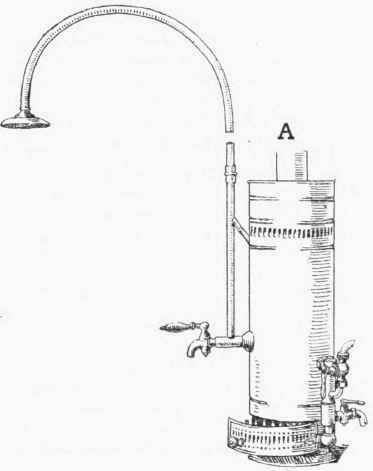
Fig. S6. Ewart's "Lightning" Geyser with Shower.
Geysers are generally cylindrical in shape, as shown in fig. 86, but some are rectangular, such as Robertson's, in which the inlet is controlled by a ball-tap. Geysers heated by oil are also made, but are more expensive than gas-geysers of the same heating capacity.
Sometimes the gas-burners are placed in a chamber under the bath, so as to warm the water after the bath has been filled, or during the process of filling; but this arrangement is not applicable to baths of every material, and in any case it is apt to damage the bath. Cast-iron baths have also been made with small furnaces under them, but for the same reason (and others) they cannot be recommended.
Continue to:


My Books

