


Inlets
Description
This section is from the book "Sanitary Fittings And Plumbing", by G. Lister Sutcliffe. Also available from Amazon: Sanitary fittings and plumbing.
Inlets
At one time it was a common practice to admit the water to a bath through the waste-outlet. This was effected by connecting the hot and cold supply-pipes to the waste-pipe between the waste-outlet and the waste-valve. This arrangement is now generally condemned for two good reasons. In the first place, the waste-pipe is often seriously fouled with the last soapy drainings from the bath, and when the water is again turned on it carries back into the bath some of this objectionable matter. The second reason is that, if the waste-valve is left open (as it usually is), one or both of the taps may be left running and the water will escape unnoticed through the waste-pipe. It is for the latter reason that water companies object to the arrangement.
The most obvious method of admitting water is by means of two taps, one for hot water and the other for cold. These ought to be at or near the foot of the bath, so as to be out of the bather's way, and ought not to project far over the edge of the bath. Hot water admitted in this way gives off a good deal of steam, and to reduce this to some extent the taps are sometimes connected with a mixing-box (fig. 84), from which a single stream of tepid water issues into the bath. The same end is gained by admitting the water into the bath at a low level, as shown in fig. 65, page 72. Fig. 68, page 75, shows a single-stream inlet connected at about half the depth of a porcelain bath. The objection to low-level inlets is that they may be fouled by dirty bath water, and the regulations of many sanitary authorities now require that the inlets must be placed so that the orifices are above the highest water-level of the bath-that is to say, above the overflow grating or above the top of the standing overflow.
For asylums, hospitals, prisons, and some other institutions, it is not desirable that the fittings should be under the control of the bathers, and in such cases the taps and waste may be so designed that they can only be actuated by a special key, which is in the possession of the attendant. Such an arrangement is shown in fig. 85, where A is the cold-water supply, B the hot-water supply, C the keyhole and key by which the water is turned on, D the waste spindle, with keyhole at E, F the overflow, and G the cast-iron casing in which the fittings are enclosed. The hot and cold supplies are in this case controlled by a single key, the cold water being started by the first movement of the key, and the hot water being turned on by a further movement. This prevents the scalding of the bather. In the section the waste is shown to discharge into a floor-channel, a method often adopted where two or more fittings (baths and lavatories) are fixed in close proximity; a trap can, however, be connected with the waste-pipe, as shown in the end elevation. Another method of withdrawing the fittings from the control of the bather is to carry the spindles or levers through the wall or partition at the foot of the bath so that they can be actuated by the attendant in the passage outside.
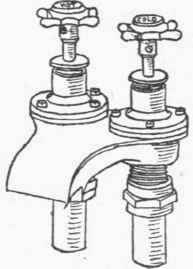
Fig. 84. Hot and Cold Taps with Mixing-Box.
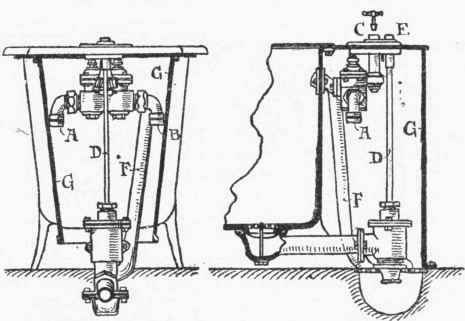
Fig. 85. Bath Fittings for Asylums, etc.
Doulton's "asylum bath-fittings and special regulator" are cleverly designed. The hot and cold taps are of the spring type, actuated by pressure on the. top. The key spindle passes through a cross-bar, which works on an eccentric, and is so placed that the two ends are directly over the two taps. As the key is turned, one arm of the lever is depressed on to the cold tap; as the turning progresses, the other arm is depressed on to the hot tap, so that hot and cold water are admitted together; further turning of the key gradually depresses the hot tap still more, and at the same time gradually releases the cold tap, so that at last only hot water is supplied. The temperature of the inflowing water can thus be increased from that of the cold supply to that of the hot, and as there are no sudden movements, the taps are non-concussive. The fittings are enclosed in a metal case, a loose key being used to turn the spindle.
Continue to:


My Books

