


14. Sharpening A Plane
Description
This section is from the book "Elements Of Construction", by Charles A. King. Also available from Amazon: Elements of construction.
14. Sharpening A Plane
Sharpening A Plane. (A.) An important part of this process is the grinding of the cutter. Set the cap back about J" from the edge of the iron, and use it as a guide by which to grind the iron perfectly square, as at A, Fig. 26. The cap iron should be kept perfectly square, and never touched except to fit it to the cutter, or, if it is too thick to allow the shavings to pass freely, to file the top of it to the proper thickness. If the tool is kept in order skillfully, the cap will need care only upon rare occasions.
The cutter should be held firmly to the grindstone or emery wheel and kept moving from side to side to prevent wearing the stone in one place. The grinding should all be done upon the beveled side of the cutter, which should be held upon the stone at an angle of about 20° (as at B, Fig. 26), more rather than less, as a thinner edge is apt to "chatter," or vibrate, if it strikes a hard place in the wood. Many workmen use a rest when grinding; this insures a true bevel. Any device which holds the tool firmly at the same place on the stone will do for a rest.
In whetting the cutter, the screw of the cap iron should be loosened and the cap iron carried back until the screw stops at the top of the slot of the bit, as at C, Fig. 26. The screw is then tightened with the fingers to hold the cap in place; this gives a better grasp of the iron, though some workmen prefer to take the cap off entirely while whetting.
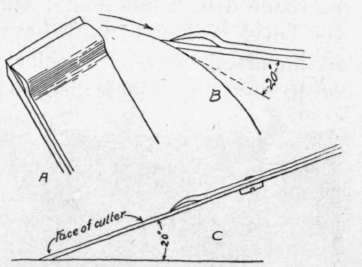
Fig. 26. - Whetting and Grinding of Plane.
A, cap set as guide for grinding iron perfectly square ; B, cutter held at an angle of 20° ; C, cap iron carried back until the screw stops at the top of the slot of the bit.
The bevel of the iron should be held exactly upon the surface of the oilstone, as shown at C, Fig. 26, the iron being grasped as in Fig. 27. Keep the right wrist rigid and allow the arm to swing from the shoulder, bending only at the elbow. In this way the rocking motion may be reduced to a minimum; this is necessary to preserve the bevel. Though the bevel may be maintained better by imparting a short circular motion to the plane iron, or to any edge tool which is being sharpened, it seems an awkward and fussy method of work, and rarely is used by an expert workman. By long practice the mechanic finds that a stroke made nearly the entire length of the stone will impart an edge quicker, and, after the knack has been acquired, that the bevel will be preserved just as well.
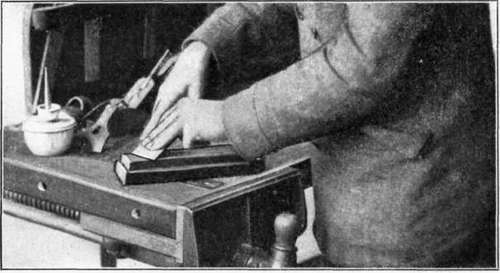
Fig. 27. - Whetting, or Oilstoning, the Beveled Side of a Cutter.
Turn the whetstone end for end frequently, and work upon the farther end, as in this way the stone may be kept true much longer than if one place upon it is used all the time. This will also minimize the danger of pulling the tool off from the nearer end of the stone, which will generally make regrinding necessary.
When the beveled side has been whetted, lay the face, or the top, of the iron, perfectly flat upon the stone, as in Fig. 28, holding it down with the fingers of the left hand, using the right hand only to move the iron back and forth. Care should be used that under no circumstances is the face of the iron lifted the slightest degree from the stone.
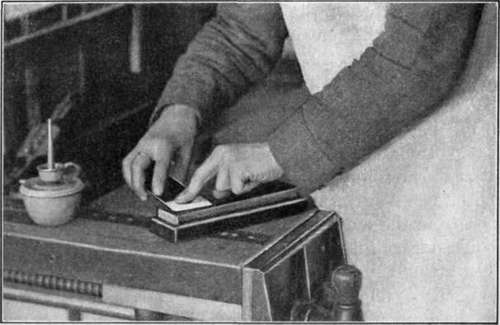
Fig. 28. - Whetting, or Oilstoning, the Plain Side of the Plane Iron.
At this stage of sharpening a plane iron, the utmost care is necessary that the face of the cutter does not lose its perfectly straight surface at the edge, as the slightest deviation from absolute accuracy at this place will prevent the cap iron from fitting properly. Such a deviation will cause endless trouble, as the shavings will be forced between the cap and the face of the iron (see C. of this topic).
(B.) The shape of the cutting edge of the plane cutter has an important influence upon its efficiency. Imagine the edge divided into three equal parts: the middle part should be perfectly straight, or almost imperceptibly rounded; the two outside thirds should be slightly and gradually rounded until the corners of the iron are so short that there will be no danger of their projecting below the face of the plane. This gives the cutting edge an elliptical shape, as illustrated in Fig. 29, which is somewhat exaggerated, as the shape shown is about that which would be seen if a moderately coarse jack plane were held as in Fig. 25.
(C.) In order to insure fine work, the cap iron must be fitted so carefully to the face and to the edge of the cutter that, if necessary, it may be placed at less than 1/64 th of an inch from the cutting edge, though this would rarely be required except upon very cross-grained wood.
In fitting the cap iron to the top of the cutter, a very fine, sharp file should be used. The filing must all be done upon the under side of the cap iron, at the places where the latter rests upon the face, or top, of the cutter; or, if preferred, the cap may be very carefully bent. Except in cases where there is considerable fitting necessary, however, this second method is not recommended, unless the joint is perfected by the use of a file.
If sufficient care and skill are exercised, a plane may be sharpened and adjusted so finely that a veneer of .01" or less in thickness of bird's-eye maple, burl walnut, ash, or similar wood may be smoothed. It is not wise, however, to spend the time necessary to keep a plane sharpened and adjusted to do this fine quality of work, as the use of a scraper and sandpaper, or of the latter alone, is the most economical way to smooth woods of such nature.
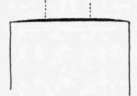
Fig. 29. - Shape of Edge of Plane Iron.
(D.) To remedy clogging of the mouth, remove the conditions which cause it; simply digging out the shavings is useless. An improperly fitted cap iron is one of the principal causes of trouble; the cutter may be ground so thin that, when it is forced against a knot or hard place, the iron chatters, which allows the shavings an entrance under the cap iron. In this lies the only real advantage of a wooden plane over the modern iron plane, as in the former the iron is much thicker and stiffer. The cap iron may be so thick that it causes the shavings to curl too much, or the frog may be set too far to the front, which will make the mouth too small. This latter may be remedied by moving the frog back, but in a wooden plane, the mouth and the throat must be cut larger in order to allow the shavings to clear themselves properly.
Continue to:


My Books

