


Plan
Description
This section is from the book "Sanitary Fittings And Plumbing", by G. Lister Sutcliffe. Also available from Amazon: Sanitary fittings and plumbing.
Plan
In modern hospitals the water-closets, bathrooms, and sinkrooms are generally planned with short passages or lobbies between them and the wards, these passages having windows and openings for air on both sides. Among the many positions in which these rooms can be placed, the most generally approved is at the extreme angles of the wards, as shown in figs, 1 and 2. These should be planned so as not to obstruct the ward windows, and so that the currents of air through the lobbies are not in the direction of the windows either in the sides or ends of the wards. The conveniences and lobbies ought to be warmed and ventilated. If there is an upper story of wards, the same arrangement of conveniences is repeated, thus simplifying both the plumbing and drainage.
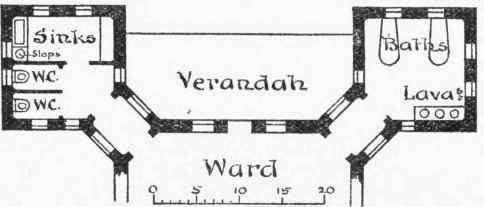
Fig. 1. Plan of Conveniences for Hospital Ward.
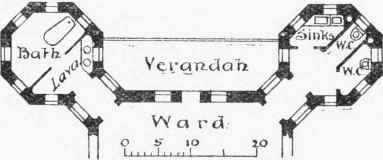
Fig. 2. Plan of Conveniences for Hospital Ward.
In some cases the conveniences are now placed at the corridor ends of the ward blocks, so as to be within easier reach of the nurses and doctors. This position is undoubtedly more convenient, but is not as freely exposed as the extreme angles of the block. A good arrangement is shown in fig. 3. The conveniences ought, if possible, to be placed on the more sunny side of the ward corridor.

Fig. 3. Plan of Conveniences at Corridor End of Hospital Ward.
In small fever hospitals, the water closets and sinkrooms are often placed at the side of a verandah, as shown in figs. 4 and 5. There is therefore a free current of air between them and the pavilions to which they are attached. In exposed situations, however, this arrangement is somewhat trying, as the verandah cannot, of course, be warmed; in the case of one hospital, built in this manner from the writer's design, the openings in the fronts and ends of the verandahs were a few years afterwards filled with wood and glass. Baths on wheels are provided, and are kept in the. verandah and hall when not in use.
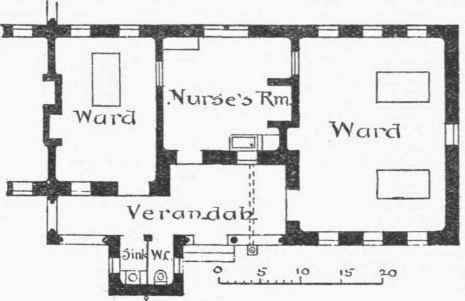
Fig. 4. Plan of Conveniences for Small Isolation Wards.
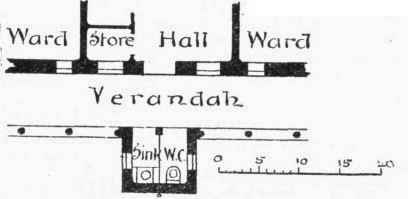
Fig. 5. Plan of Conveniences for Small Wards.
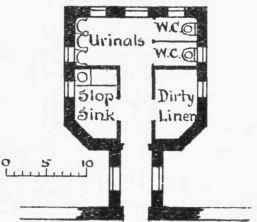
Day Room
Fig. 6. Plan of Conveniences for Workhouse.
Similar or slightly modified arrangements may with advantage be adopted in other public buildings, such as workhouses (fig. 6), and also in hotels, etc.
A cloakroom with lavatory and water-closet on the ground floor of a house may have over it a bathroom, lavatory, and water-closet, as shown in fig. 7. In small houses, where much money cannot be afforded, probably the utmost that can be done is to arrange that the approach to the bathroom and water-closet shall be properly lighted by means of a sash or casement window, and not, as is so often the case, a dark, unventilated passage. In tenement dwellings of the cheapest class, only one sink and one water-closet are sometimes provided for two tenements, as shown in fig. 8. The arrangement is repeated on the different floors.
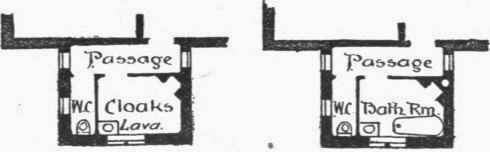
Fig. 7. Plan of Conveniences for House.
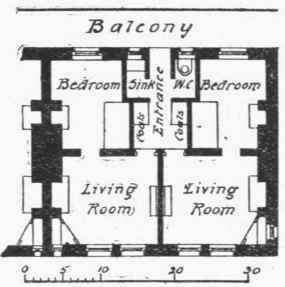
Fig. 8. Labourers' Dwellings, Oldham Road, Manchester.
The illustrations already given also serve as examples of the grouping of sanitary fittings. This is an important point for consideration, as the grouping of fittings reduces the length of water-pipes, waste-pipes, soil-pipes, and drains, and therefore reduces the cost and also the dangers arising from defective materials and workmanship. An isolated fitting often requires a long branch-drain, and the nature of the fitting may be such that its discharge is not sufficient to cleanse the drain; hence, unless some method of periodical flushing is devised, deposit occurs, and the drain becomes foul and is ultimately choked. With a little care in planning, the sanitary rooms of a house can be much better grouped than is usually. the case. The bathroom and water-closet can be placed over the ground-floor lavatory and water-closet, or over the butler's or maid's pantry, or over the scullery. It is a great mistake to place such rooms over living-rooms or larders, particularly if the floors are constructed with ordinary joists and boards.
Water-closets are often placed in most unsatisfactory positions. In a great many houses they are entered from the half-space landings of the stairs, or from other equally-exposed thoroughfares. Such arrangements are most objectionable. Privacy ought to be one of the guiding thoughts in the planning of these rooms, and this is best secured by arranging the lavatory and water-closet in close proximity to each other, and by approaching the two rooms by means of a short passage or lobby, as shown in fig. 7. It is a mistake to place the water-closet in the same room as the bath and lavatory, though this is too often done. It is also a mistake to place a water-closet in such a position that it is separated from an important room by nothing more than a lath-and-plaster partition. The noise made by the flushing of the apparatus will be heard on the other side of such a partition, and even of a 4 1/2-in. brick wall, and it is best, therefore, to build a 9-in. wall wherever possible. The arrangement shown in fig. 7 will effectually prevent all sounds passing to the rest of the house. It is even more essential that the housemaid's closet should be out of the way, and this can best be effected by placing it near the servants' stairs.
In this country lavatory basins are not now fixed in bedrooms as frequently as was formerly done, but if the lavatories themselves, and the plumbing and drains, are thoroughly satisfactory, there cannot be any serious objection to the practice. A better position would, of course, be the dressing-room or small room adjoining the bedroom.

Fig. 9. Typical Plan of Underground Conveniences for Men and Women.
Public conveniences are now erected in every town, although in many cases provision is made for one sex only. At one time cast-iron urinals above the street level were in favour, but their unsightliness and publicity and the obstruction they sometimes cause to traffic have led during recent years to the more frequent use of underground conveniences, in which not only urinals but also water-closets and lavatories are provided. These are a great improvement on the wooden structures which form such prominent objects in some of the streets of Paris and other continental cities. A typical plan of two underground conveniences for men and women, designed by Mr. D. J. Ross, the London city engineer, is given in fig. 9. They are covered with a flat roof, part of which forms a refuge for foot passengers as shown by the dotted lines A A. Fig. 10 is a plan of underground conveniences for men only. The design will be governed to a great extent by the position which the conveniences will occupy and by the amount of accommodation required. In many cases a single flight of steps will suffice, but in busy streets separate flights ought to be provided for ingress and egress. The walls ought to be faced with glazed bricks. The divisions between the closets may be formed with slate or marble slabs, or with glazed bricks; wood is sometimes used but is not as satisfactory. Enamelled sheet-iron divisions have also been tried but are not sufficiently durable. The conveniences are generally lighted by means of pavement lights, and ventilation is effected by means of a ventilating curb or a ventilating shaft, the latter being preferable as it discharges the air at a higher level.

Fig. io. Underground Conveniences for Men only, at Glasgow Cross, Glasgow.
Continue to:


My Books

