


Noisy Flushing
Description
This section is from the book "Sanitary Fittings And Plumbing", by G. Lister Sutcliffe. Also available from Amazon: Sanitary fittings and plumbing.
Noisy Flushing
Many water-closets are undoubtedly very noisy in action. The rush of water in the basin cannot be entirely prevented, but the sound may be deadened by the use of a hinged lid over the seat, and by fixing the cistern at a low level with a correspondingly larger flush-pipe and valve or siphon; it is one advantage of the "Combination" closets that the discharge creates very little noise in the basin.
Flushing cisterns are often very faulty in this respect. The ball-valve may admit the water with a loud hissing sound, or may give rise to "water-hammer" in the pipes; the mechanism (as in some dome siphon cisterns) may be very clumsy; and in siphon cisterns the inrush of air at the conclusion of the flush may cause a loud gurgling and sucking sound.
In the case of high-pressure services it is a good plan to fix a screw-down stop-cock on the supply-pipe, so that the supply to the ball-valve can be regulated; if this is done, and the ball-valve is of the full-way type, hissing and water-hammer will be almost, if not altogether, prevented. A simple device for deadening the noise of the supply consists in attaching a pipe to the outlet of the ball-valve and carrying it down to the bottom of the cistern, so that the end is either permanently below the water remaining in the cistern after each flush, or is soon covered by the incoming water. Such pipes are shown in figs. 119, 120, and 121. Cisterns with heavy mechanism ought not to be selected.
Several devices have been designed for preventing the noisy rush of air in siphon cisterns. One of these (Baxen-dale's "New Pattern") is shown in fig. 121. The cistern is of the dome type, and an air-pipe A is connected near the foot of the stand-pipe, and carried up above the water level and bent downwards again nearly to the bottom of the cistern. In this pipe a hole B is bored. When the siphonic action is in progress the float C descends and covers the hole, but as it does not fit closely against the pipe, a small amount of air is admitted at B during the descent of the float. This gradual introduction of air checks the siphonic action very slightly, but greatly reduces the rush of air when the cistern is emptied. The makers claim that " the sucking, swirling noise is entirely prevented." D is the inlet pipe carried down to the bottom of the cistern. Another device is sometimes adopted for siphons of ordinary type, such as that shown in fig. 117. A small pipe (not exceeding 1/4 in. in diameter) is taken from the crown of the siphon, and bent down into the water to a sufficient depth to admit air and check the siphonage towards the end of the flush.
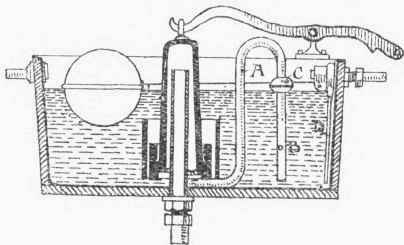
Fig. 121. Baxendale's "New Pattern" Siphon Cistern.
Many cisterns are fitted with 3/8-in. ball-valves, but this size is too small for rapid filling if the pressure is low, and for silent action if the pressure is high. It is much better to have a larger ball-valve, controlled where necessary by a stop-cock on the supply-pipe.
Continue to:


My Books

