


Chapter XIX. The Unsealing Of Traps
Description
This section is from the book "Sanitary Fittings And Plumbing", by G. Lister Sutcliffe. Also available from Amazon: Sanitary fittings and plumbing.
Chapter XIX. The Unsealing Of Traps
Causes Of Unsealing
Under certain conditions, trap-ventilation is absolutely necessary in order to prevent the seal of the traps being destroyed by the ordinary use of the fittings, but ventilation is of no use in preventing loss of seal in what may be termed extraordinary cases. If a fitting is not used for a long time, the water in the trap may evaporate, and this evaporation will be hastened by the current of air induced by the trap-ventilating pipe. Again, the contents of a trap may be partially or wholly drained away by a piece of rag lying with one end in the trap and the other in the waste-pipe. Evaporation cannot, of course, be prevented, but it can, to some extent, be checked by keeping the plug in the washer in the case of fittings where plug-wastes are adopted, and by closing the lids of water-closets but this destroys the polish and ultimately injures the wood. The retention of pieces of rag in the outlets of traps may be guarded against by having the traps of self-cleansing shape and adequately flushed. The standing water in a trap may also be lowered by strong winds blowing across or down the open end of the ventilating pipe. The most common causes of loss of seal are, however, siphonage and momentum.
Siphonage And Momentum
Strictly speaking, the term,"siphonage" ought to be confined to those cases in which the contents of the trap are drawn out below the level of the outlet by siphonic action, and "momentum" to those in which the contents are carried over the outlet by the momentum of the water entering the trap. A round-pipe trap fixed under a valve-closet is very liable to unsealing, and in this case the unsealing is largely due to the momentum gained by the water in falling from the valve to the level of the trap. It is obvious that the momentum is not reduced by ventilating the trap. It is equally obvious that a large body of standing water in a trap checks the force of the flush and at once reduces its momentum. Water-closet traps, which are quite safe under ordinary circumstances, may be unsealed by pouring into them a number of pailfuls of water or slops. The cumulative effect of successive discharges must be borne in mind in examining water-closets which are also used as slop-hoppers. The effect of a pailful of water rapidly emptied into the basin is much more severe than that of the normal flush discharged through a pipe only 1 1/4 in. or 1 1/2 in. in diameter.
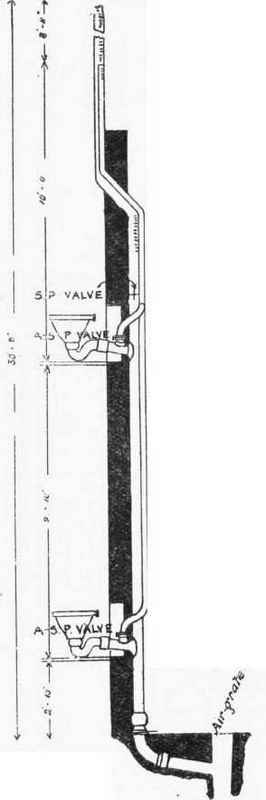
Fig. 169. Apparatus used by the Sanitary Institute for testing Water-closet Traps.
Although the momentum of the falling water undoubtedly plays a considerable part in lowering the standing water in traps, thorough unsealing is seldom effected unless siphonic action is brought into play, and it is practically impossible to distinguish in every case between the two causes of failure. To avoid unnecessary verbiage, the term "siphonage" will be employed whether the unsealing is due to siphonic action or momentum, or to both. Sanitary Institute's Tests. -It cannot be said that a complete series of tests, sufficient to demonstrate the advantages and disadvantages of different forms of traps, has yet been carried out. Tests carried out by the makers of a special trap will naturally be regarded as less authoritative than those carried out by independent witnesses. A committee of the Sanitary Institute* has recently experimented with two forms of water-closet traps-the round-pipe "Dubois" P trap, and the "Anti-D" trap -and as far as these traps are concerned, the tests are fairly complete, and are of sufficient value to merit detailed notice.
The apparatus (fig. 169) consisted of a 3 1/2-in. lead soil-pipe 30 ft. 8 in. high, with 3 1/2-in. branches to two short-hopper closets with circular outlets, the upper outlet being 3 1/4 in. and the lower 3 1/2 in. in diameter. The two closets were placed on the ground floor and first floor respectively, and in each experiment both closets were fitted with similar traps. The Dubois ordinary traps were 3 1/2 in. in diameter, with 1 7/8-in. seal, and contained 60 ozs. of water. The Dubois deep-seal traps were of the same diameter, but with a seal of 2§ in. on the lower basin and 2 3/4 in. on the upper basin, the traps containing 60 ozs. and 64 ozs. of water respectively. The Anti-D traps were also 3 1/2 in. in diameter, with seals of 1 7/8 in. on the lower basin and 2 in. on the upper basin, and each contained 40 ozs. of water. The water was emptied into the basins from a pail, six experiments being made in each case. This is, of course, a severer test than would have been obtained by the use of a flushing cistern. Valves were fitted in the anti-siphonage pipes and soil-pipe, as shown in the illustration, so that these could be closed as required for different experiments.
When the soil-pipe and anti-siphonage pipes were open, the discharges had practically no effect on the traps, but when these pipes were closed, all the traps on the upper basins were unsealed by the discharges through the same basins, while discharges through the lower basins lowered the water in the traps of these basins but did not unseal them. The mean results are shown graphically in fig. 170 by the thick horizontal lines, and the maximum results by the black dots. The normal seal is represented by the portions hatched with vertical dotted lines, and the loss of seal by the vertical full lines: the cross-hatching represents the depth below the dip to which the water was lowered in those cases where the traps were quite unsealed. In the tests marked A the anti-siphonage pipes and soil-pipes were open, in those marked B the anti-siphonage pipes were closed and the soil-pipe open, in those marked C the anti-siphonage pipes were open and the soil-pipe closed, and in those marked D the three pipes were closed.
See the "Journal" of the Sanitary Institute, April, 1901.
It will be observed that, with the exception of a single test, the traps attached to the upper closets were the only ones unsealed, and that the unsealing occurred only when the water was poured into the upper basins. The sole exception was in the case of the Anti-D trap, the maximum siphonage (with a three-gallon flush in the upper basin) lowering the water of the lower trap exactly to the bottom of the dip when all the pipes were closed.
The tests were not sufficiently complete to allow a final comparison to be made between the two traps, but as far as they go, they show that neither trap can claim superiority under every condition.
A
When the anti-siphonage pipes and soil-pipe were open, both traps retained practically the full depth of seal in every case.
B
When the anti-siphonage pipes were closed and the soil-pipe open, there was little difference between the traps under the following conditions-(1) when fitted to the lower basin and tested by discharges through either the lower or upper basin, and (2) when fitted to the upper basin and tested by discharges through the lower basin; but when fitted to the upper basin and tested by discharges through the same basin the Anti-D trap had a decided advantage, the seal remaining practically intact, while the Dubois trap was unsealed time after time.
C
When the anti-siphonage pipes were open and the soil-pipe closed, both traps were satisfactory and gave almost identical results.
D
With the anti-siphonage pipes and soil-pipe closed, both traps, when fitted to the upper basin and tested by discharges through the same basin, were unsealed; when the traps were fitted to one basin and tested by discharges through the other basin, the Dubois trap gave uniformly better

Fig. i Results of the Sanitary Institute's results than the Anti-D trap; but when the traps were fitted to the lower basin and tested by discharges through the same basin, the Anti-D trap was decidedly superior.
[Sanitary Fittings and Plumbing, pp. 189, 190.

Fig 170. Tests of Water-closet Traps.
It would have been more satisfactory if additional tests of the upper traps had been made with the branches from the lower traps closed, and vice versa, and also if a complete series of tests had been made with the air-grating near the foot of the soil-pipe closed.
The tests illustrated in fig. 170 refer to the Dubois trap with ordinary seal. The deep-seal trap fitted to the upper basin and tested by discharges through the same basin gave better results, when the soil-pipe was open and the anti-siphonage pipes closed, but was unsealed time after time when all the pipes were closed. Under other conditions, the ordinary trap gave, on the whole, as good results as the other.
Continue to:


My Books

