


Soil-Pipes. Part 4
Description
This section is from the book "Sanitary Fittings And Plumbing", by G. Lister Sutcliffe. Also available from Amazon: Sanitary fittings and plumbing.
Soil-Pipes. Part 4
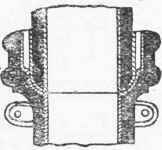
Fig. 206. Joint in Lead-lined Cast-iron Pipes.
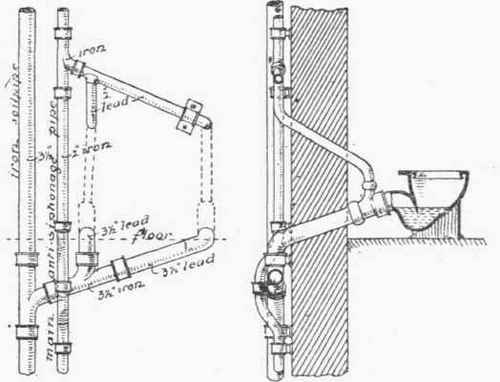
Fig. 207. Cast-iron Soil-pipe and Anti-s'phonnge Pipes.
Another and better method of overcoming the difficulty consists in fixing the main anti-siphonage pipe at such a distance from the soil-pipe that it will pass quite clear of the soil-pipe branches, as shown in fig. 209. This illustration shows an arrangement for a hospital or other building of two or more stories, with two fittings on each floor. The main soil-pipe and external branches are of cast-iron 4 in. in diameter, with 1/4-in. metal, while the branch pipes passing through the wall are of drawn lead of a substance equal to sheet lead 7 1/2 lbs. per square foot. The main anti-siphonage pipe is 3 in. in diameter, and is also of cast-iron, the branches being of lead 2 in. in diameter. The main pipe is carried down a short distance below the lowest branch to form a rust-pocket; if the pipe is glass-enamelled inside, the rust-pocket will not be required. The top of the main anti-siphonage pipe is not connected to the soil-pipe, but is terminated at or about the same level, and covered with a copper-wire guard. If there are fittings on both sides of the soil-pipe, two anti-siphonage pipes will be required, one for the fittings on the right and the other for those on the left.
In the best of circumstances two or more bends are required in an anti-siphonage pipe, and when iron pipes are used it is difficult to avoid having one of the joints within the thickness of the wall. For this reason it is certainly better to use lead for the internal pipes, even if the external pipes are of iron, as fewer joints are required with the former material.
Drain-ventilating pipes are required at the heads of long drains where soil-pipes are not available for the purpose.
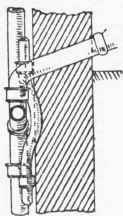
Fig. 208. Alternative Arrangement for Anti-siphonage Pipe.
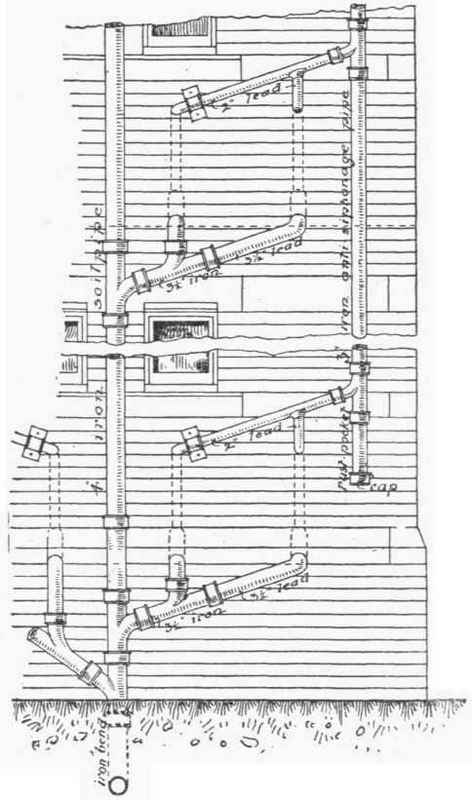
Fig. 209. Soil-ripe and Anti-siphonage Pipes for Ranges of Fittings on Two Floors.
They ought to be not less than 3 1/2 in. in diameter, but are all the better if made of the same sizes as the drains to which they are connected, that is to say (in the majority of cases) 4 in. They must be fixed outside the building, and treated like soil-pipes. If the pipe is of cast-iron, and not glass enamelled, a rust pocket of iron or pottery (fig. 210) must be fixed at the foot, as the damp air from the drain soon corrodes unprotected iron, and the rust falling from the pipe may choke the bend at the foot, and so render the pipe utterly useless. The pocket illustrated is known as the "Loco" rust-pocket.
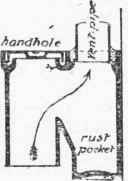
Fig. 210. "Loco" Rust-Pocket for Foot of Iron Ventilating Pipe.
Continue to:


My Books

