


Soil-Pipes. Part 3
Description
This section is from the book "Sanitary Fittings And Plumbing", by G. Lister Sutcliffe. Also available from Amazon: Sanitary fittings and plumbing.
Soil-Pipes. Part 3
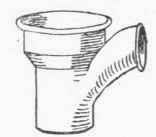
Fig. 202. Brass Socket with Junction for Anti-siphonage Pipe.
Light rainwater pipes must not be used as soil-pipes, as it is impossible to make a proper caulked joint in them on account of the narrowness of the sockets and the thinness of the metal. The least weights now allowed by the London County Council are as follows, for each 6-ft. length:-3 1/2-in., 48 lbs; 4-in., 54 lbs.; 5-in., 69 lbs.; and 6-in., 84 lbs.; and the thickness of metal must be at least 3/16-in for 3 1/2-in and 4-in. pipes and 1/4-in. for 5-in. and 6-in. pipes. Pipes much lighter than these are made and sold as soil-pipes, but cannot be recommended. Heavier pipes, weighing about half as much again as the London County Council pipes, can also be obtained. For 3 1/2-in. or 4-in. pipes, the metal ought to be not less than 1/4 in. thick, and slightly more for larger pipes. The sockets in cast-iron soil-pipes ought to be at least 2 1/2 in. deep, and the annular space allowed in the sockets for caulking not less than 1/4 in. wide for the two smallest pipes, and § in. for the others.
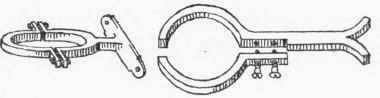
Fig. 203. Cast-iron Clips for Soil-pipes.
Cast-iron pipes may be fixed with ears or clips nailed to the walls. Special projecting ears or sockets are now made so that the pipes will stand well clear of the wall; these are a great improvement, as they allow the pipes to be painted all round. If special ears are not provided, the same result can be obtained by using longer nails and driving them through short distance-pieces of wrought-iron pipe (1 in. or
1 1/2 in. long) placed behind the nail-holes of the ears or clips. External corrosion is certain to occur if the pipes are fixed close to the wall, as the back parts cannot be painted. Two good forms of support are shown in fig. 203, one for building into the wall and the other for nailing to it; the bolts and screws ought to be of brass or gun-metal, so as not to rust. A support ought to be fixed under each socket.
Special junctions, bends, etc, are now cast for almost every conceivable requirement. A junction ought always to be formed with the branch rising slightly from the pipe, and curved at the point of junction. The branch can be cast
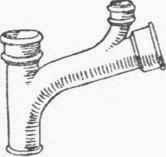
FIG,. 204.
Cast-iron Junction with of any length from 6 in. to 36 in., so that it is unnecessary to make a joint in the thickness of the wall. Fig. 204 shows such a junction and branch 3 1/2 in. or 4 in. in diameter, with a 2-in. socket for the trap-ventilation pipe; a socket is cast on the end of the branch to receive the outlet of the P-trap of the closet. The end of the branch is sometimes cast with an upward bend to receive the outlet of an S-trap. Junctions for the upper ends of trap-ventilating pipes are cast as shown in fig. 205. Bends for the feet of soil-pipes ought to be well rounded, and with foot-rests cast on to give them firm bearing on flags or beds of concrete. Set-offs or double bends to fit base-courses, eaves-troughs, etc, are also made, but ought to be used as sparingly as possible, as all bends obstruct the currents of air.
Branch for Anti-siphonage
Pipe.
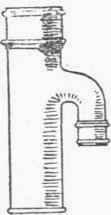
FIG. 205. Cast-iron Junction for Upper End of Anti-siphonage Pipe.
3. Lead-lined Iron. - Lead-lined iron pipes are manufactured by the Sanitary Lead-lining and Pipe-bending Company, and consist of an outer pipe of iron and an inner lining of lead. The lead is smooth and practically incorrodible by ordinary domestic sewage, and the iron protects the lead from external injury and gives it the firmness which is so lacking in ordinary drawn-lead pipes of large diameter. The cast-iron pipes are carefully made, and are smoothed inside by means of emery rubbers on a rotating spindle. The drawn-lead tube, of a substance equal to sheet-lead 5 lbs. per square foot, is then inserted, and is tightly pressed against the iron by means of a smooth steel bobbin, which is pulled slowly through the double pipe. The upper end of the lead tube is opened out to fit the special shape of the cast-iron socket, and the lead is turned outwards round the spigot-end of the iron pipe to form a kind of lead collar, as shown in fig. 206. When two pipes are fitted together, the joint can be completed by filling the annular space with molten lead, or by caulking it with cold lead rings, or by inserting a brass caulking-ring and caulking the lead lining on to it. The lead lining of junctions, etc, is introduced by casting, special cores being used for the purpose. Bends and junctions of almost every kind can be made. The invention is decidedly useful. The pipes and fittings are admirably adapted for soil-pipes, waste-pipes, and drain-ventilating shafts. They are naturally more expensive than ordinary iron pipes, but the extra cost is a trifling item in the total cost of a building. On the other hand, they are clean, durable, strong, and easily fixed. The lugs are of a special kind, so that the pipes can be fixed at any distance from the wall up to 2 1/4 in.
Anti-Siphonage Pipes
As already stated, soil-pipes and the trap-ventilating pipes connected with them ought,where possible, to be fixed outside the building, as all the pipes contain air more or less impure. In the case of stacks serving only one or two fittings, this presents no difficulty; but when ranges of closets on two or more floors are connected to one soil-pipe, the various pipes are not so easily arranged. If the soil-pipe and main anti-siphonage pipes are fixed near each other, bends must be introduced so that the soil-pipe branches and the main anti-siphonage pipe can pass each other. It is generally considered best to form the bends in the anti-siphonage pipes, but as these bends interfere with the free rush of air to the branches, the anti-siphonage pipes may with advantage be made somewhat larger than the usual 2 in. The anti-siphonage pipes may be bent round in front of the soil-pipe branches (fig. 207), but if the soil-pipes are fixed 1 1/2 in. or 2 in. clear of the wall, the bends will be somewhat quick and unsightly, and it is, on the whole, better under such circumstances to bend the anti-siphonage pipes behind the soil-pipe branches (fig. 208), cutting small chases in the walls where required.
Continue to:


My Books

