


Chapter XIII. Non-Mechanical Water-Closets
Description
This section is from the book "Sanitary Fittings And Plumbing", by G. Lister Sutcliffe. Also available from Amazon: Sanitary fittings and plumbing.
Chapter XIII. Non-Mechanical Water-Closets
Non-Mechanical Water-closets may be divided into four classes-hopper, wash-down, wash-out, and siphonic. Trough-closets and latrines are also non-mechanical closets, but it will be most convenient to consider these separately. Waste-water closets form a class by themselves.
1. Hopper Closets. - In their simplest form these consist of a conical hopper (usually of glazed fireclay) with a trap of the same material below. There are thousands still in use in the outbuildings of cottages without any apparatus whatever for flushing. An occasional pailful of water is the only cleansing they receive. Such closets ought certainly to be condemned as nuisances, as they are not only foul in themselves but cause deposits in the drains. Hoppers are generally known as long or short, according to their height. Fig. 93 shows a long hopper; it has a diameter of 14 in. at the top and 4 in. at the bottom, and a height of 15 1/2 in., exclusive of the trap. The connection for the flush is placed at the side in such a manner that the water circulates around the basin in a spiral form. The short hopper (fig. 94) is 11 1/2 in. high, or (including the trap) 16 in.: the closet and trap can both be fixed above the level of the floor. This closet is shown with a flushing rim and the trap is a modified S-trap with shortened outlet, so that the joint is above the floor ; it is sometimes known as a Q-trap. Fig. 93 shows a P-trap. An ordinary S-trap, with or without ventilation socket, can, of course, be used with either the short or long hopper.
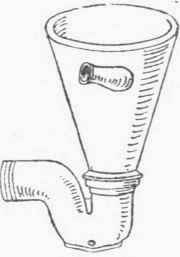
Fig. 93. Long-hopper Closet with Spiral Flush and P-trap.
Sometimes the hoppers and traps are made of enamelled cast iron, but, whatever the material, they are almost invariably enclosed with woodwork. The cheapness of hopper closets is the sole reason of their popularity; a short or long hopper, cane outside and white inside, can be obtained for 2s., and a trap for Is., and it is no wonder, therefore, that they have been very frequently used in cottages and in the servants' closets of larger houses. An enamelled-iron hopper with trap is more expensive, costing from 20s. to 25s.
The great disadvantage of the hopper closet is that the water area is so small (only 4 in. in diameter, as a rule), and that it is consequently impossible to avoid fouling the basin; this defect is, of course, more pronounced in the long hopper. The flushing arrangements are often inadequate, and the wood enclosure is also objectionable. For these reasons the long - hopper closet ought not to be used at all, and the short-hopper closet ought not to be fixed inside houses, and even in outbuildings should only be used in connection with a flushing cistern containing at least two gallons of water. 2. Wash-down Closets. - These are really identical in principle with the hopper-closet, consisting simply of a basin and trap. Many so-called "wash-down" closets are nothing but short-hopper closets with the shape of the basin modified to reduce the risk of fouling. It would be more satisfactory if the term "wash-down" were confined to closets with a water surface appreciably larger than that of the hopper closet. The basin in fig. 95 has a straight back, and the trap has a large socket A for receiving the basin, so that a good cement joint can be made between it and the trap. The flushing nozzle is arranged so that the last portion of the flush drains slowly through the hole at B and recharges the trap.
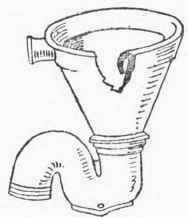
Fig. 94. Short - hopper Closet with Flushing Rim and short S-trap.
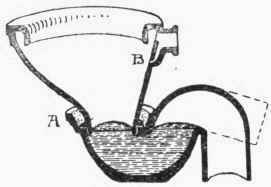
Fig. 95. Wash-down Closet with Insufficient Water Surface.
Wash-down closets may be broadly divided into closets with loose traps, and closets with the basin and trap in one piece. In each class there may be a further sub-division into closets for enclosure with woodwork, pedestal closets, and suspended or bracketed closets. The improvements to which inventors have chiefly turned their attention have been the improvement of the shape of the basin and the increase of the surface of the water standing in it (so as to reduce the risk of fouling), and the better design of the trap and flushing apparatus, so that the trap as well as the basin may be cleared at every flush. The ventilation of the trap and depth of seal, the method of connecting the trap to the branch of the soil-pipe, and other points have also received careful attention. The area of the standing water and the depth of the trap-seal cannot be increased beyond a certain point without increasing the quantity of the flush.
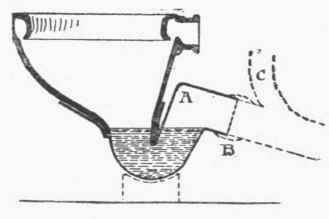
Fig. 96. Hellyer's "Hygienic" Wash-down Closet with Lead Trap.
As long ago as 1852 the General Board of Health of this country recommended two forms of pedestal wash-down closet with the basin and trap in one piece of glazed ware. In one the basin is of ordinary short-hopper form and has only a small water-surface, but that in the second has a recessed back and a fairly large area of water. The designs are historically interesting, but are not of any practical value at the present day.
The "Hygienic" closet (fig. 96) may be given as an example of a wash-down closet with separate trap. The latter may be of earthenware to match the basin or (as in the illustration) of lead. The lead trap allows a wiped soldered joint to be made at B between the trap and the lead branch of the soil-pipe. The trap is of the well-known "Anti-D" shape, having a square angle at A to reduce the risk of siphonage. The ventilation-pipe may be connected with the branch of the soil-pipe as shown at C. A wide flange of lead around the inlet of the trap forms a good seat for the basin, the joint being made tight with white lead or "elastic" cement. The objections to this closet are the small area of water and the large exposed surface of the basin.
Continue to:


My Books

